
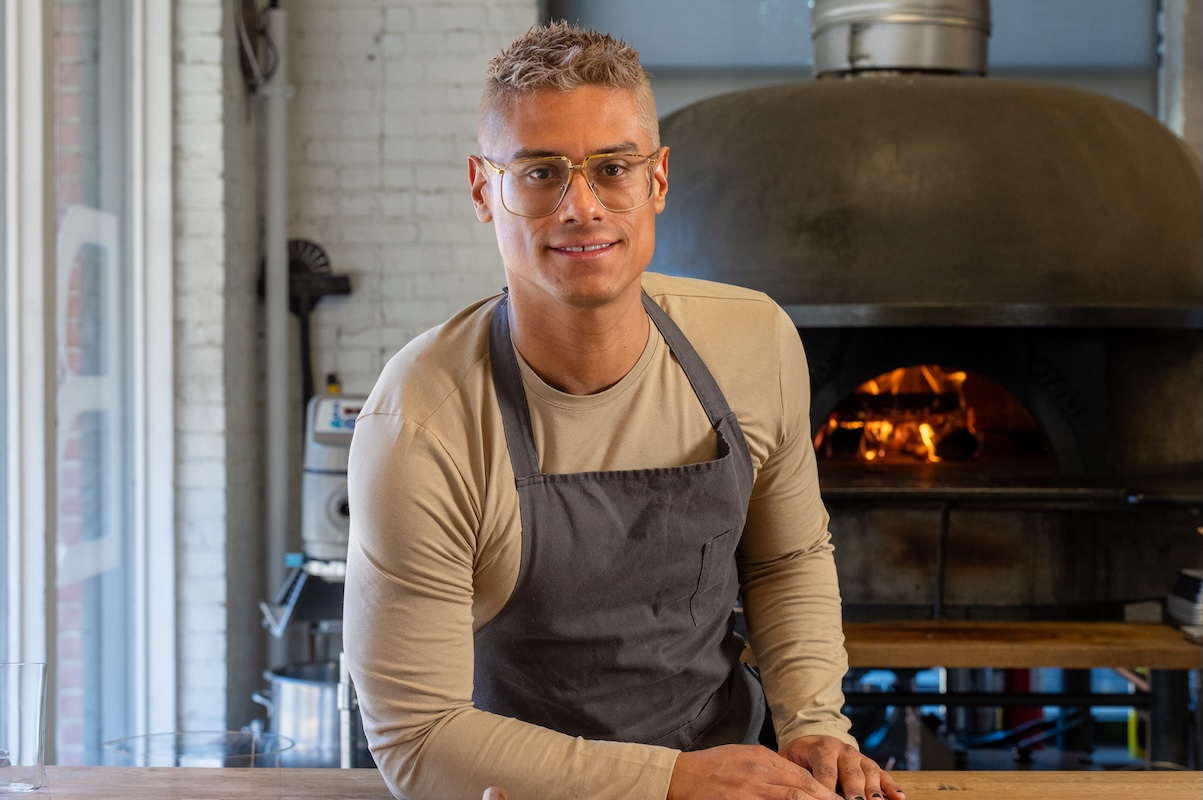
Chef Byron Gomez has had an illustrious culinary career. He’s led the team that earned a Michelin star for Bruto in Denver; was featured on season 18 of Top Chef; worked at some of the best restaurants in Manhattan including Café Boulud, Atera, and Eleven Madison Park. But, as the chef put it, none of this would be possible without DACA (Deferred Action for Childhood Arrivals).
“From around 1997 until 2015, almost 20 years, I didn’t have any papers. Once DACA came about in my early 20s, I had already integrated myself into American life, spoke the language, and went through the school system,” Gomez recalled. “DACA was the one branch that was handed to me to be able to live a more normalized life. Through DACA, I didn’t have to feel like I was in survival mode or hiding or scared.”
Chef Gomez first arrived in the United States from Costa Rica at age 8, and his family settled in Long Island, New York. He began working in kitchens as a teenager, starting his food career at Burger King at the age of 15.

As a young man, he found himself without an identity, literally. He had no social security number, no license, and no work permit. He lived day-to-day, hoping he wouldn’t be deported. When DACA was passed in 2012, it was a lifeline for Gomez and hundreds of thousands of other undocumented individuals like him, but the program proved to be a double-edged sword.
Each recipient of DACA finds themselves in legislative limbo. They have no permanent pathway to citizenship, and must renew their DACA status every two years, making legal standing a constant uncertainty.
Rather than sitting idly by, Gomez has chosen to take action by advocating for himself and other immigrant workers, which represent more than one-fifth of the restaurant workforce.
“[DACA] is not a law, it was just a tactic of kicking the can down the road…but I strongly believe I wouldn’t be where I’m at right now without DACA,” Gomez explained. “What was handed to me was a bad card, but I played the best hand that I could’ve played, and here I am.”
From Costa Rica to Capitol Hill
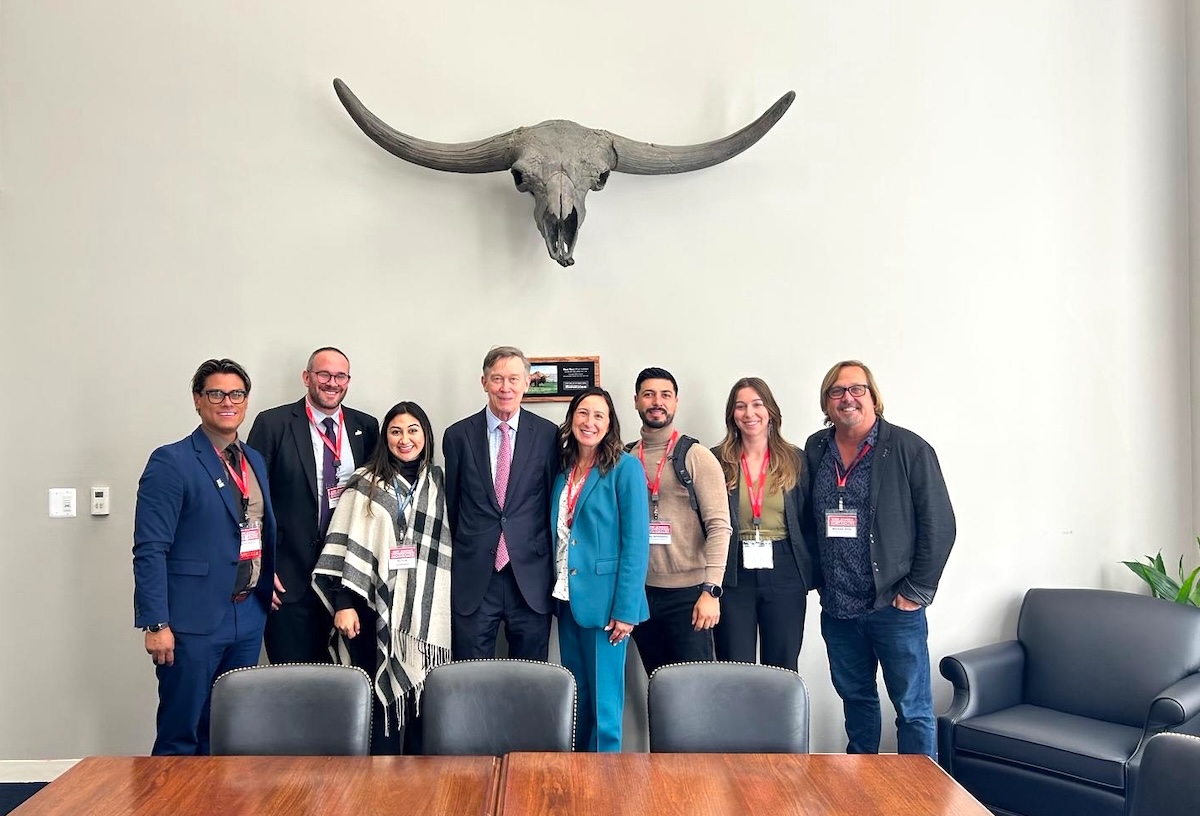
Last month, Gomez traveled to Washington, D.C. for Seat at the Table, a fly-in event hosted by the American Business Immigration Coalition (ABIC) in partnership with the James Beard Foundation. The initiative calls on elected officials to provide work permits for long-term, tax-paying immigrant workers.
“ABIC has organized five fly-ins so far, but none at this scale, and none with a concentrated hospitality focus like Seat the Table,” said Rebecca Shi, CEO of ABIC. “Nearly 200 employers total from diverse sectors, including hospitality, but also representing agriculture, health and eldercare, and construction met with more than 200 offices in Congress over two days.”
Gomez was there specifically advocating for the Dignity Act (H.R. 3599), a bipartisan bill led by Representatives Veronica Escobar (D-Texas) and Maria Elvira Salazar (R-Florida), that would, among other things, allow undocumented immigrants who meet certain requirements to obtain legal status, as well as a pathway to permanent resident status for Dreamers and DACA recipients.

According to a press release from Rep. Salazar’s office, The Dignity Act has drawn support from almost 50 national organizations and over 20 bipartisan members of Congress. Gomez personally met with Colorado senators John Hickenlooper and Michael Bennett, along with representatives from other states like Texas and California, to discuss how the lack of common sense immigration policy is impacting the restaurant industry.
“The service industry is being affected because there’s no labor or hands on the fields to pick the crops, therefore, fruits and vegetables are literally rotting away in the fields,” said Gomez. “We don’t have a strong infrastructure of delivery drivers from the farms to the distributors or to the restaurant because [those workers are now] afraid. I’ve also heard stories of cooks or dishwashers not showing up to work. And all of that brings inflation.”
That’s just one part of why so many restaurants are closing down, he added. It’s a trickle down effect where service and ingredients cost more because of the lack of workers, and then diners don’t go out to eat as much because the prices are too high.
Other leaders from Colorado’s food and beverage scene, like Kristen Rauch, executive director of Eat Denver, were in attendance, as well as Anne McBride, vice president of Impact at the James Beard Foundation.
“Every sector of the hospitality industry is deeply impacted by the lack of immigration solutions,” said McBride. “Expressing that together helps underscore that for our members of Congress.”
Choosing Courage Over Fear

Gomez is clear-eyed about the risks he faces under the Trump administration’s immigration agenda, all the while noting that – in his personal opinion – it is not particularly different from other administrations.
“The immigration situation in this country, we’ve turned a blind eye to it for decades. I can recall from a very young age, from the Bush Sr. administration to Bill Clinton, there always has been this issue, there always have been mass deportations,” he said. “I think why it’s so dramatic now is that someone has turned on the light in the room and we cannot unsee that light.”
That “light in the room” he’s referring to are the widely publicized ICE raids that have swept the country.
“I 100% could be caught in the crossfire. I could be mistakenly identified or I could be mistakenly taken,” he stated. “But I will cross that bridge on a legal basis if I get dragged into these raids. Can I stress today about something that hasn’t happened? No.”
Ultimately, the acclaimed chef wasn’t in Washington just for himself. He was there for the millions of essential workers who have lived in the U.S. for decades but still have no legal way to belong here.
“As much as I can, I try to turn down the noise from social media and the news, it just brings fear. I don’t want to live a life of fear,” Gomez shared. “I have a platform where I can speak on behalf of others that maybe have that fear, but I want to do it the right way. I don’t want to do it with the victim mentality.”


