
“Fuck ICE forever.”
That’s the message that appeared on MAKfam’s Instagram story on Monday, October 13. The post, an image created by artist and MAKfam front-of-house staffer Liv Servaes (@livserves), was re-shared by the Michelin Bib Gourmand Chinese eatery at 39 W. 1st Avenue.
“I wanted to highlight [Liv’s art] and hopefully help her gain more followers, maybe help her sell some art,” said owner Doris Yuen, who runs MAKfam with her husband, chef Kenneth Wan. “The whole image encompasses everything I want to support, so I’m going to share it.”
What Yuen didn’t expect was the backlash that followed. Some users sent hateful messages to the restaurant’s account, prompting her to post a fiery follow-up to the restaurant’s more than 15,000 followers: “For all the people in our DM who has a problem with us saying “fuck ice.” Please unfollow, don’t come and eat at my restaurant. If you condone the actions of ICE, you’re not welcome at MAK. If you continue to troll, I have no problem putting you on blast.”

The response from Denver’s restaurant community was swift and overwhelmingly supportive. MAKfam’s post was shared around 100 times; the restaurant lost about 200 followers but gained roughly 600 more. “People were sending clapping emojis, saying, ‘I’ve never been to your restaurant, but I’m definitely coming now,’” Yuen said. “A lot of business owners were sharing it, too.”
However, there were also hate comments. One user messaged MAKfam: “Bro, stfu [shut the fuck up] and make some dumplings…Stay in your lane.”
Those words didn’t intimidate Yuen.

“[Comments like that] make me really upset, but it’s also not something new to me…I’m really used to people saying racist things,” she said. “While I didn’t love what was said, it didn’t put me in a place of fear. If anything, it just makes me want to be even louder.”
The Immigrant Experience
Sap sua, the James Beard-recognized Vietnamese spot on Colfax, was one of the businesses that shared MAKfam’s post.
“Having a platform comes with a responsibility to stand up for what’s right, especially when things around aren’t looking good at all,” co-owner Anthony “Ni” Nguyen said. “With ICE coming into town and kidnapping people off the streets with no warrant, no due process, it has everybody scared. So, being a member of this community, I felt compelled to say something.”

A first-generation Vietnamese-American, Nguyen wasn’t surprised by the vitriol MAKfam received. “This current administration emboldens those who think [racist] things to actually say those things,” he said. “But the things you say in private nowadays never stay private. If you’re going to DM someone, you better stand on business.”
Nguyen’s experience growing up in California as the son of Vietnamese refugees has deeply influenced his perspective on the matter.
“I saw how hard my parents had to work to make a living, and then to have to assimilate into a culture and figure out the language. That’s why I always have a soft spot for people who may not have the privilege to speak up because they’re afraid of retribution from this administration,” he said. “As a person of color, it is scary when black vans pull up right next to you…There’s a secondary layer of caution now that we’re operating with.”
Yuen also grew up with immigrant parents, and is an immigrant herself, which makes her opinions on the current administration’s immigration policies all the more poignant. Her father, a chef, came to the U.S. on a work visa before bringing her family over from Hong Kong. She recalled experiencing racism from her small Rhode Island community and the slurs they would call her and her family.
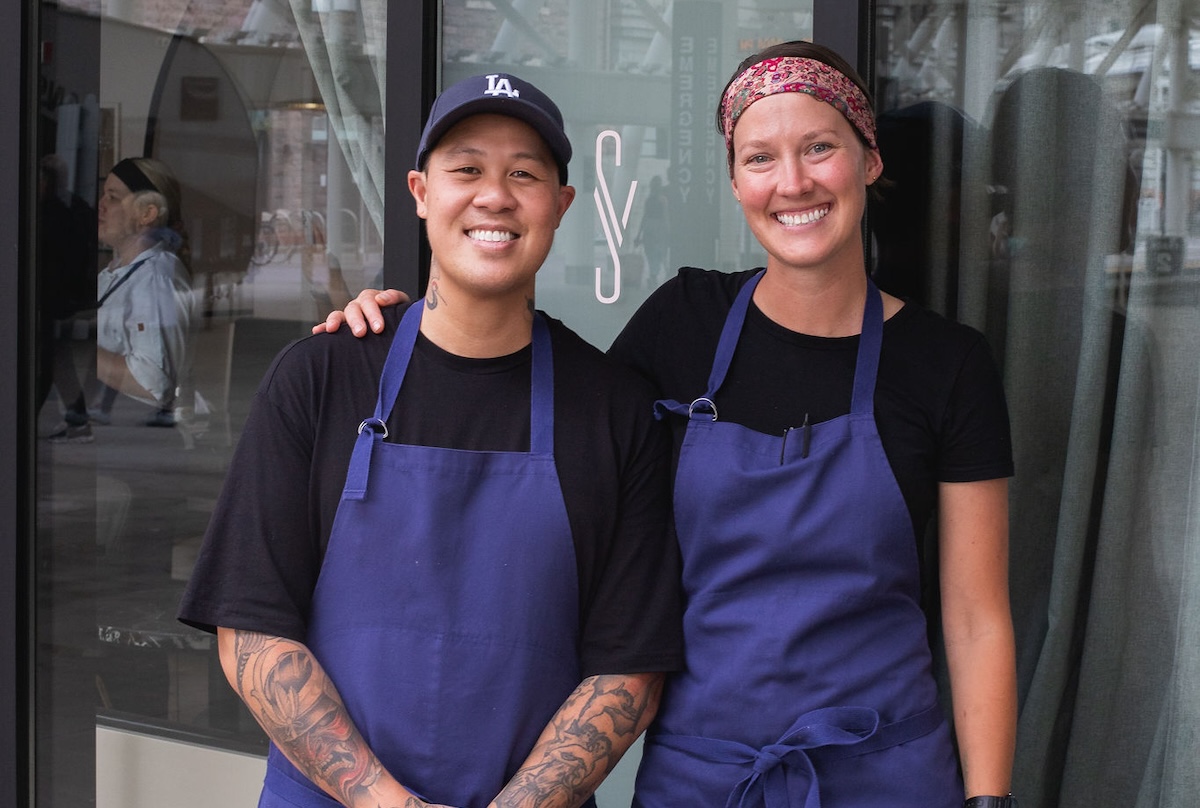
However, one markedly different experience for her parents versus immigrants today is that they were able to work without fear. “I don’t think my parents were fearful of being deported for just going to work,” she said. “Whereas these days, anything can happen to any person of color.”
A Real Threat
Beyond social media outrage, ICE’s lingering presence is being felt in Colorado’s kitchens. The agency already has one detention facility operating in Aurora and is working on another at the former Hudson Correctional Facility, about thirty miles from Denver in Weld County.
On September 16, Hacienda Real, a Mexican restaurant in Frisco, was raided by ICE agents executing a search warrant. Two employees were detained, and the restaurant temporarily closed before reopening a month later.

“The last thing restaurants need right now is staff who are afraid to come to work, especially those who are legally working and living here,” said Nick Hoover, Government Affairs Director for the Colorado Restaurant Association. “Can you imagine being separated from your family and your means of earning a living when you’ve done nothing wrong? Operating a restaurant is challenging enough right now without low staff turnout due to the threat of ICE activity.”
For Dylan Lopez, bar manager at Occidental, who also shared MAKfam’s post, the tone has shifted drastically in recent years.
“I’ve been in bars and restaurants for about 13 years now. [With this Trump administration] it has absolutely been very different than anything I’ve ever seen before,” Lopez said. “It’s definitely felt like the most aggressive immigration enforcement I’ve ever seen, especially for food and beverage workers who are very vulnerable because [this industry] employs so many migrants.”
“Even joy is an act of resistance.”
Despite the growing threats to their livelihoods, immigrant workers remain essential to Colorado’s hospitality industry. According to the Office of New Americans, one in nine Coloradans, and one in eight workers, is an immigrant. In the food services and accommodation sectors, that number rises to more than 10%. That is why business owners like Yuen and Nguyen say now is not the time to be silent.
“Being educated, having a game plan, and taking care of the people that work for me is the best thing I can do,” Yuen said. “If something happens, I want to make sure my staff is safe and knows their rights.”

“Resistance looks different for everyone; there’s no ‘right way,’” Nguyen said. “Even joy is an act of resistance.”
Lopez believes the restaurant community has both the responsibility and the power to push back.
“ICE is not welcome in our communities and immigration enforcement that is not held to any sort of accountability, legal or otherwise, has no place in a free society,” Lopez expressed. “I think [restaurants and bars] are in a very unique position to literally and figuratively starve out their efforts. If they were to ever come here and realize they’re not welcome to eat in any of the major restaurants in Denver, I think that could be a viable tactic.”
Organizations like the Colorado Immigrant Rights Coalition, ACLU Colorado, and We Have Rights, along with Denver’s Immigrant Support Toolkit, have resources for businesses and workers facing ICE threats, while legal partners like Fisher Phillips offer rapid-response guidance and a hotline. Individuals within Denver’s restaurant scene have found their own ways to contribute to the resistance, like Tiffany Hernandez, a Denver bartender and founder of Escuelitas, who has been hosting Know Your Rights workshops with immigration lawyers at bars and restaurants throughout Denver and other states. Follow her on Instagram @mezcalmistress for upcoming events.
To business owners who want to speak up but might be afraid to, Yuen offers these words of encouragement: “I would say, get a pulse check on your staff. And then say what you’ve got to say, say it with your whole chest. What’s the worst that can happen? Those racist people you don’t want in your restaurant don’t come? Good, we don’t want to serve those people anyway.”