
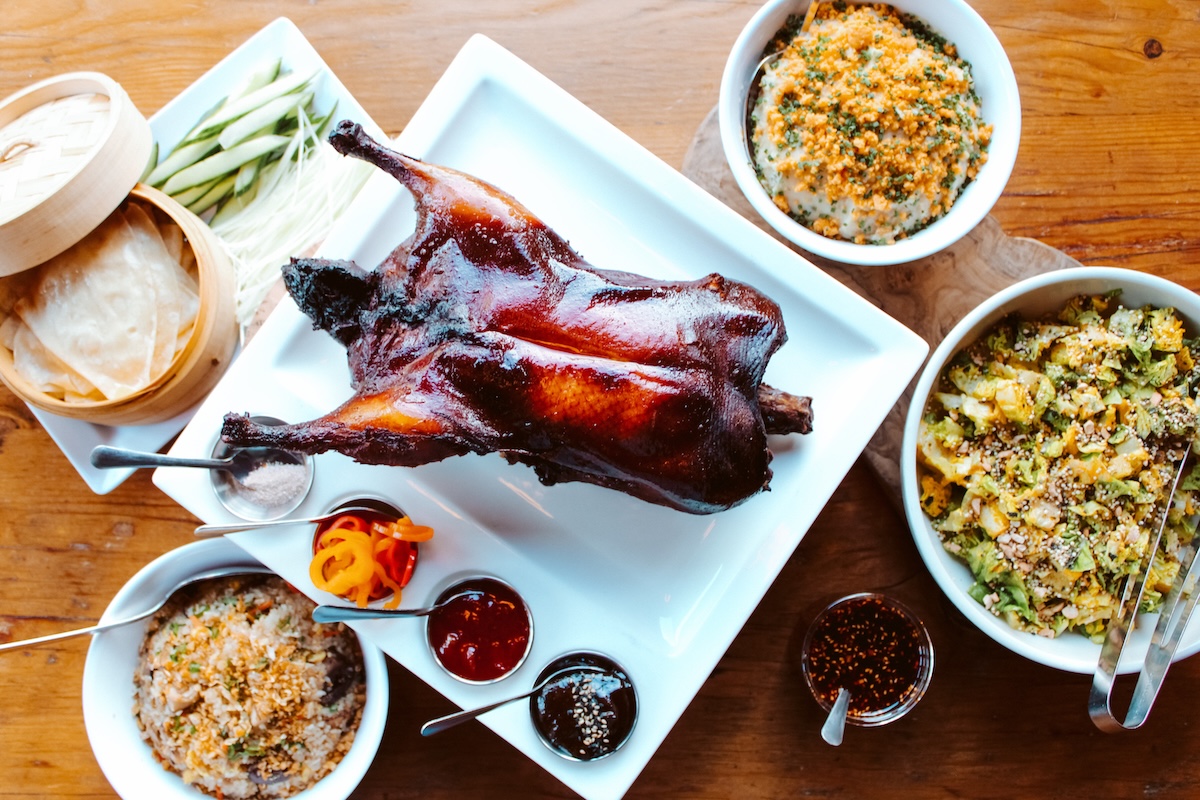
What once was reserved for special occasions and holidays can now be enjoyed Tuesday through Sunday at Ace Eat Serve in Uptown.
“Prior to this experience I had only eaten duck like twice,” said Ace’s executive chef, Stewart Gray. “I think people are surprised by the tableside carving element of it, but it’s universally positive and people love it.”
For those curious, a traditional Peking duck dish consists of a painstakingly prepared roasted duck served with the skin and meat separate. It comes with a variety of vegetables, crepes, and sauces, which can be used to make little sandwich-like bites. The word Peking comes from the older name given to China’s capital city, which today we commonly know as Beijing.
History dates the first iteration of the dish back to the 13th century, though it didn’t have the same nuances it does today. Over these years the cooking methods and even the type of duck changed. When the Qing dynasty hit in 1644 (and lasted until 1912), Peking duck became a delicacy and the popularity of the menu item grew.
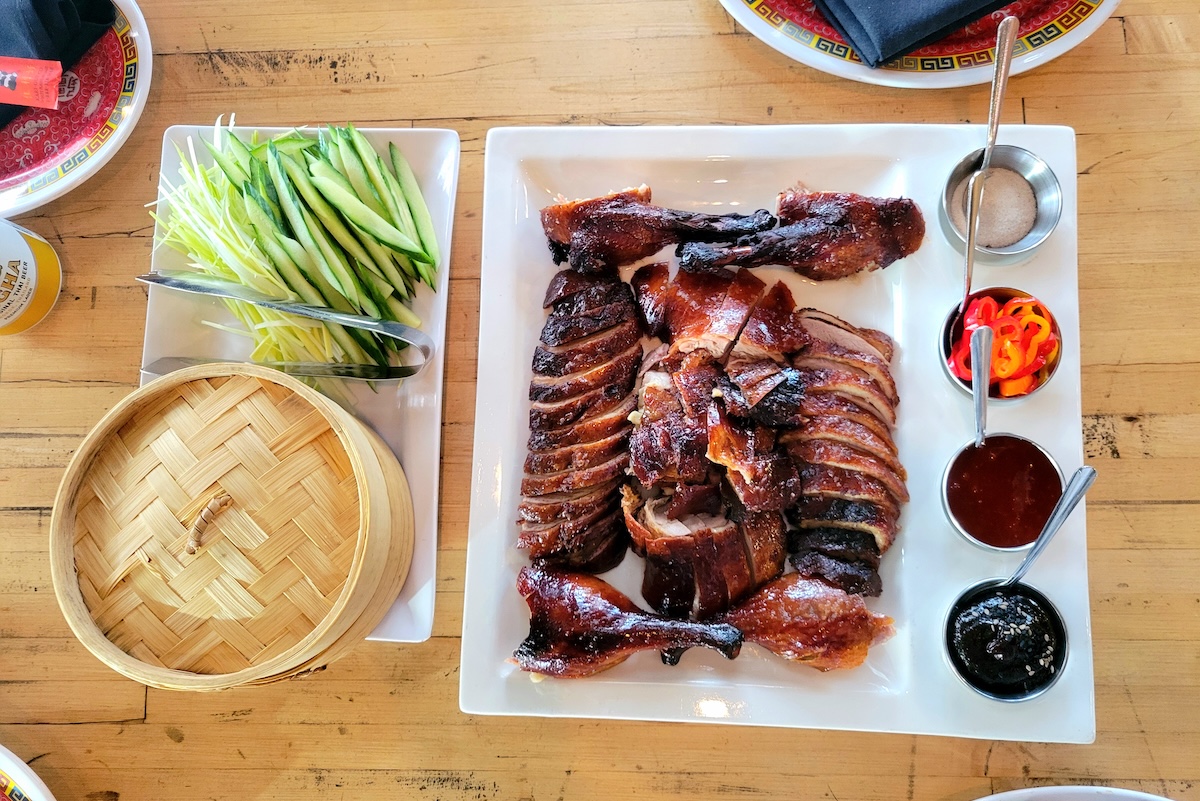
At Ace, when you order the Peking Duck it comes to the table whole, and the chefs carve it up right there, separating the crispy skin from the juicy meat. The idea, said Gray, is to enjoy each on its own, and it’s how the duck has been served for centuries. He recommends dipping the crackling duck skins in the blend of sugar and five spice offered on the side.
Other accoutrements include a traditional serving of steamed moo shu pancakes, cucumber, and leeks, as well as a housemade sesame hoisin, pickled sweet peppers, and chili-apricot jam. You roll the duck, sauce, and veggies into the pancake and eat it like a mini wrap.
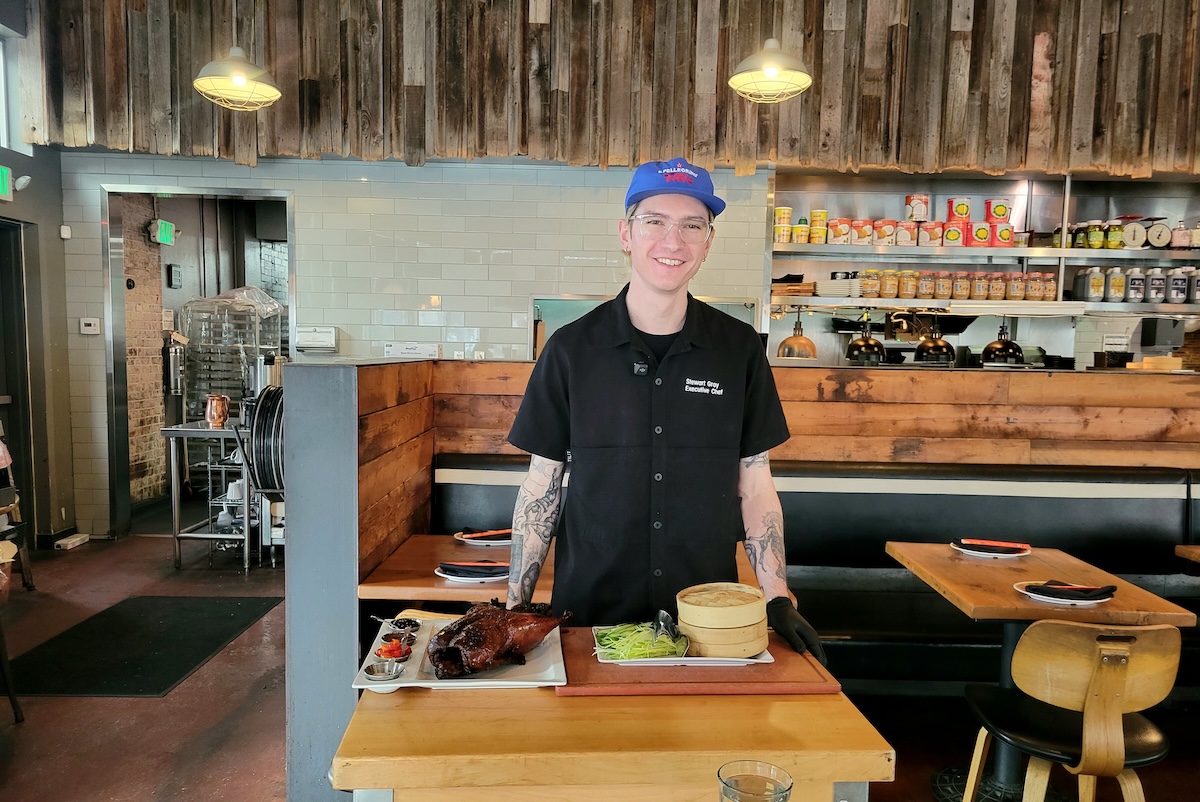
To make a Peking duck, first Gray stuffs the bird with aromatics and vegetables before sewing it up. In order to make sure the skin comes out nice and crispy, an air pressure hose is used to separate the skin from the muscle. Then the whole bird gets put into a boiling spiced brine, which tightens up the skin and prepares it for dry aging.
After at least 24 hours, the bird gets roasted in the morning before service. When it’s time to eat, the duck has a quick bath in the deep fryer, and then the skin gets even more fire to the skin before it goes to the table.
All the birds used at Ace come from Culver Duck Farms, which raises White Pekin Duck in Indiana. The family-run company started in 1859, and remains one of the most sustainable duck farms in the United States. In fact, the company holds the only American Humane Certified status presented to a duck farm in the whole country.
Make the most of your duck by adding on a $25 ramen kit so you can make soup at home. The set comes with noodles, hard boiled eggs, and vegetables, as well as the chopped up carcass of the duck to be used to make a rich broth.
While a select amount of ducks are available each night, it’s best to reserve one to make sure you get it. Whether dining in house or ordering it to go, the Peking duck experience runs $75 and serves two to four people. Of course you can add on other Ace favorites such as the Tiger Wings, a variety of dumplings, Rangoon Mozzarella Sticks, Spicy Pork Ramen, and more. Plus, the restaurant has a great cocktail program, and a full sake and Japanese whiskey list. Book a spot here and find out what the fuss is all about.
Visit Ace Eat Serve Tuesday through Friday from 4 to 10 p.m.; and Saturday and Sunday from 11 a.m. to 10 p.m. The bar is open until midnight on both Friday and Saturday. 501 E. 17th Ave., Denver, aceeatserve.com

