Atlanta has always been a city that rebuilds—sometimes by necessity, often by ambition. From the ashes of Sherman’s march to the bulldozers of urban renewal to the cranes of today’s skyline, reinvention is our native instinct. But threaded through all that change is the story of buildings and blocks that refuse to disappear.
These 12 restaurants have made their homes in structures that carry Atlanta’s memory in their walls, foundations, and bones. Pull up a chair. The history is on the house.
The Silver Skillet
Built: Early 1950s
Restaurant Opened: 1956
Green and tan Naugahyde booths, boomerang tabletops, and shark fin windows have outlasted everything Midtown could throw at this mid-century diner. Owner Teresa Breckenridge grew up in the business and has kept the same dedication to good food her father established—and Hollywood keeps coming back for seconds. Decades of films have used this room as a shooting location precisely because you can’t fake what’s real. Come for the pancakes, stay for the rapidly disappearing neighborhood atmosphere. 200 14th St. NW, Atlanta, thesilverskillet.com
Atkins Park
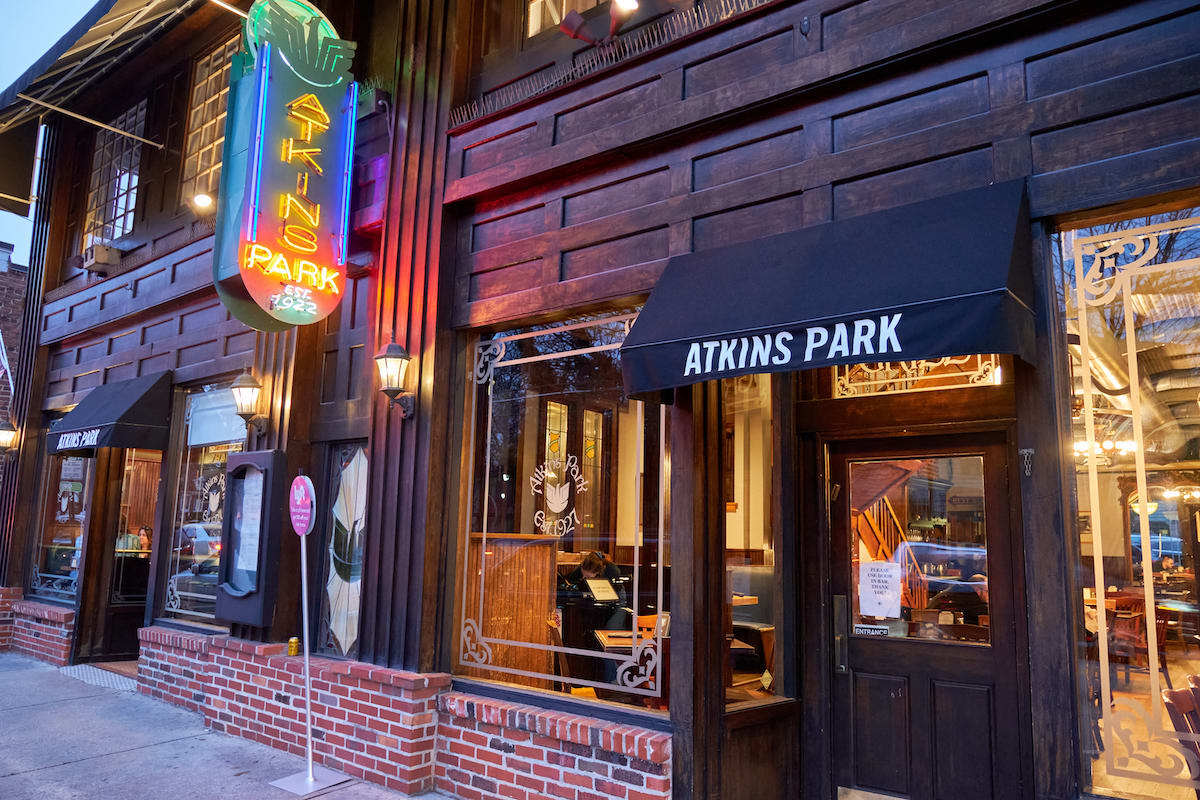
Built: 1910
Restaurant Opened: 1922
This Virginia-Highland institution started as a neighborhood deli in 1922, carved into the ground floor of a turn-of-the-century home. It holds the oldest continuously active tavern license in Atlanta—a distinction made considerably more interesting by the fact that the license supposedly predates the end of Prohibition. VaHi Summerfest founder Warren Bruno transformed the historic establishment into the comfort food classic it is today, now with a second Smyrna location. 794 N. Highland Ave. NE, Atlanta, atkinspark.com
Paschal’s
Built: 1947 (original location)
Restaurant Opened: 1947
When brothers James and Robert Paschal opened their restaurant in 1947, they built something that transcended the business of feeding people. Their location on what is now Martin Luther King Jr. Drive became the unofficial headquarters of the Civil Rights Movement; a place where King and his contemporaries strategized, recovered, and organized, night after night. The current Castleberry Hill location, opened in 2002, carries those recipes and that weight of history forward. 180 Northside Dr SW, Atlanta, paschalsatlanta.com
Polaris
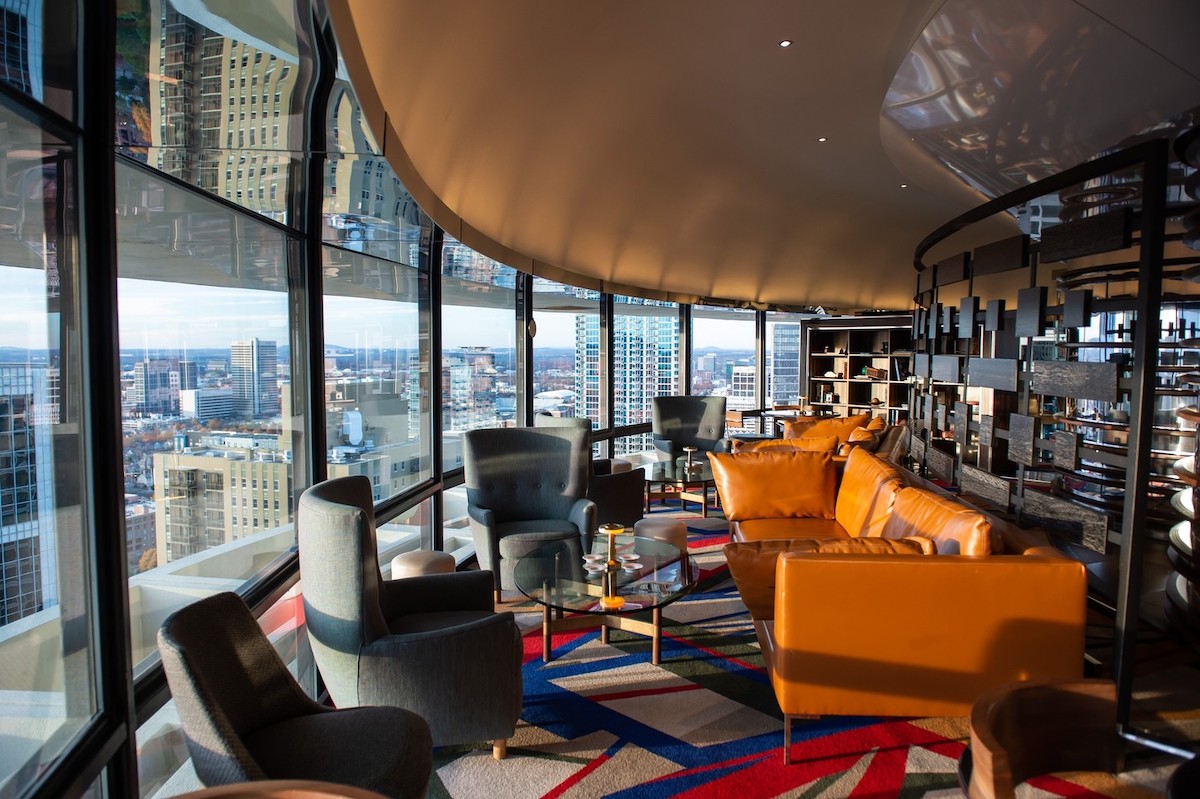
Built: 1967
Restaurant Opened: 1967
There’s nothing subtle about this Downtown destination. Conceived by neo-futurist architect John Portman, the cobalt-blue flying saucer atop the Hyatt Regency has been one of the city’s most recognizable silhouettes since it first began rotating in 1967. The building carries a profound civil rights footnote, too—it was Atlanta’s first fully integrated hotel, offering Dr. Martin Luther King Jr. a place to gather after a nearby property turned him away a few years earlier. More than half a century later, the room is still spinning. 265 Peachtree St. NE, Atlanta, polarisatlanta.com
9 Mile Station at Ponce City Market
Built: 1926
Restaurant Opened: 2016
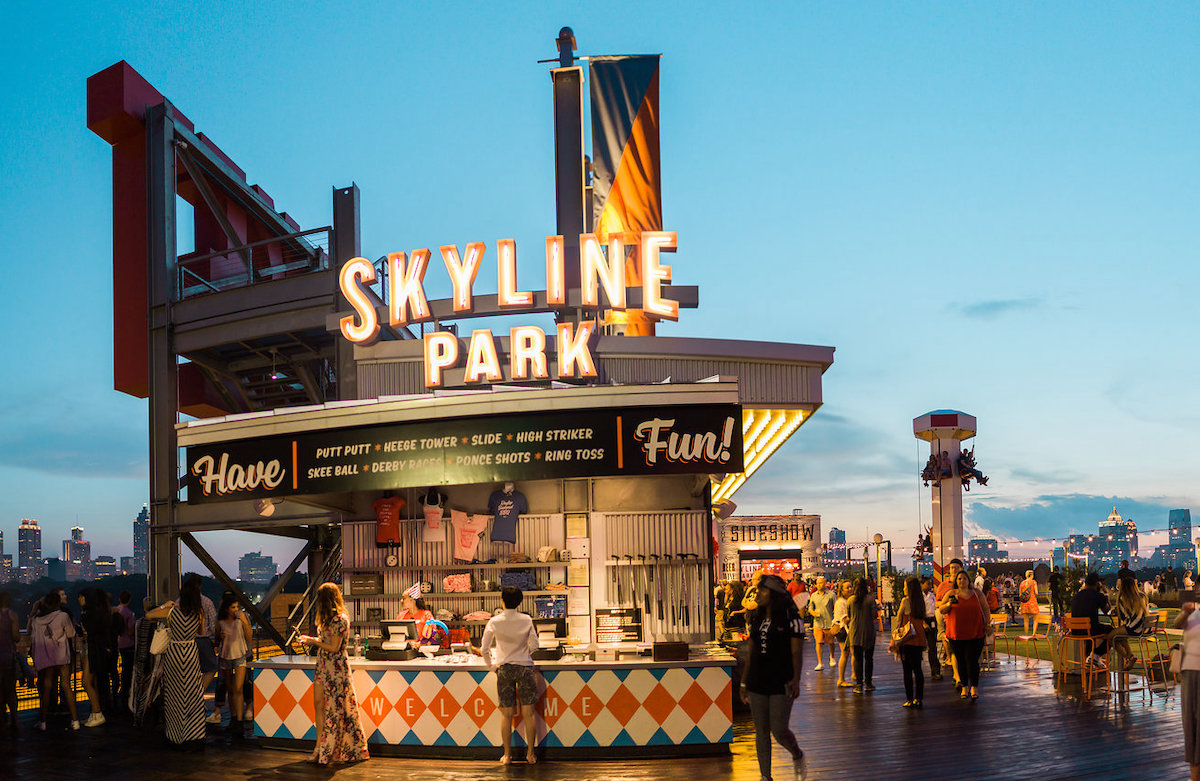
The massive brick building that houses Ponce City Market has lived several lives. Before it became a tourist hot spot, it was a Sears, Roebuck & Co. department store and warehouse opened in 1926, later pressed into service as part of Atlanta’s City Hall under Mayor Maynard Jackson. 9 Mile Station perches on the building’s rooftop, where the Beltline curves below and the Midtown skyline opens wide. The building’s bones are industrial and proud, and the views are among the best in the city. 675 Ponce De Leon Ave. NE, Atlanta, 9milestation.com
By George
Built: 1906
Restaurant Opened: 2019
When Coca-Cola magnate and future Atlanta mayor Asa Candler commissioned his namesake skyscraper in 1905, he created what would become the city’s first steel high-rise—a Beaux-Arts landmark on Peachtree Street that still stops people in their tracks. Restored and reopened as the Candler Hotel in 2019, it houses By George in the soaring space that once served as the Central Bank and Trust. The restaurant’s name honors both architects who designed the building, who happened to share the first name, George. The basement vault, rumored to once have safeguarded the Coca-Cola formula, is available for private dining. 127 Peachtree Rd. NE, Atlanta, bygeorgeatl.com
Mary Mac’s Tea Room
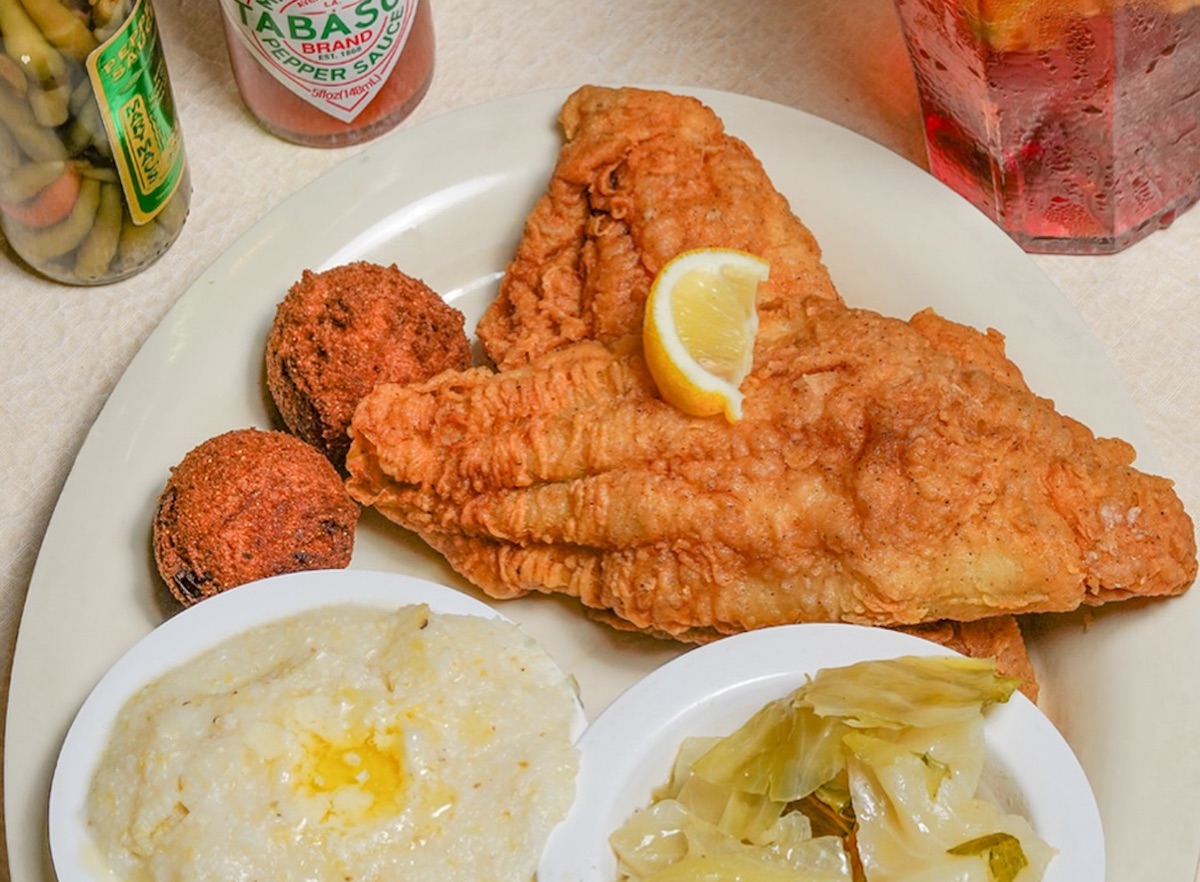
Built: 1915
Restaurant Opened: 1945
When Mary MacKenzie opened her tea room on Ponce de Leon Avenue in 1945, she was one of 16 such establishments in the city. She is the last one standing. The building has grown from a single dining room to 13,000 square feet across several storefronts, but the corner hasn’t changed, and neither has the kitchen. The Georgia House of Representatives designated it “Atlanta’s Dining Room” in 2011, a title the regulars had already bestowed decades before. 224 Ponce De Leon Ave. NE, Atlanta, marymacs.com
The Busy Bee Café
Built: 1947
Restaurant Opened: 1947
Lucy Jackson opened the Busy Bee in 1947 on what was then Hunter Street, one of the only corridors in Jim Crow Atlanta where Black entrepreneurs were permitted to operate. The building became a gathering place for civil rights leaders—Dr. King was said to be particularly fond of the ham hocks—and the community it served has kept it alive for nearly eight decades since. A 2022 James Beard America’s Classics Award and recurring Michelin Bib Gourmand honors cement its legacy status. 810 M.L.K. Jr. Dr. SW, Atlanta, thebusybeecafe.com
Scout
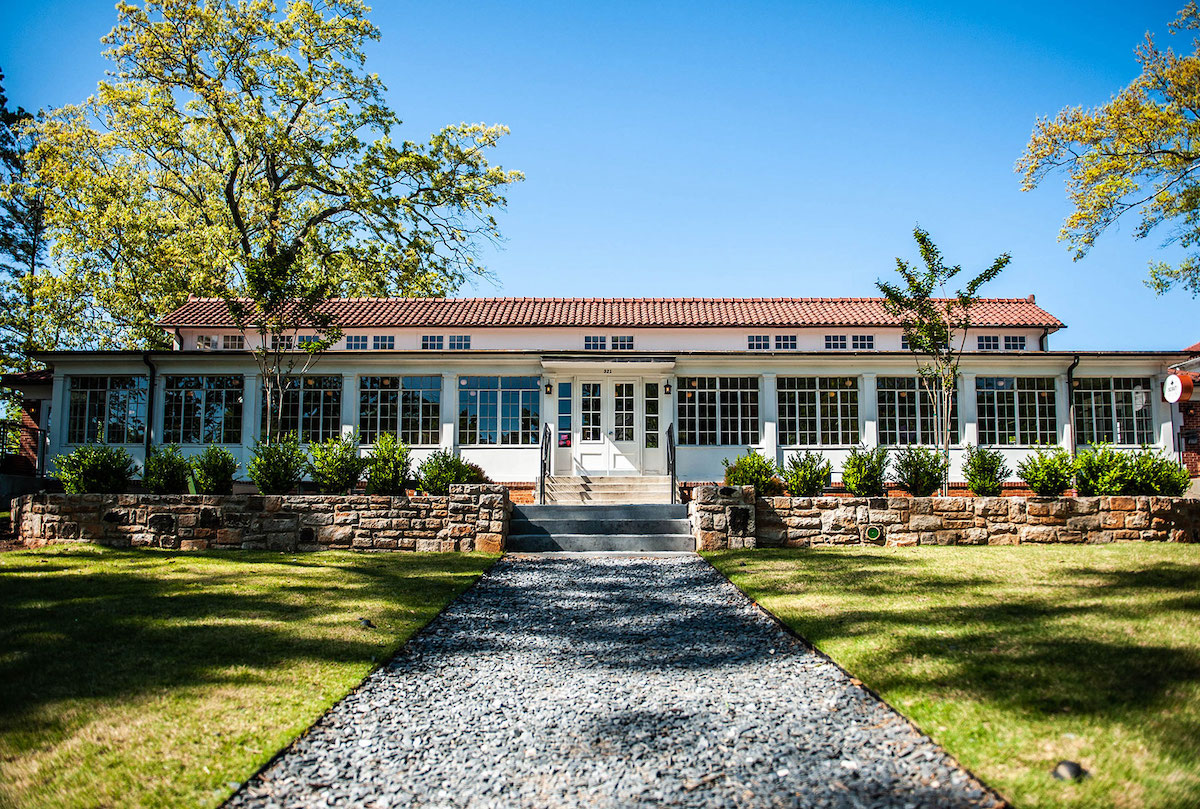
Built: 1919
Restaurant Opened: 2016
The former Scottish Rite building that houses Scout was designed by noted Georgia architect Neel Reid and is listed on the National Register of Historic Places—a pedigree that has made its preservation a matter of civic pride in Decatur for decades. Restaurateur Chris Martha saw the potential for something special in those peaked ceilings, clerestory windows, and generous proportions. The renovation kept those bones visible, resulting in one of the most architecturally compelling dining rooms in the metro area. 321 W. Hill St., Decatur, scoutoakhurst.com
The Colonnade
Built: 1927 (original location); 1962 (current building)
Restaurant Opened: 1927
Follow the red neon sign to a piece of Atlanta history. Open since 1927, the Colonnade has earned its reputation through consistency rather than reinvention. Atlanta’s second-oldest restaurant has been welcoming the same families, often across multiple generations, for the better part of a century. Expect fried chicken, yeast rolls, and sweet tea served in a room that hasn’t lifted a finger to change with the times. 1879 Cheshire Bridge Rd. NE, Atlanta, thecolonnadeatl.com
Old Vinings Inn
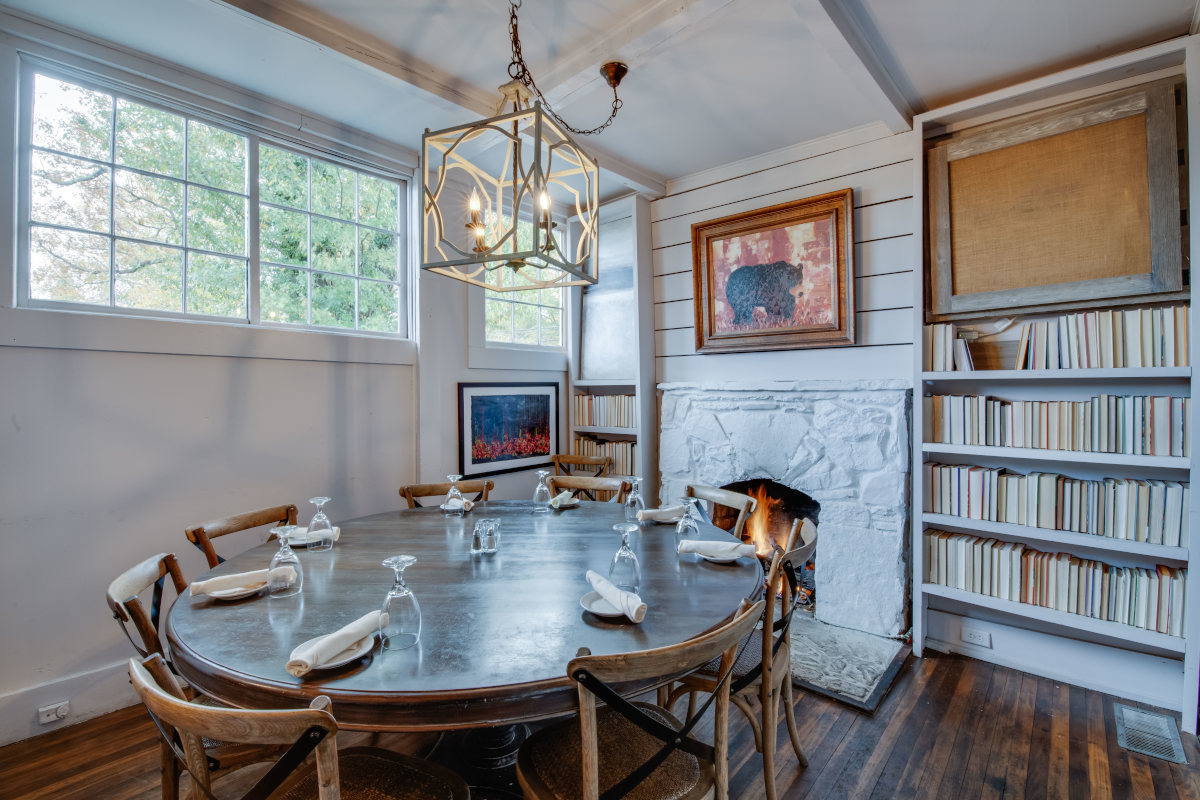
Built: 1880s
Restaurant Opened: 1990
Few buildings in the Atlanta area can claim the age and continuity of the Old Vinings Inn. The structure dates to the 1880s, when it served as a private home and then the village post office for what was then a small community well outside the city. Today, the wraparound porches and low-ceilinged rooms feel genuinely historic. For more than 35 years, it’s been serving up elegant Southern fare and live local music in a setting that predates nearly everything else on this list. 3011 Paces Mill Rd. SE, Atlanta, oldviningsinn.net
Johnnie MacCracken’s Celtic Firehouse Pub
Built: Late 1885
Restaurant Opened: 2004
Marietta’s first fire station still brings a sense of warmth to the historic square, even after more than 100 years standing vigil. The oversized carriage doors through which horse-drawn engines once thundered are still part of the entrance, and the space is filled with artifacts of that early life. Today, it serves as a neighborhood gathering place serving cold European drafts, solid pub food, and live music, all in well-worn tavern surroundings. 15 Atlanta St. SE, Marietta, johnniemaccrackens.com