When a community lacks access to healthy food, the problem extends far beyond nutrition. These individuals face higher rates of chronic conditions like heart disease and diabetes, are at more risk of mental health issues, and experience lower economic and academic performance.
Affecting 48 million people nationwide, food insecurity is more widespread than you may think. This disparity is also happening in Denver, particularly in Westwood and the surrounding southwest neighborhoods. Redlining and systemic disinvestments in this predominantly-Latino area has led to a poverty level of 32 percent, which is close to three times the city’s average.
Federally and locally, this lower-income region is a designated food desert where many residents have limited access to grocery stores and transportation, as well as other public services.
“Non-profits really had to try to fill those gaps over the years,” commented Liz Weintraub, director of operations with Re:Vision.
In speaking with community members, this Westwood-based organization learned that access to fresh, healthy food was a critical need. From a handful of backyard gardens, the non-profit has evolved around three core pillars: community health, wealth, and education. Since 2007, its work has made a remarkable impact.
How Re:Vision Supports Community Health
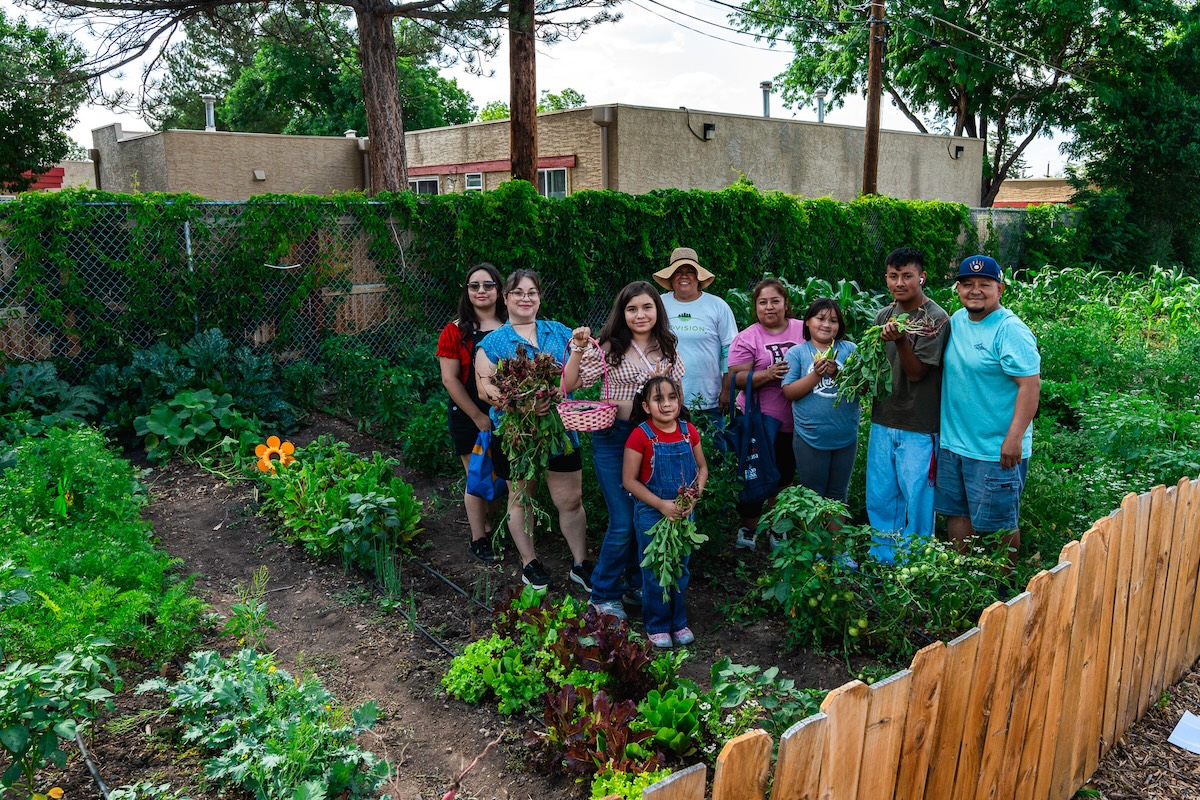
Re:Vision began with seven backyard gardens managed by paid promotoras, the Spanish term for community health workers, who supported Westwood families in cultivating fresh produce from their yards. Weintraub shared that this resident-led model has been utilized in international development widely, but especially in Latin America.
“When you’re training local people to work with neighbors, they are part of the same population and are able to assess and understand the unique context and factors that are contributing to the problem that you’re trying to approach,” she explained. “This is a mostly Latino, mostly immigrant neighborhood so a lot of people that have been gardening and doing agriculture work for many generations are bringing those traditions forward and putting them to use here in a more urban setting in Denver.”
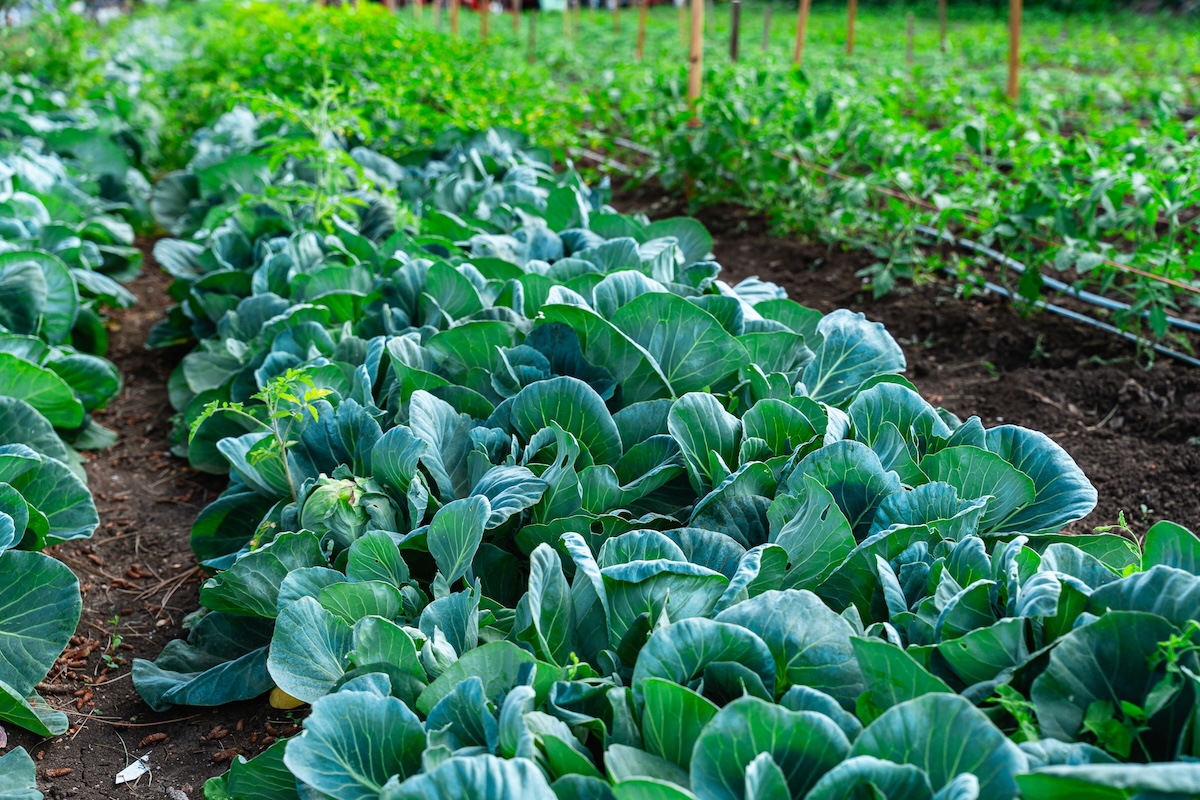
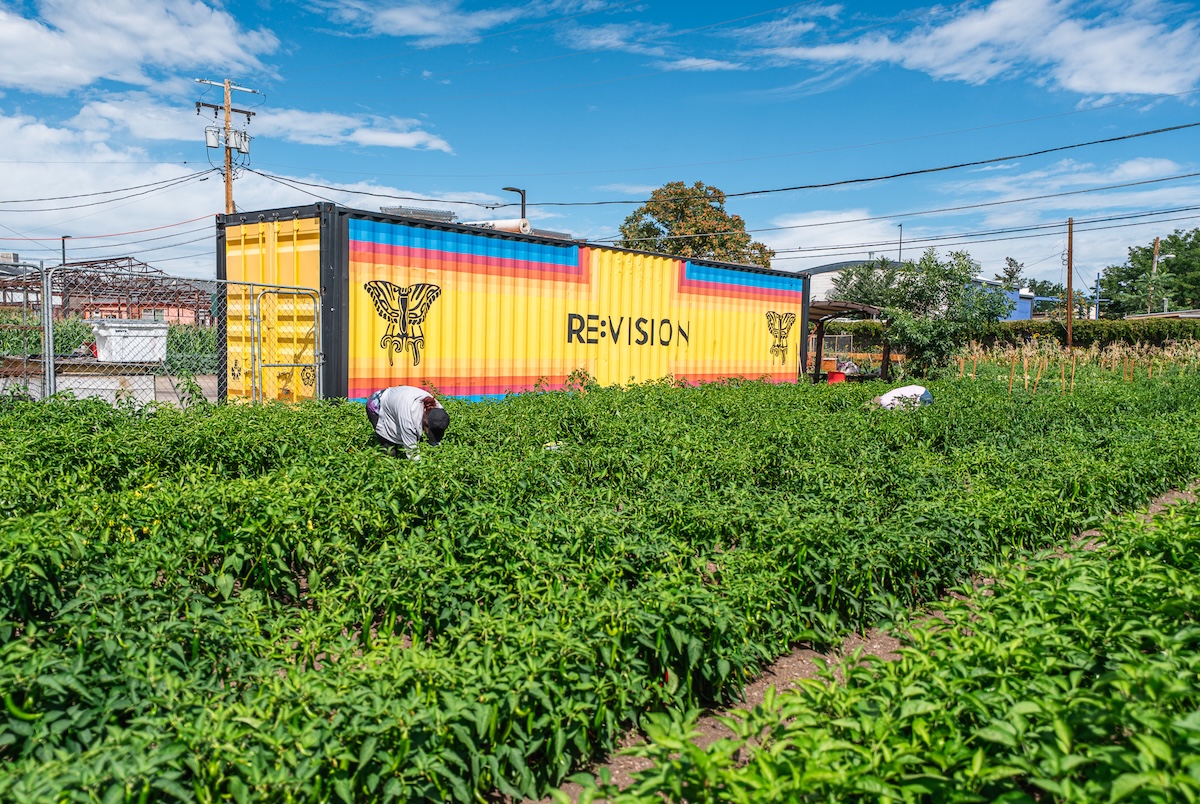
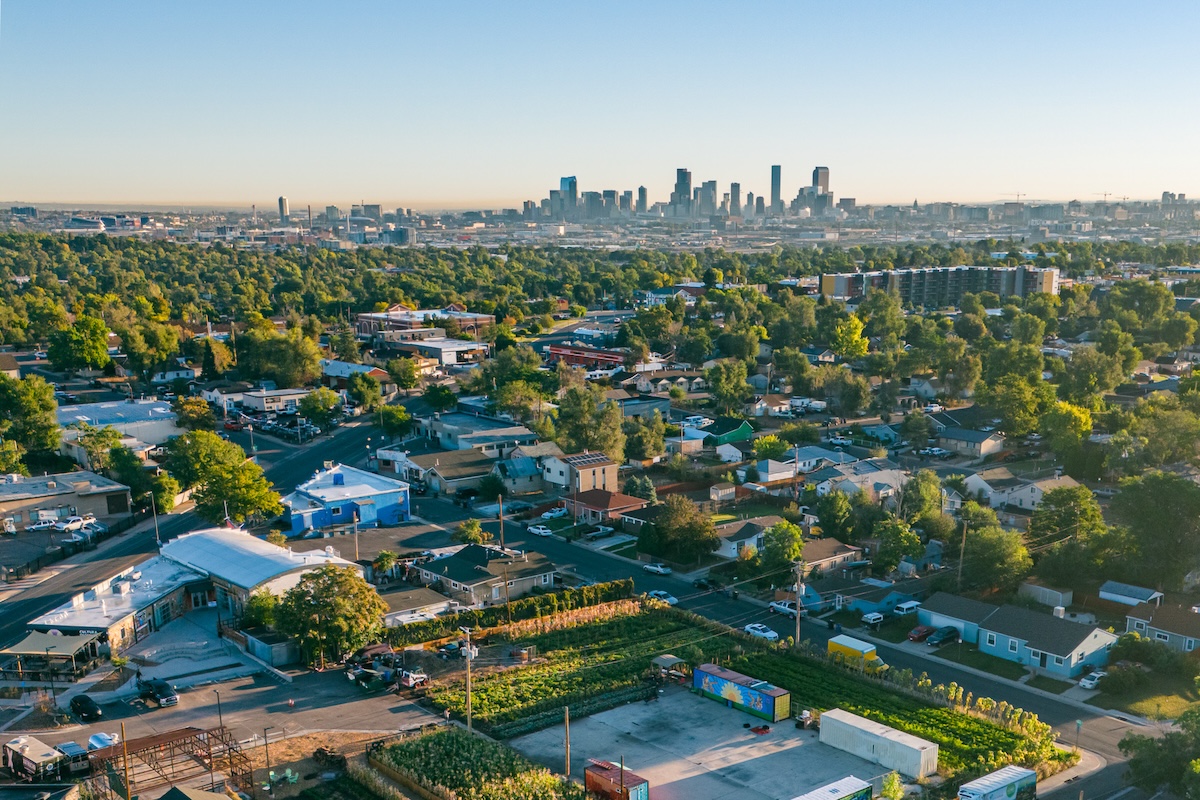
Now, Re:Vision promotoras help cultivate as many as 150 backyard gardens across Westwood and nearby neighborhoods including Barnum, Villa Park, Ruby Hill, and Athmar Park. Additionally, the non-profit has established four separate urban farms which encompass nearly two acres.
“We’re trying to convert underutilized land into productive growing space, and all of the food that we grow is given away for free to the community through a variety of programs we run,” said Weintraub.
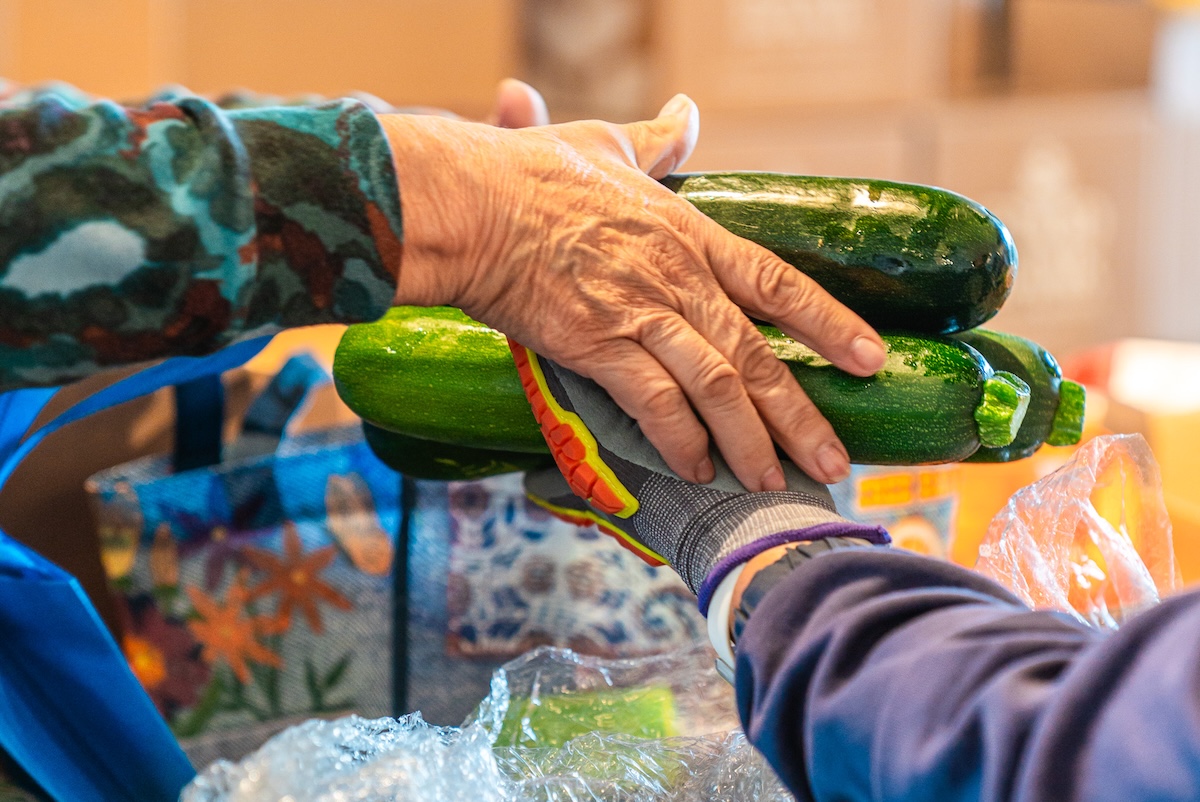
This includes a CSA program managed in partnership with Denver Health, where free boxes of vegetables are distributed to individuals experiencing pre-diabetes and other health issues.
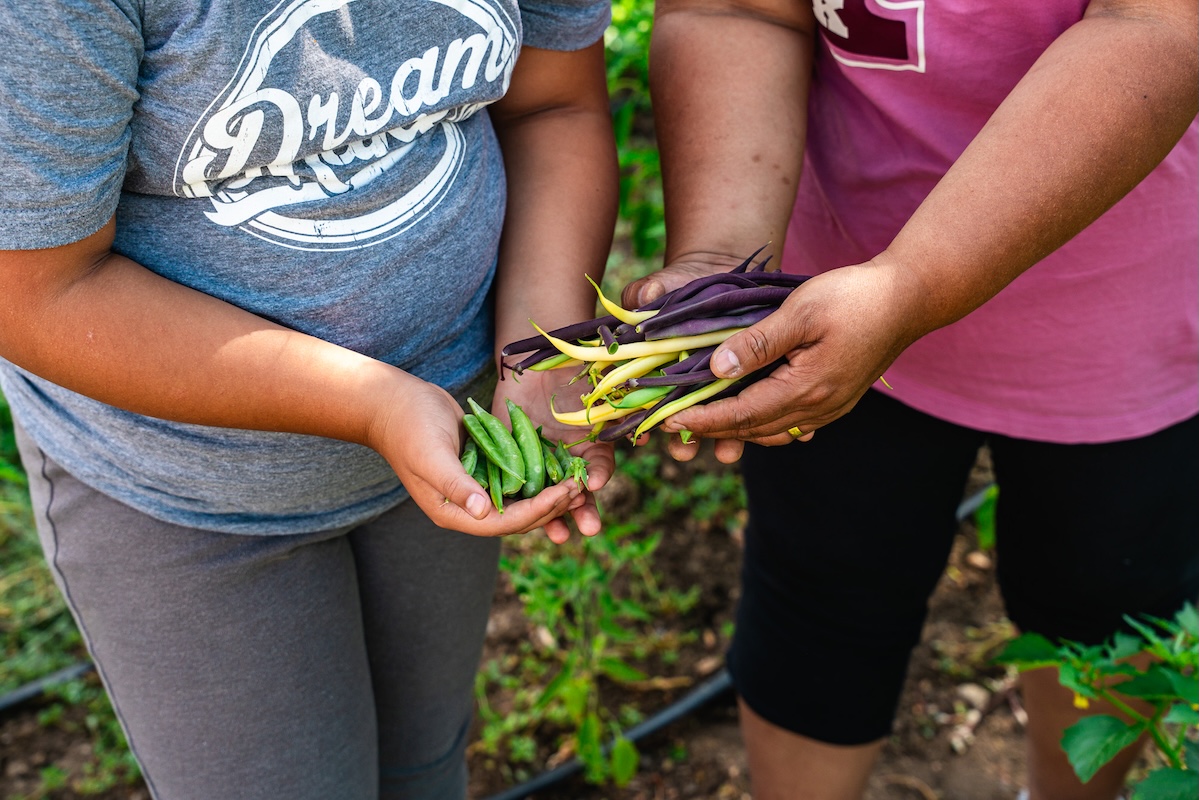
Produce from the urban farms also supplies the organization’s no-cost grocery, which is supplemented by donation partners like Food Bank of the Rockies, We Don’t Waste, and UpRoot Colorado. During operating hours every Tuesday, this choice-style food pantry serves close to 850 local families.
Weintraub noted that prior to the Covid-19 pandemic, “We always focused on growing food. But when we started doing food distribution, we saw the need in the community. Everything in life is getting more expensive, even when you live in a supposedly ‘more affordable’ part of town.”
She added that the pressures of gentrification have made the non-profit’s work especially vital.
Educational Programs From Re:Vision
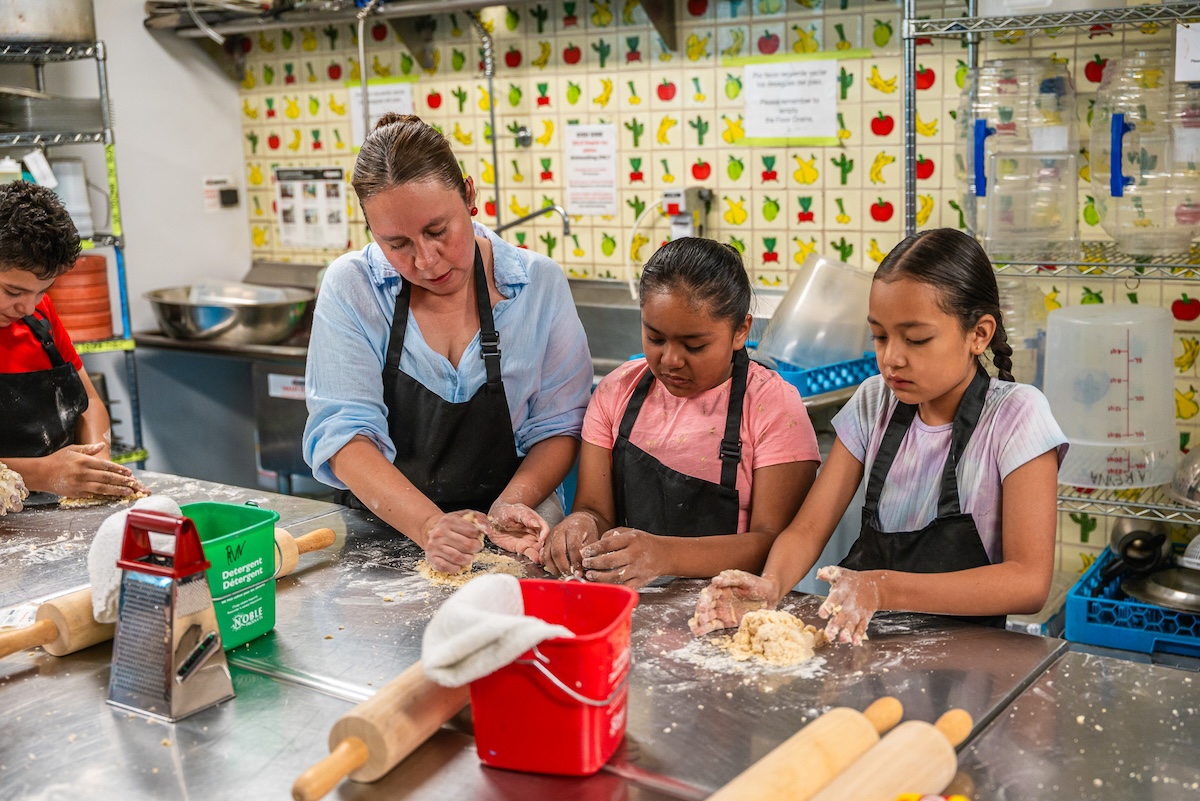
Westwood is the city’s youngest neighborhood with 39 percent of locals under the age of 18. This is nearly double the average youth population in Denver.
Three years into its establishment, Re:Vision designed programs that allowed student-age residents to participate in gardening, as well as nutrition and cooking classes at its Morrison Road campus. With additional funding from the Colorado Health Foundation in 2023, youth summer programs expanded to a year-round after-school model.
Weintraub explained that in part, the non-growing season provides an opportunity for youth and the wider community to attend classes on how to transform fruits and veggies into canned goods, which extends food access into the winter months.
She noted, “They might not have chilies or tomatoes from their garden in February. But if we teach them in February how to can a fresh salsa, they can put those skills to use and start canning and preserving when the next garden season rolls around.”
Contributing to Community Wealth
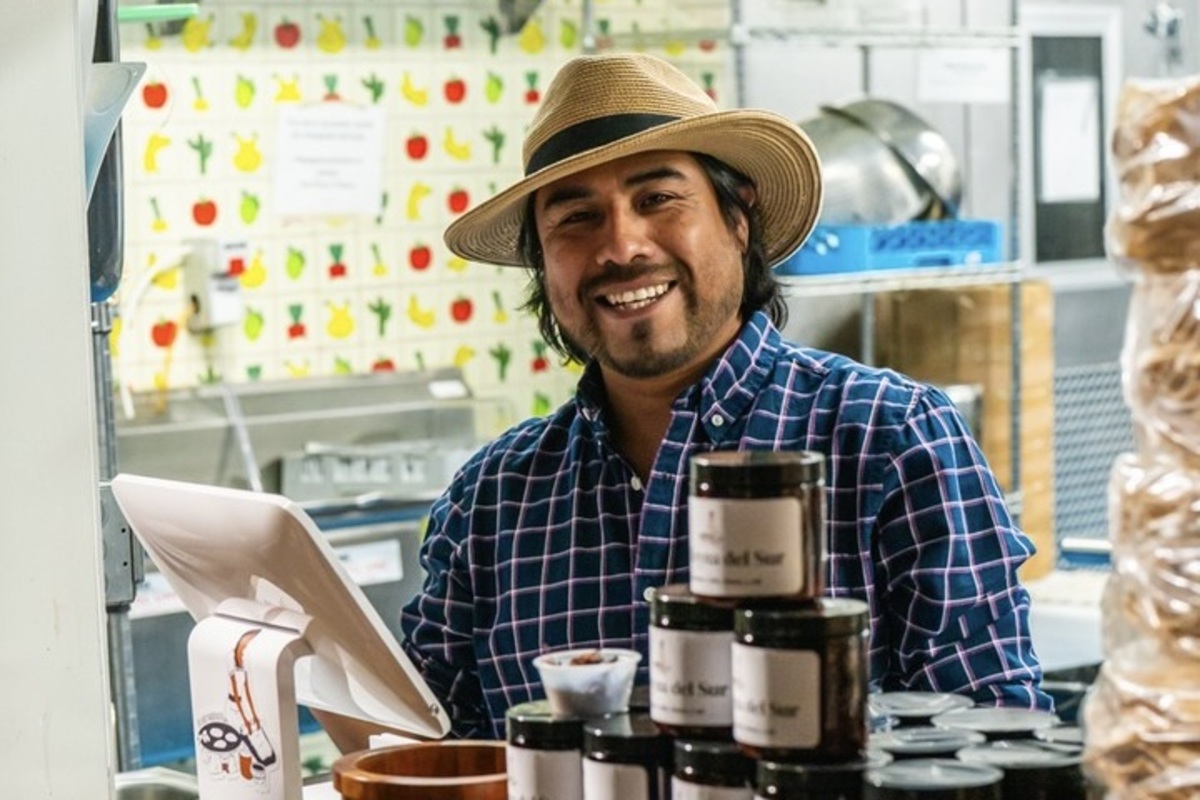
Transformed from a junkyard, the Re:Vision campus at 3800 Morrison Road is a dynamic, multi-use hub featuring community programs, the original urban farm, a large common area, and office spaces rented by other nonprofits and small businesses. There’s also a commissary kitchen that is leased by local food concepts.
“The idea behind La Cocina is to provide affordable, accessible kitchen space in a city where that can be extremely difficult to come by, and very expensive as well,” explained Weintraub.
Re:Vision rents its commissary kitchen by the hour to individuals with infrequent catering gigs or other one-off events. But more often, this amenity acts as an incubator for businesses who have signed an ongoing lease.
“Right now, the long-term tenant that we have in the kitchen is La Reyna Del Sur, which is an Oaxacan food concept,” said Weintraub. “They are local to the community and have had roots here in Westwood for many years.”
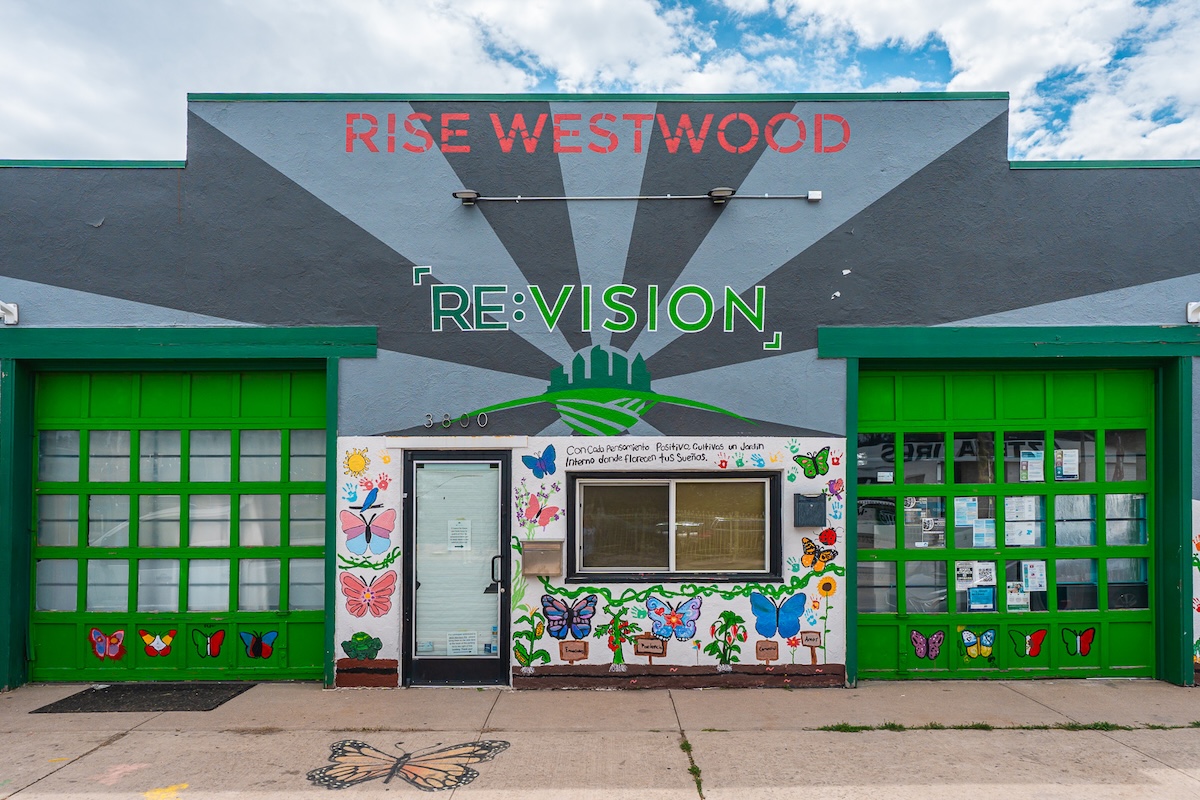
The concept’s chef and co-owner, Rubén Hernández, grew up in a small mountain town in the southern Mexico state. From a young age, he learned to nixtamalize corn and prepared barbacoa traditionally using an in-ground, wood-fired oven.
When he relocated to Denver, he pursued work in the local restaurant industry and connected himself with several chefs including James Beard semifinalist Jose Avila. Hernández helped him open his then-food truck, X’Tabai Yucateco, and worked alongside him for several years.
When Avila decided to open La Diabla Pozole y Mezcal, which is now a Michelin-awarded Bib Gourmand, he offered Hernández his food truck and the chef readily agreed. With it, he and co-owner Diana Rivero debuted La Reyna del Sur and reached out to Re:Vision for help.
“They have been an invaluable asset for our business,” commented Rivero. “The partnership with Re:Vision has allowed our business to develop and evolve in the last four years. They have included us in their culinary classes, fundraisers, and even helped us organize a cultural event highlighting Oaxaca and our cuisine.”
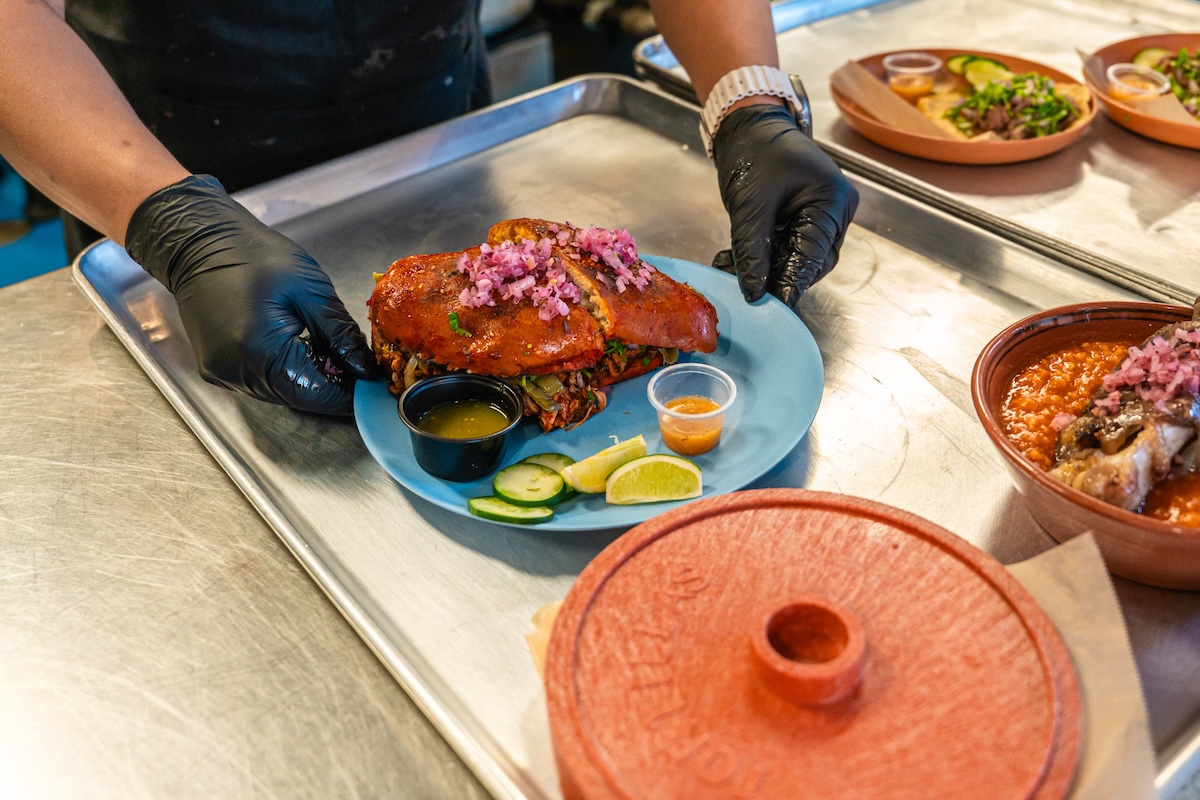
In addition to catering and events (like the Guelaguetza Festival happening in Westminster on August 1), the concept operates a pop-up restaurant at Re:Vision on Friday evenings from 5 to 9 p.m. and weekends from 9 a.m. to 2 p.m.
Community members gather for locally-sourced sheep barbacoa, which is cooked underground with herbs and spices sourced from the chef’s family farm in Oaxaca. Fork-tender and juicy, the meat is served with masa tortillas and a flavorful house salsa.
Weintraub shared her enthusiasm for La Reyna Del Sur’s expanded hours and growing clientele. “We’re really, really excited to help them realize the next iteration of their business,” she affirmed.
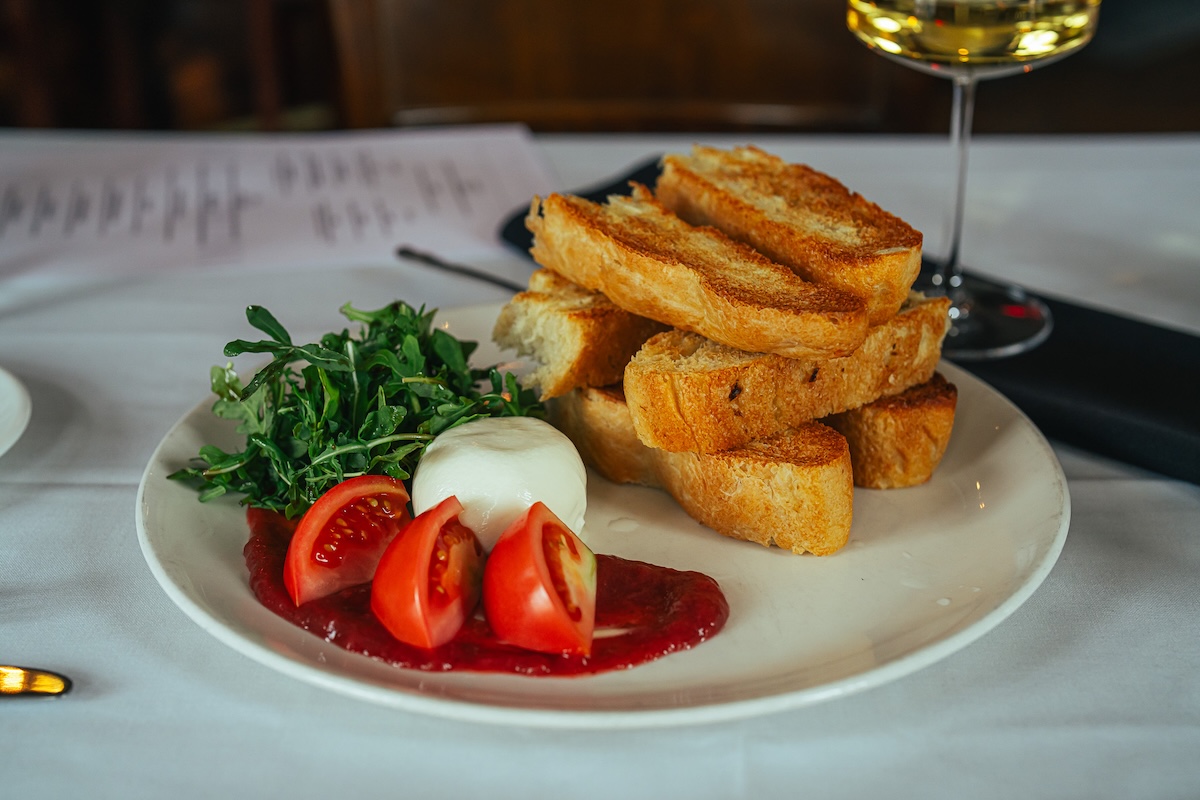
And, when produce runs in abundance and/or can’t easily be used, Re:Vision turns towards chefs who may be interested. For example, chef John Wilson of Bella Colibri in Golden took on pounds of fresh garlic scapes and transformed them into bread and sauce for the lobster. This partnership creates that symbiotic relationship important to both; and outside diners get to reap the benefits too.
Ways to Support Re:Vision
“Especially because of the current political system, but even before the current administration, barriers to access services are plenty,” commented Weintraub. “One of the things that Re:Vision prides itself in is trying to break down as many of those barriers as possible, regardless of the language that you speak, regardless of how much money you make, or how long you’ve been living in the city, we try to see every single person as a potential participant.”
All of the community programs offered by Re:Vision are free to participants and entirely funded by grants, foundations, and individual donors. Monthly donations can be made through the Colorado Gives platform, which Re:Vision links to on its website.
But, Weintraub added, “We couldn’t do what we do without our dedicated volunteers.”
Between 100 and 200 people support the urban farms and no-cost grocery each year. Individuals and large groups, such as corporate teams, can complete a volunteer interest form online.