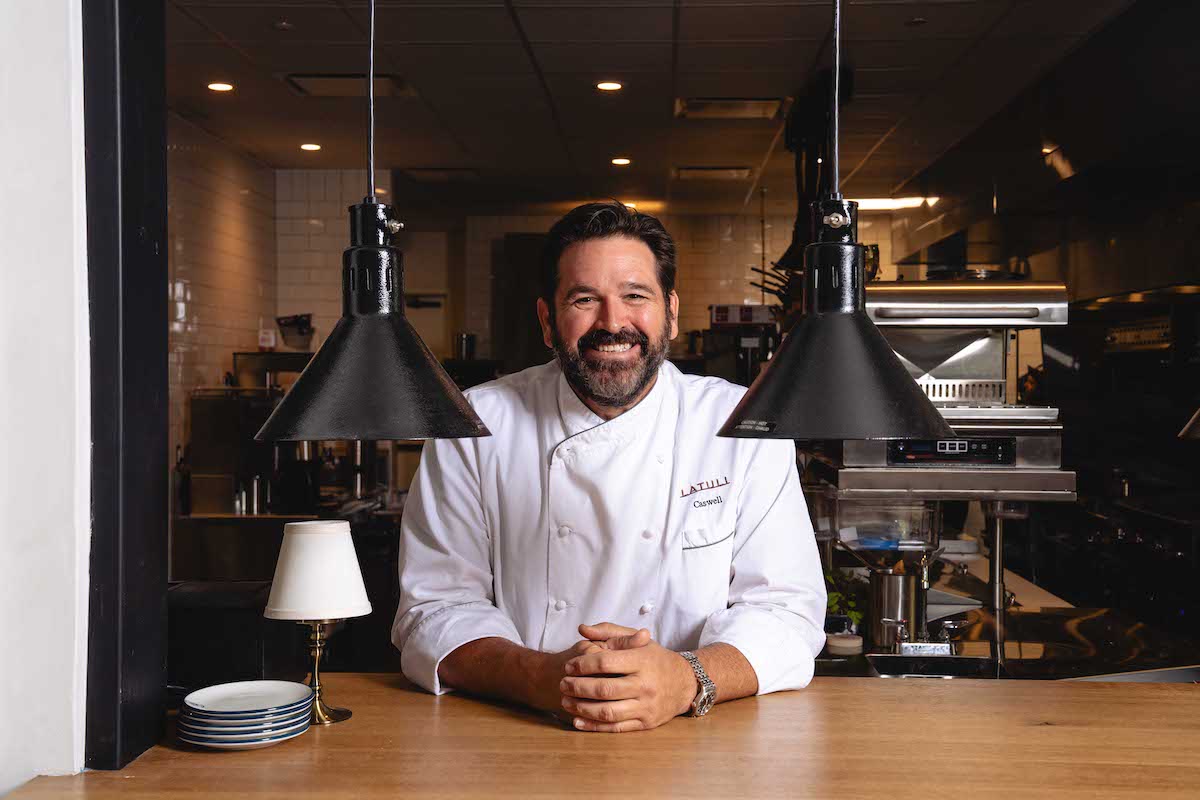
Bryan Caswell has spent much of his career chasing ingredients—not the rarest or the most expensive, but the ones with the strongest connection to the land, the water, and the people who produce them. Sometimes that means driving to meet a rancher or waiting out a week of storms before Gulf fishermen can get back on the water. More often, it means relying on relationships built over decades—relationships that have become as essential to his cooking as a knife or a sauté pan.
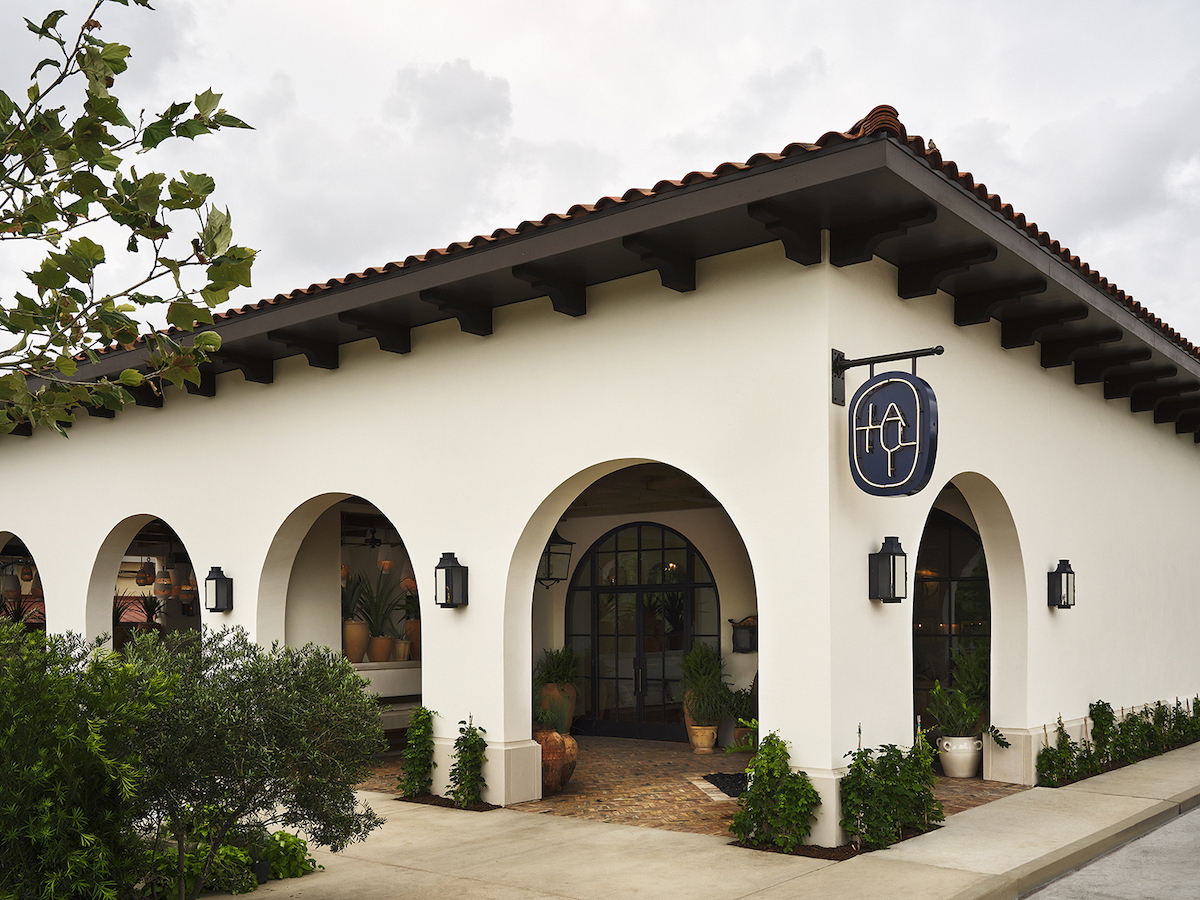
At Latuli, the Memorial restaurant he opened with owner Allison Knight last year, those relationships are the foundation of the menu. Whether it’s Gulf seafood, Texas-raised meats or seasonal produce, every ingredient reflects a sourcing philosophy rooted in the people and places behind it.
“The search is always ongoing,” Caswell says. “Like with fish, weather, availability, seasons and even cyclical holidays all play a big part.”
For Caswell, sourcing isn’t something that’s finished when the menu is printed; it’s a daily conversation.
Beyond “Local”
Few words appear on restaurant menus more often than “local”. Caswell doesn’t dismiss the idea—he just thinks it’s too limiting. “At Latuli we cast a wide net,” he said. “One hundred miles offshore to one hundred miles inshore along the Gulf Coast.”
That definition feels fitting for Houston, a city whose culinary identity has always stretched well beyond city limits. The Gulf provides snapper, shrimp, grouper and crab. Inland farms produce seasonal vegetables, while Texas ranches raise cattle that have become synonymous with the state’s dining culture. Rather than checking boxes on a map, Caswell builds the menu around what each region naturally does best.
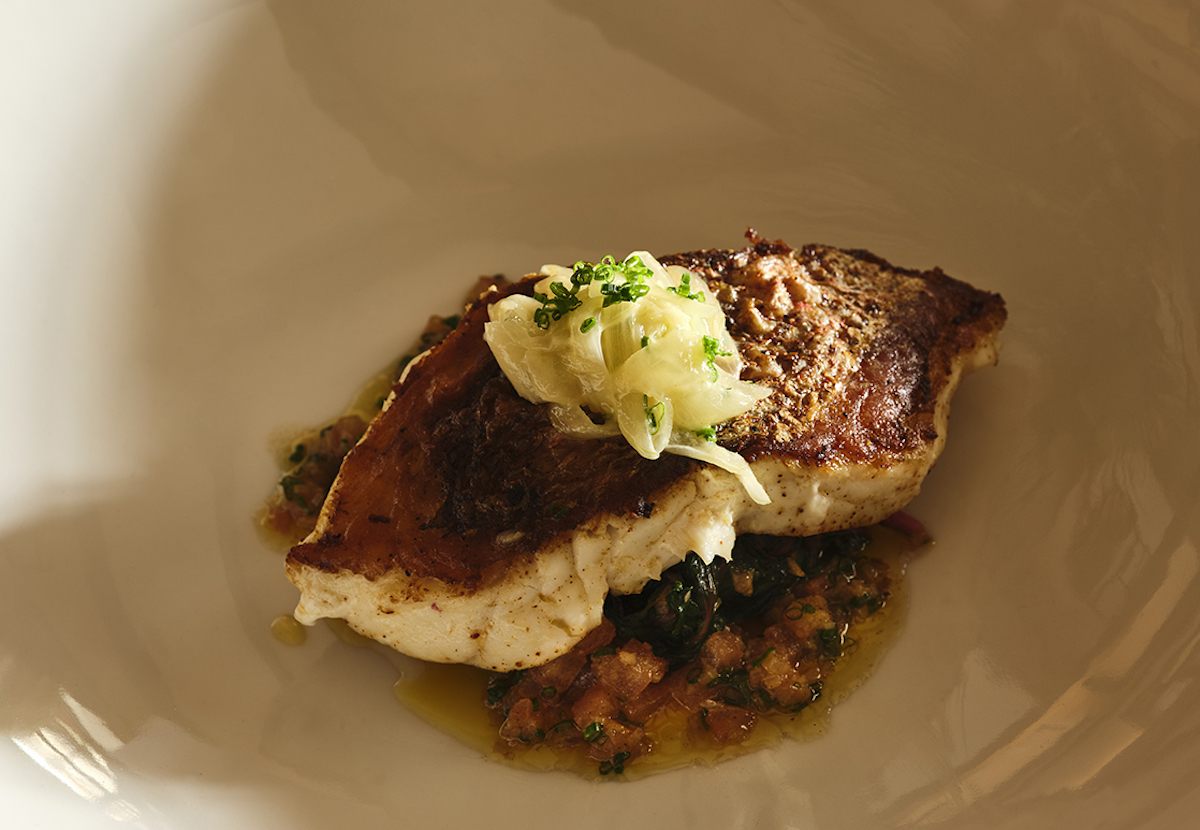
The result is a dinner menu that quietly tells the story of the Gulf Coast without announcing it. Gulf shrimp appear twice—once as shrimp cocktail with three sauces and again wrapped into spring rolls scented with Thai basil. Snapper arrives as delicate carpaccio with grapefruit preserve before returning as a roasted entrée finished with tomato brown butter. Grouper, lump crab and smoked redfish reinforce the idea that the Gulf isn’t just an influence—it’s the pantry.
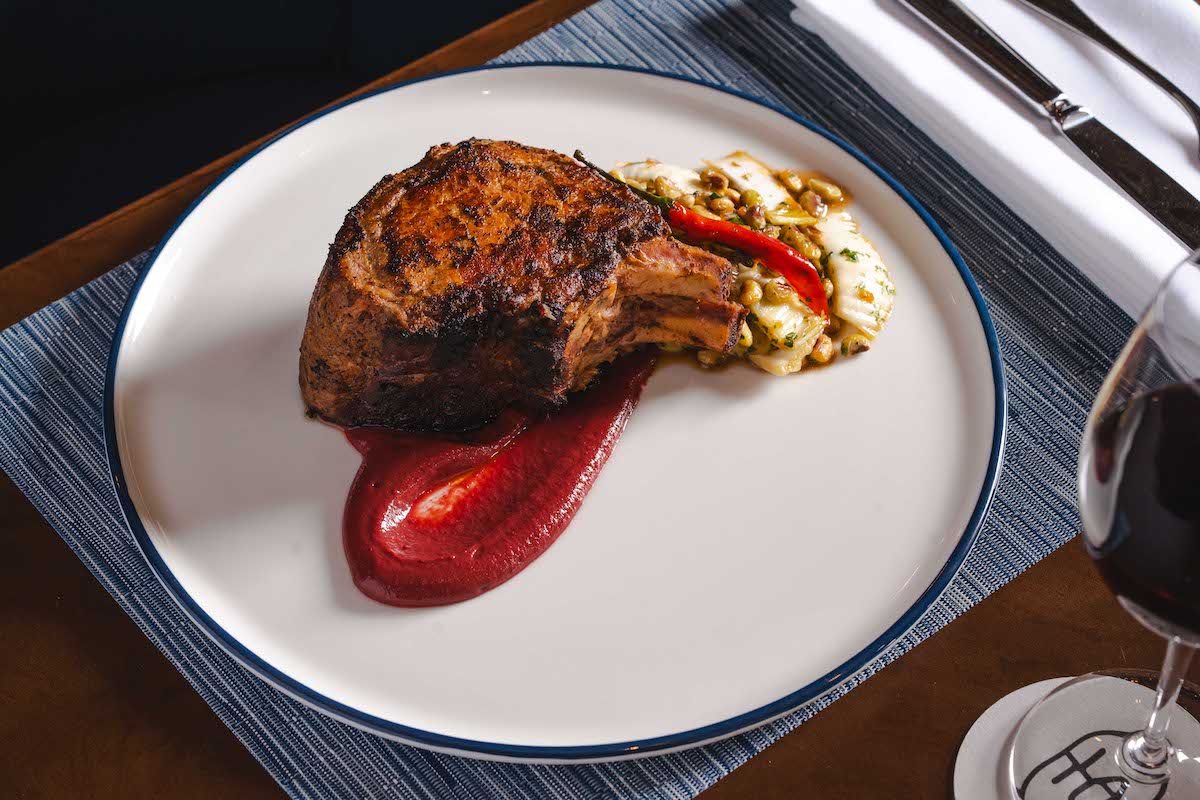
Texas’ agricultural traditions are just as present. A double-cut pecan-smoked pork chop sits alongside Wagyu barbacoa, while steaks share menu space with vegetables like purple hull peas, lady cream peas, broccolini and asparagus that shift with the growing season.
Together, those ingredients tell diners exactly where they are.
Relationships That Last Decades
Caswell’s sourcing philosophy didn’t begin with Latuli. Long before the restaurant opened, he’d spent years building connections with Gulf fishermen, many dating back to his time at Reef, his lauded Midtown restaurant that shuttered in 2019. “My seafood relationships have been a lifelong journey for me since I started Reef,” he says. “These folks are as close to me as family members without being blood related.”
That familiarity changes the way ingredients arrive in the kitchen. Fish isn’t simply ordered from a distributor; it’s sourced through people Caswell has trusted for years. Those relationships shape the menu long before a recipe is written.
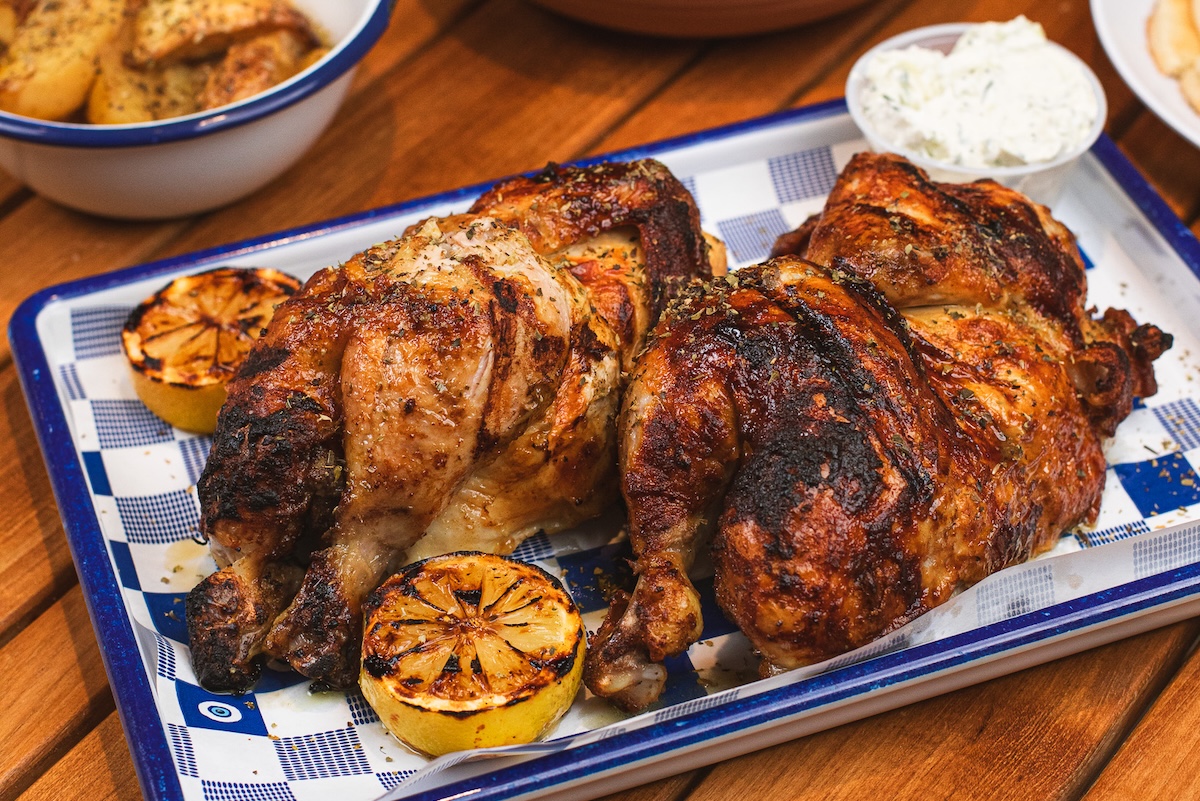
The same philosophy extends beyond seafood. One producer Caswell singles out is Greener Pastures, a farm near College Station that supplies the restaurant’s chicken. “It’s a product that reminds me of the days past,” he says. “A true chicken flavor produced with the highest standards.”
That confidence carries onto the plate. Rather than masking the bird beneath sauces or elaborate garnishes, the Greener Pastures entrée pairs it with preserved Meyer lemon, arugula, salsify boulangère and pan jus, allowing the quality of the chicken to remain the focal point. It’s a simple philosophy, but one that requires patience: when the ingredient is exceptional, the chef’s job is often to stay out of its way.
Letting the Seasons Decide
Restaurants often speak about seasonality as though changing menus is simply a creative exercise. Caswell describes something much less romantic. “Consistent availability is always a battle,” he explains. “Seasons and weather dictate availability way more than market forces. This is the deal with a true market-run menu.”
As an example, Caswell points to a recent stretch when Gulf snapper all but disappeared. Weeks of poor weather coincided with Father’s Day, one of the busiest fishing weekends of the year, creating what he calls a “snapper drought.”
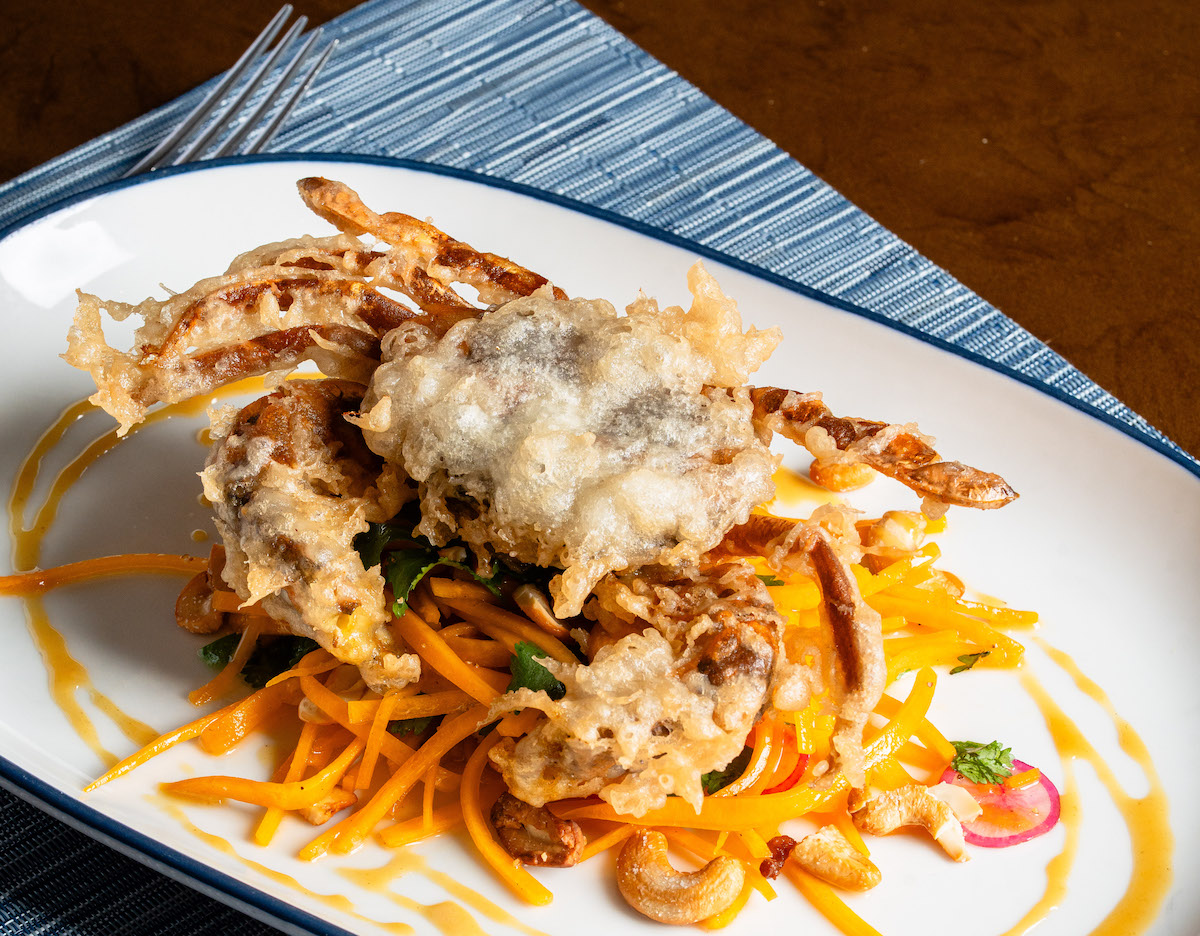
For diners, that can be frustrating. For chefs committed to buying directly from working fishermen, it’s reality. “So, the challenge is explaining to your diners why they can’t have Gulf snapper or soft-shells that day.”
Instead of expecting every dish to be available every night, diners are invited to trust that what’s on the menu reflects what’s actually at its peak. That approach is becoming increasingly rare as restaurant supply chains grow more standardized.
Houston on a Plate
Caswell hesitates when asked which ingredient most defines Houston. “This is a massive question,” he said. “Because of Houston’s diversity, I would find this question difficult to nail down.”
The answer, it turns out, isn’t one ingredient at all—it’s the menu itself. Southern staples like field peas appear in a posole verde alongside avocado and pickled serranos. Italian influences surface in house-made pastas, while Gulf seafood anchors dishes rooted in Texas. The Double Dip combines smoked redfish with pimento cheese, while Roman Holiday offers everything from cacio e pepe to wild boar ragu.
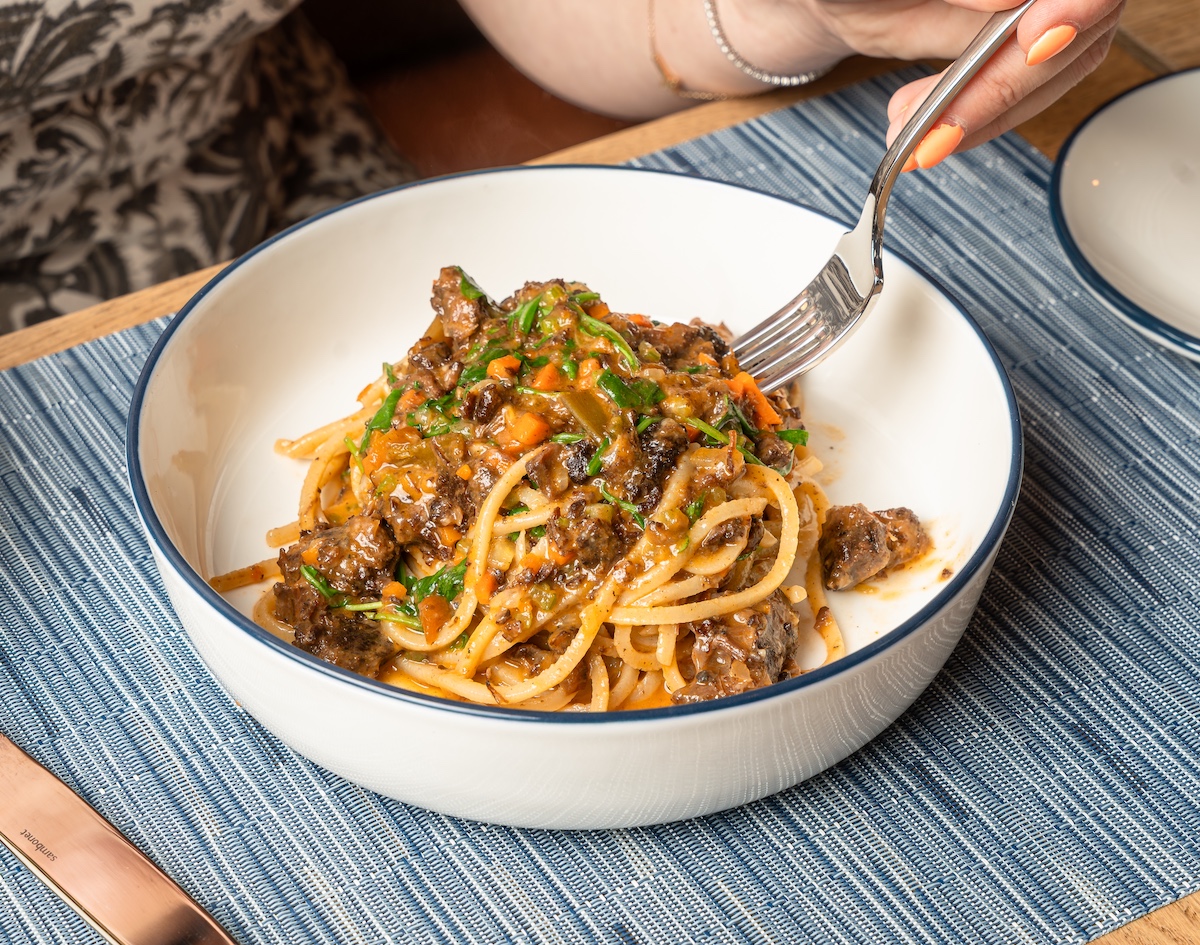
Taken together, the menu mirrors Houston’s own identity:impossible to define by any single cuisine, but unmistakably shaped by the cultures and landscapes that surround it.
More Than Farm to Table
Restaurants frequently describe themselves as farm-to-table. Latuli feels closer to people-to-table. Behind every fish is a fisherman Caswell knows. Behind every chicken is a producer whose standards he trusts. Behind every steak is a Texas ranch with its own history. Those relationships don’t just determine what arrives in the kitchen—they shape what diners ultimately experience.
The recipes matter, of course. Caswell’s decades of experience—from Jean-Georges Vongerichten’s kitchens to Houston institutions like Reef and Stella Sola—are evident throughout the menu. But for Caswell, the story doesn’t start in the kitchen. It starts on the Gulf, on a ranch or on a farm, with the people whose work gives every plate at Latuli its sense of place.
Latuli, 8900 Gaylord Dr., Houston, latuli.com