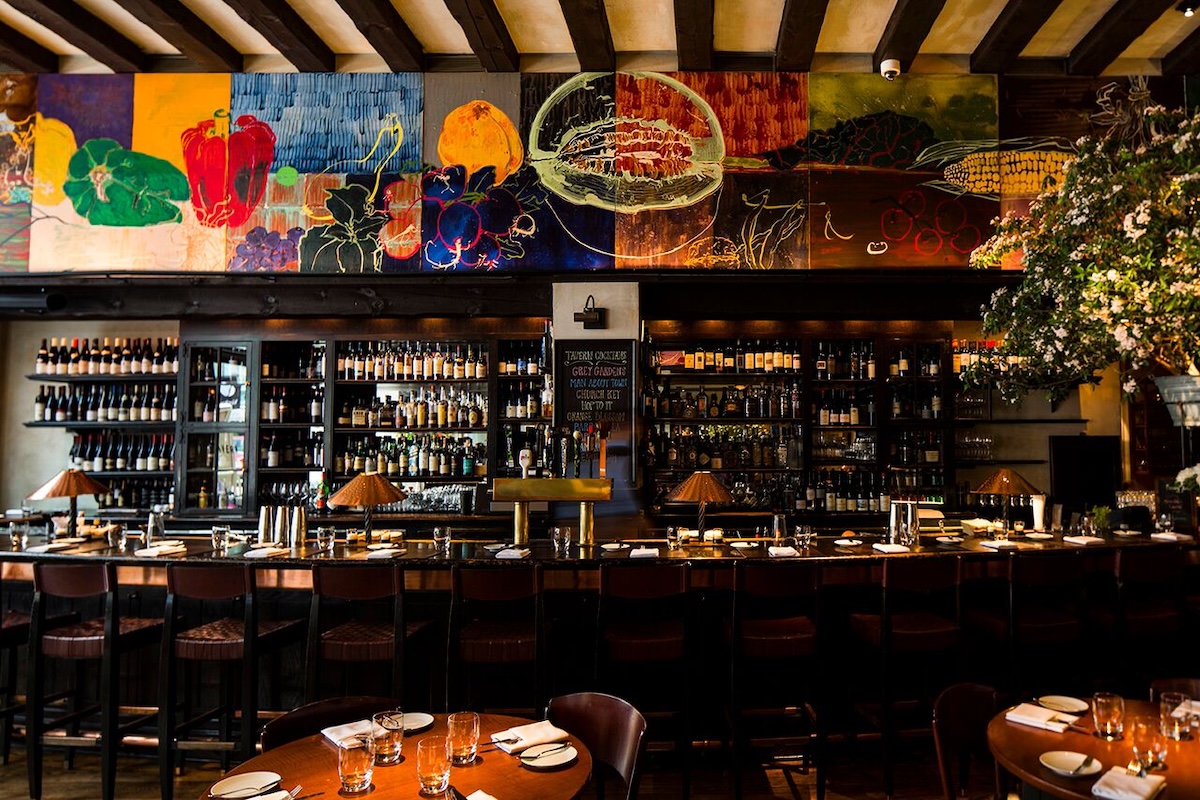
In the fall of 2006, chef Michael Anthony joined the staff of then-12-year-old restaurant Gramercy Tavern. He came into the beloved Flatiron farm-to-table spot on 20th Street, succeeding chef Tom Colicchio who left to start his Craft empire.
Anthony, who’d trained in kitchens in Japan and France before returning to the United States, had worked at esteemed restaurants in New York City, including Restaurant Daniel and Blue Hill Stone Barns, and had considered going out on his own. That was before legendary restaurateur Danny Meyer asked him to consider joining his Union Square Hospitality Group as executive chef of Gramercy Tavern.
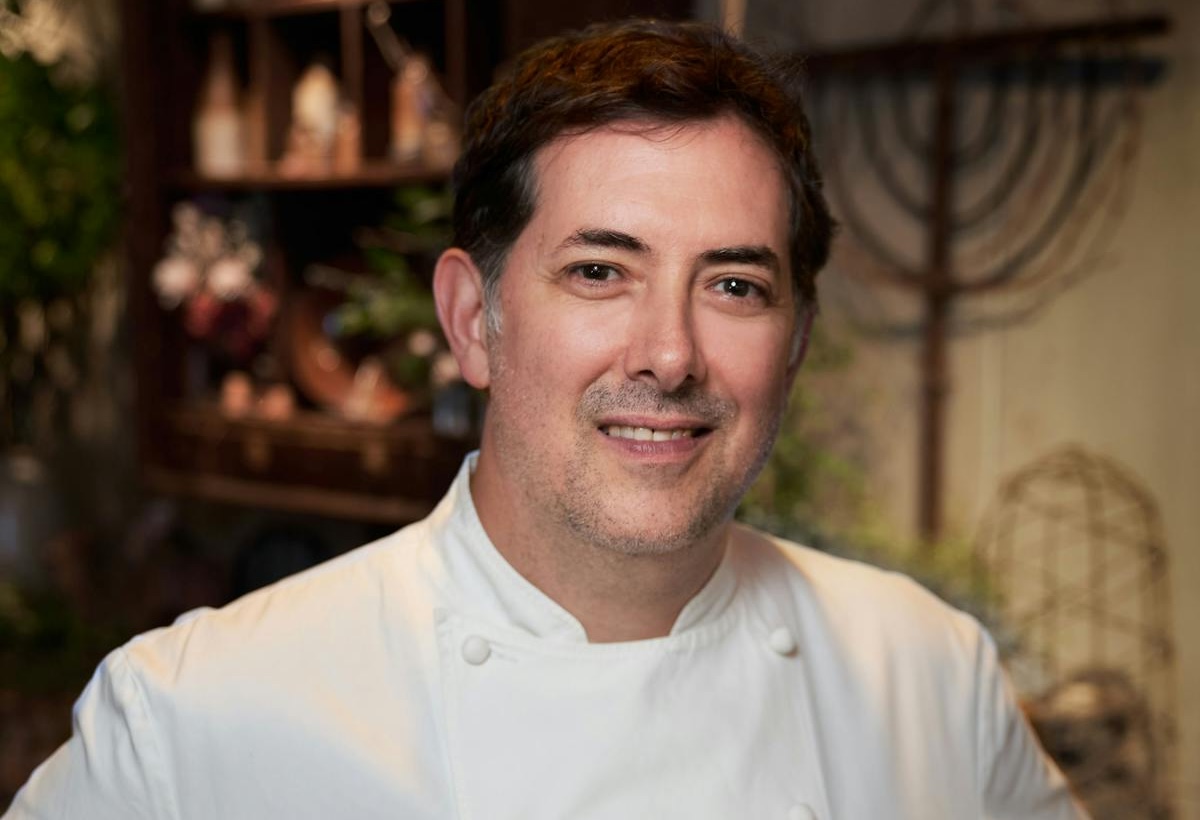
During his tenure, and through his leadership, Gramercy Tavern earned a three-star New York Times review (2007) and James Beard awards for Outstanding Restaurant (2008) and Best Chef in New York City (2012). In 2015, Anthony garnered national recognition from the James Beard Foundation, winning the award for Outstanding Chef.
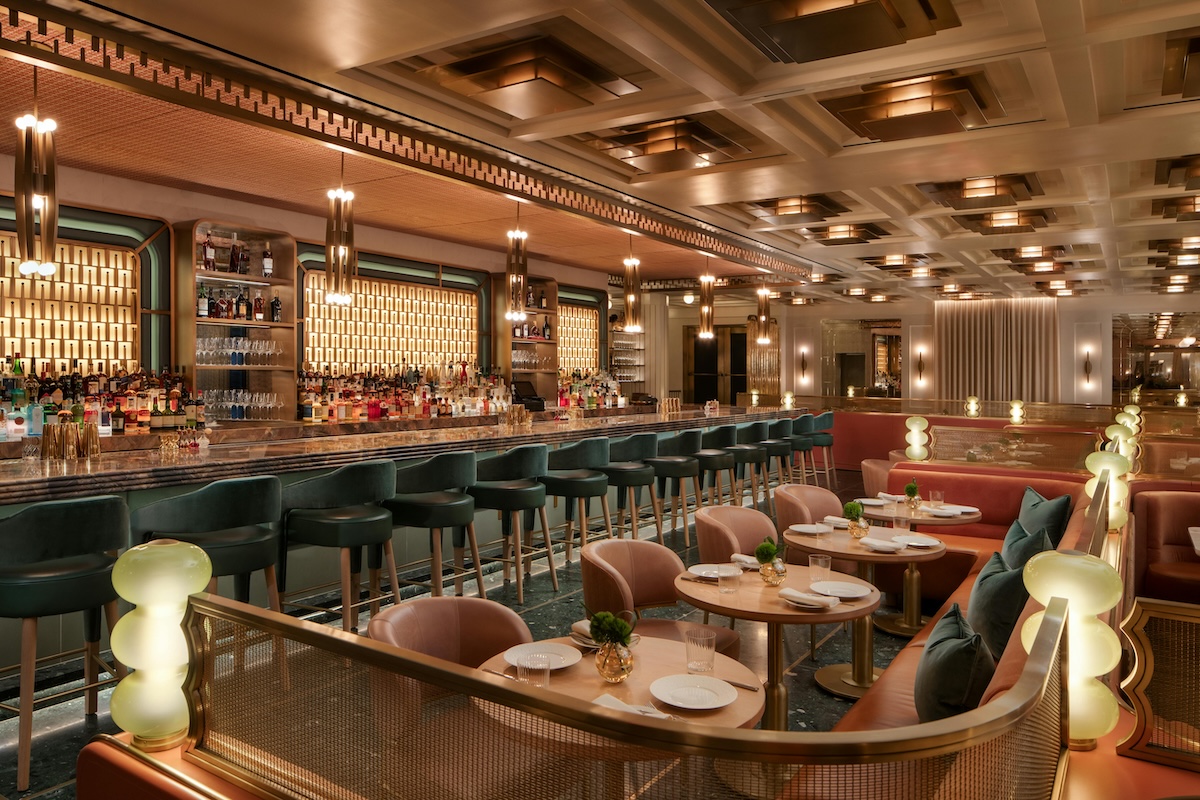
Now, 20 years later, the chef remains in the kitchen, happier than ever. We caught up with Anthony, who also helms Lex Yard, the all-day American Brasserie at the newly opened Waldorf Astoria New York, about not remembering major milestones, the state of fine dining, and the incredible Gramercy Tavern family tree.
Congrats on hitting 20 years at Gramercy Tavern. Has the milestone sunk in yet?
I grew up not taking a ton of time to acknowledge these moments in life; like when you hit benchmark moments. As a kid, my parents always made my birthday special, but work was always different. I’ve always had my head down and barely recognized any work holidays. Everyone has to remind me about work anniversaries. But 20 is a bigger number as an anniversary, and it feels good. I’m happy to be healthy and I am thrilled to still be with Gramercy Tavern. I’m still as much in love with the restaurant as I was in 2006.
And I’m equally proud of the work that this current team does. Working with 20-year-olds makes you feel younger than you are (laughs). But there’s no sense of ownership. I never use possessive pronouns, I never refer to the people I work with as “my team” or “my cooks, ”because I like to be a colleague. I still learn things every day from the people I work with, and you know what? It’s working for me! So I’m going to keep doing it, and I’ve tried to instill that into the culture at Lex Yard.
Congrats on Lex Yard too, and that makes a lot of sense. Thinking about the Gramercy Tavern cookbook, it felt like the GT cookbook as opposed to the Mike Anthony cookbook.
Right, the book obviously has recipes and it’s my cooking, but for a good chunk of time during that era, we were stewards of that restaurant. The cool thing about working in a restaurant that’s 31-years-old, is we’re stewards of what was put in place. As a chef, before I made the decision to come here, I asked myself if I could add to [Gramercy Tavern] one of the most beloved restaurants in New York City. And, thanks to Danny [Meyer], and the team, I’ve had more than enough room to add and evolve. I don’t think I could stay in a restaurant for 20 years if I couldn’t keep evolving.
Good point. Do you think the time has flown by? Do the past two decades feel like a blur?
I’ve talked to people who have worked here [over the years] and they’ll come back as a guest, and just seeing them in the restaurant feels like… it feels quite natural to see people who worked here long ago come back. Unlike many restaurants, people feel deeply connected to this restaurant long after they leave here.
True. And the Gramercy Tavern family tree has a lot of branches…
Before I worked here, I was well aware of the culture and how happy people were here. I learned that you can be on people’s side and still hold them accountable, which is rare. When I started working with Union Square Hospitality Group, EMP was part of it, so I was really impressed.
My USHG colleagues were people like Daniel Humm, Floyd Cardoz, Michael Romano, Gabriel Kreuther. I would show up for chef and GM meetings at 8:30 on Friday mornings, a crazy time to hold a chef meeting by the way, and be totally enamored with the people in the room. Having that kind of camaraderie was incredible. I would’ve paid to sit in that meeting.
I bet. And RIP Chef Floyd Cardoz, he was the best!
That was a hard loss. When you think about it, Floyd was a legendary chef, but the fact that he came from Grey Kunz’s kitchen made him beyond legendary. Grey’s kitchen was mythical. He created a lineage of superheroes. When Tabla closed [in 2010], I’ve never seen more adults crying in any one place in my life… it was heavy.
What have you learned in terms of surviving in the restaurant business?
Having lived and worked this long in the [hospitality] business, you learn that you don’t succeed if you don’t fail. No one in this business has not failed or not fallen on their face, everyone has. And the reason they’re still in the business is because they learned how to get up. I’m still learning [and] I’m still in it [laughs].
What stands out the most in terms of changes in the past 20 years?
You are asking that question right now [March 2026] with the industry’s eyes and the world’s eyes on Noma. [We are] learning how to digest this news [and] everyone is trying to come to terms with what this means.
In 2006, we were feeling the questions rise up around how people were paid and how people were treated. Everyone knew right and wrong, but some restaurants were still clinging to an old model of abuse and bad practices. I’m not going to name names, but in 2006, it was still considered normal to have a wide variety of approaches. Yes, there were people like Danny, who long ago set out to create something different [at USHG], but there were some places holding onto old practices.
In 2006, I thought I knew about restaurants, but because of the interest in the restaurant industry, and the positive evolution of the industry into the mainstream, and [foodie culture], what hit was a tidal wave of the outside world projecting real human expectations of the industry. And sadly, whether they were enforced though lawsuits, or chefs not treating people in ways that are allowed, things came crashing down. While I think there was always a question of “can you run a more enlightened culture in a restaurant?” after 2006, it was emphatically like, “you have to.”
It’s been an incredible time to be in the world of dining, in whatever capacity.
It’s amazing being an American chef at a time like this! It’s invigorating, it’s thrilling… and it’s still hard! [But] I’m a glass-half-full kind of person, and I think we’re making progress in terms of being more approachable and reaching chefs from a wider geographical area, in the States and around the world. For as much as I like to be a cheerleader for the evolution of American cooking around the country, I still feel like I work in the very best food market in the world. New York City is untouchable!
Visit Gramercy Tavern Wednesday through Saturday from 11:30 a.m. to 11 p.m., and Sunday through Tuesday from 11:30 a.m. to 10:30 p.m. 42 E. 20th St., Flatiron, gramercytavern.com
