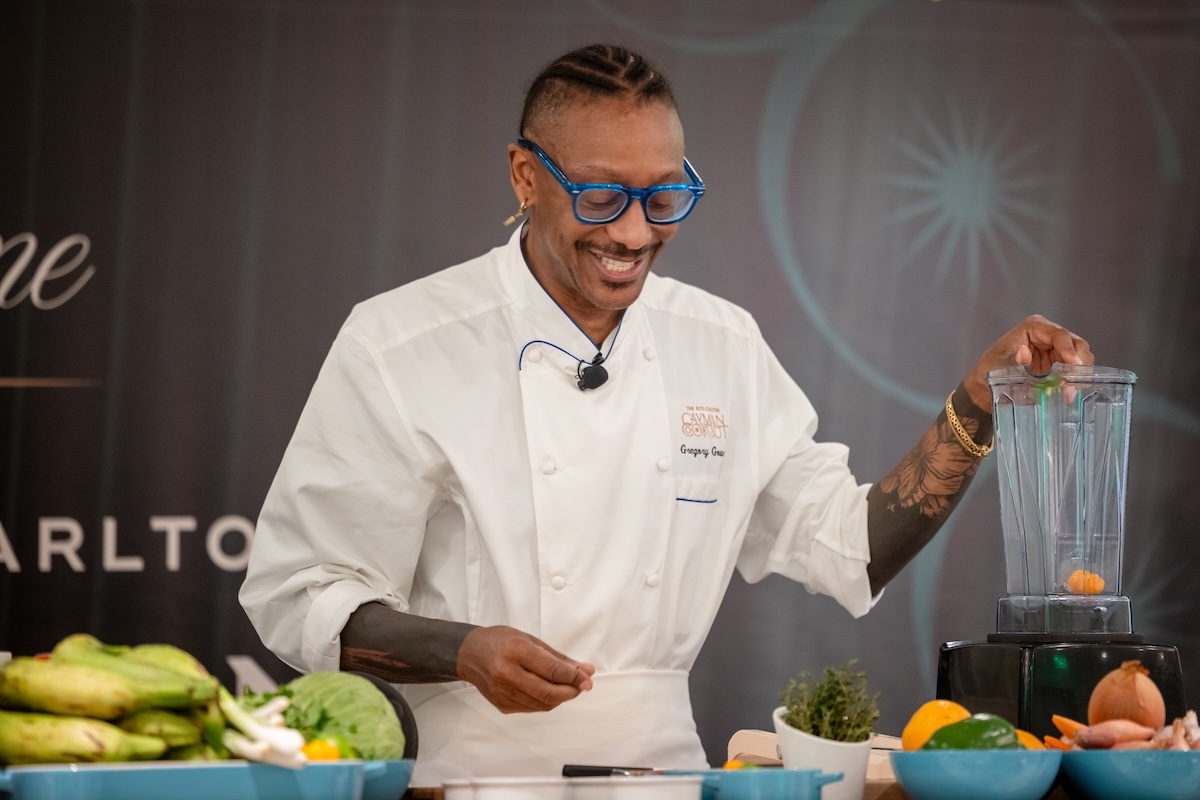
Before he was a Top Chef standout or the chef behind Kann, one of Portland’s most celebrated restaurants, Gregory Gourdet was a New Yorker. Now, after more than a decade building his career on the West Coast, he’s splitting his time between Portland and New York and bringing his signature blend of Haitian flavors and fine dining technique back to the city that shaped him.
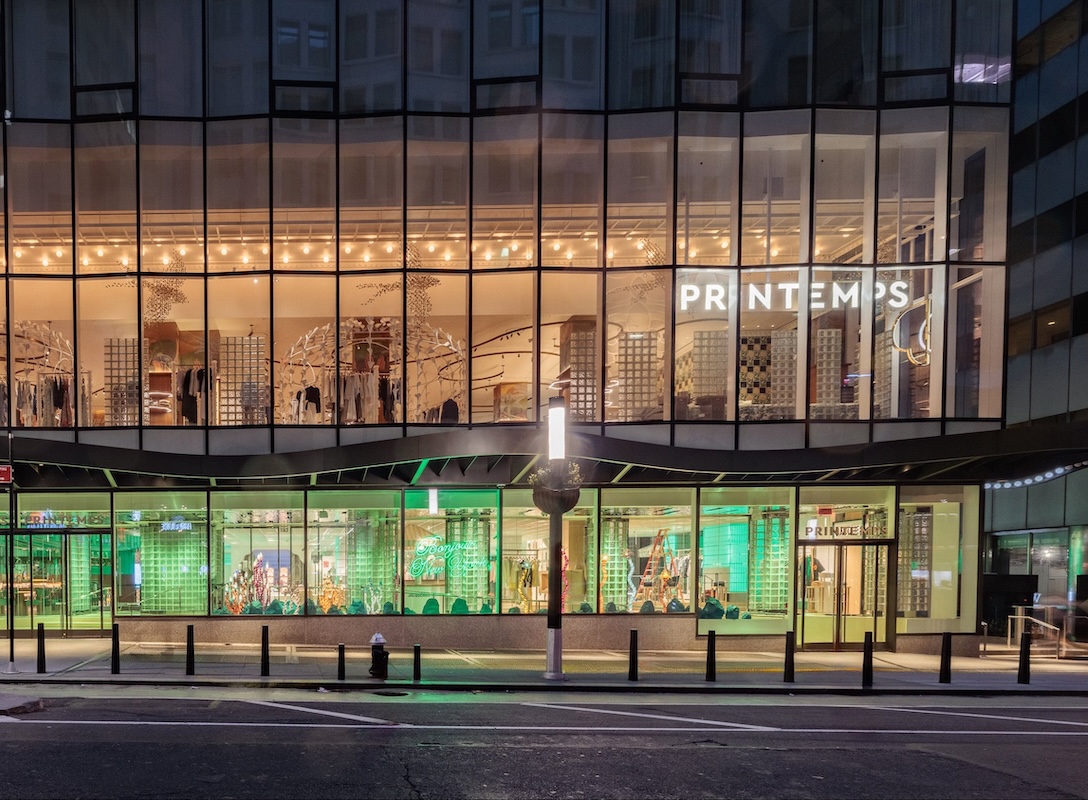
We caught up with Gourdet to talk about his new role at Printemps, a French department store located at One Wall Street in the Financial District. Aside from clothing, shoes, accessories, home goods, and cosmetics, it also boasts four food and beverage options led by Gourdet, including Maison Passerelle, Salon Vert, Café Jalu, and Red Room Bar.
We also chatted about how his New York upbringing continues to influence his cooking, and why he’s committed to elevating Caribbean cuisine on a national stage.
You recently joined Printemps New York as culinary director. How does it feel to be back working in the city, especially given your Queens roots?
It’s been interesting, but it’s been really good. I was looking for an opportunity to eventually try to do some work in New York. It came a little bit early, our restaurant was only one year old when we started talking to the team at Printemps, so it was a little nerve-racking, but it seemed like a good opportunity.
I mean, I love Portland, obviously, my restaurant’s there, but New York is my stomping grounds. [My mentor] Jean-Georges and his restaurants are right nearby. It’s been good to reconnect with all my old friends.
You mentioned your restaurant in Portland. How did you end up there in the first place?
I’ve always traveled quite a bit just as a young adult. I went to boarding school in Delaware for high school. Then I went to the University of Montana for college. [I became] familiar with Portland in the ’90s because I went there when I was in college.
A friend I had gone to culinary school with had moved there a year prior. The Nines Hotel was opening and he was going to be the executive chef. [I applied to be] the CDC of this Pan-Asian concept and I ended up getting that job and staying there for 10 years.
Are you based in New York now or still in Portland?
I live in both. I’ve lived in both for the past year. I have two apartments.
Portland isn’t really thought of as a very diverse city, but your restaurant Kann centers Haitian cuisine. How was it received?
Portland’s great. It’s not the most diverse city statistic-wise, but within the food community, I think it’s incredibly diverse for such a small city. There are a lot of different styles of cuisines, and a lot of people from different cultures. You can get great West African, Thai, Russian, Japanese…there’s a little bit of everything. The food scene there is diverse.
For me, I’ve been living there for over a decade, so I have a very strong community. I’ve probably cooked for about two million people in the state of Oregon over my time there. When we started doing pop-ups during the pandemic, it was a pretty dark and scary time, and it was really comforting for a lot of folks to be able to go out. We created these yurts, so it was outdoor dining but heated, with sound. People were flying in from all over the country to come to our first pop-up.
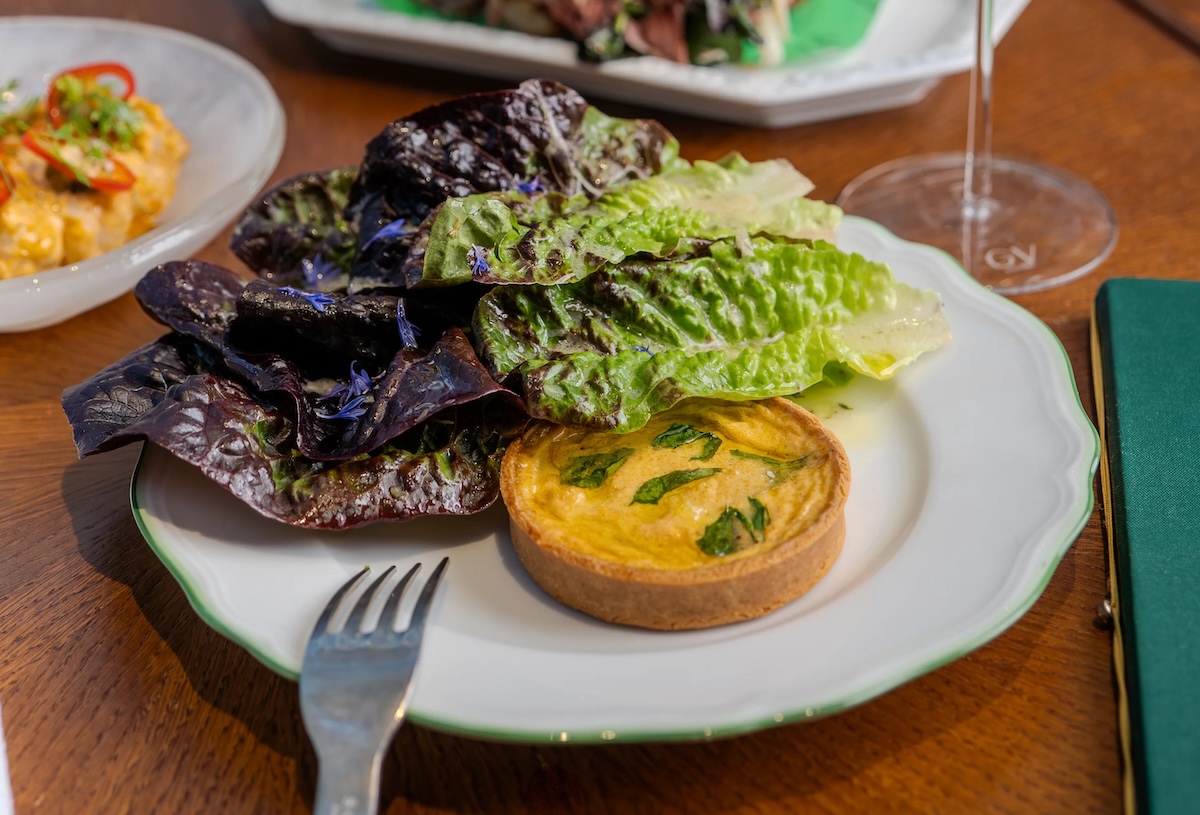
Around the same time, Top Chef came out and I cooked a bunch of Haitian food. Kann was highly anticipated by the time we opened, and we had a very long buildup because the pandemic slowed us down. We opened to a lot of national and local press, and guest feedback has been really wonderful.
Your food blends Haitian flavors with fine dining techniques. How do you approach that balance?
I think for me, it’s a couple things. Jean-Georges taught me about seasonality and luxury ingredients, so that was really important to me. Then I spent 13 years making pan-Asian cuisine because that was the restaurant I worked at, but I just felt like I was spending so much time learning about different cultures, but not spending enough time learning about my own culture.
Obviously, being super proud of my heritage, I asked my mom to start teaching me all the family recipes. I approached it from that lens of just spending time with my mom and learning all the traditional recipes that she always made.
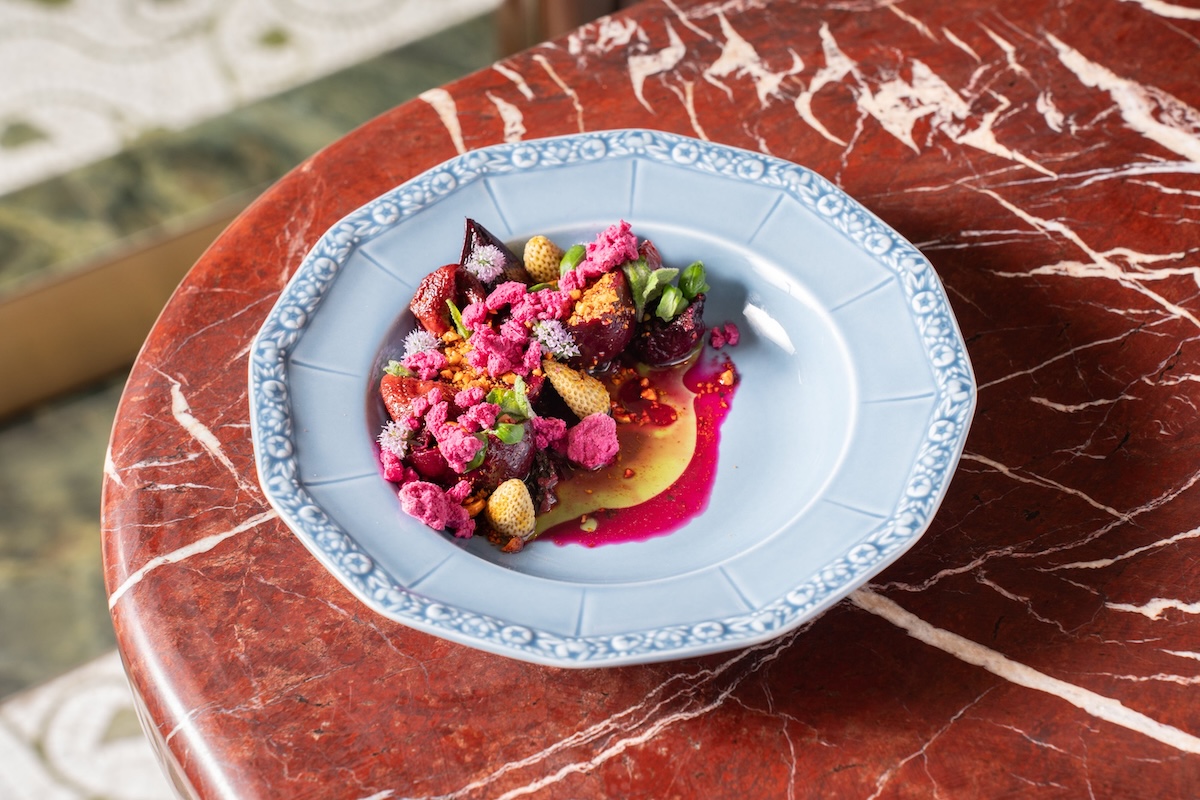
Now Kann represents Haitian flavors and culture. We honor our ancestors from West Africa and our place in the Caribbean, but it’s also a very seasonal restaurant that focuses on Oregon produce. I think it’s one of my goals just to keep elevating these flavors and giving them the space that they deserve. It’s like coming from the soul and not coming from a memorized recipe. So I think that is very important to me.
Do you see yourself as part of the broader movement to elevate cuisines of the diaspora within fine dining?
What’s happening [is that] a lot of us are entering this dining space and now that we have the tools and the techniques, we want to do something that feels more comfortable to us. Whenever we make our own food, it just feels better. As just our generation of chefs come up and open our own restaurants, we want to do what feels best in our souls…and that is make our own food.
With one foot in Portland and one in New York, what’s next for you?
My second book is coming out in spring 2027! We’re just going into edits now. It’s been about a three-year project.Beyond that, I think it’s about balancing New York and Portland. Kann is extremely important to me, and I want to spend more time there with the team and push that restaurant even further. At the same time, the Printemps project has been wonderful. I just want to keep pushing both and sharing more stories of Haiti.