
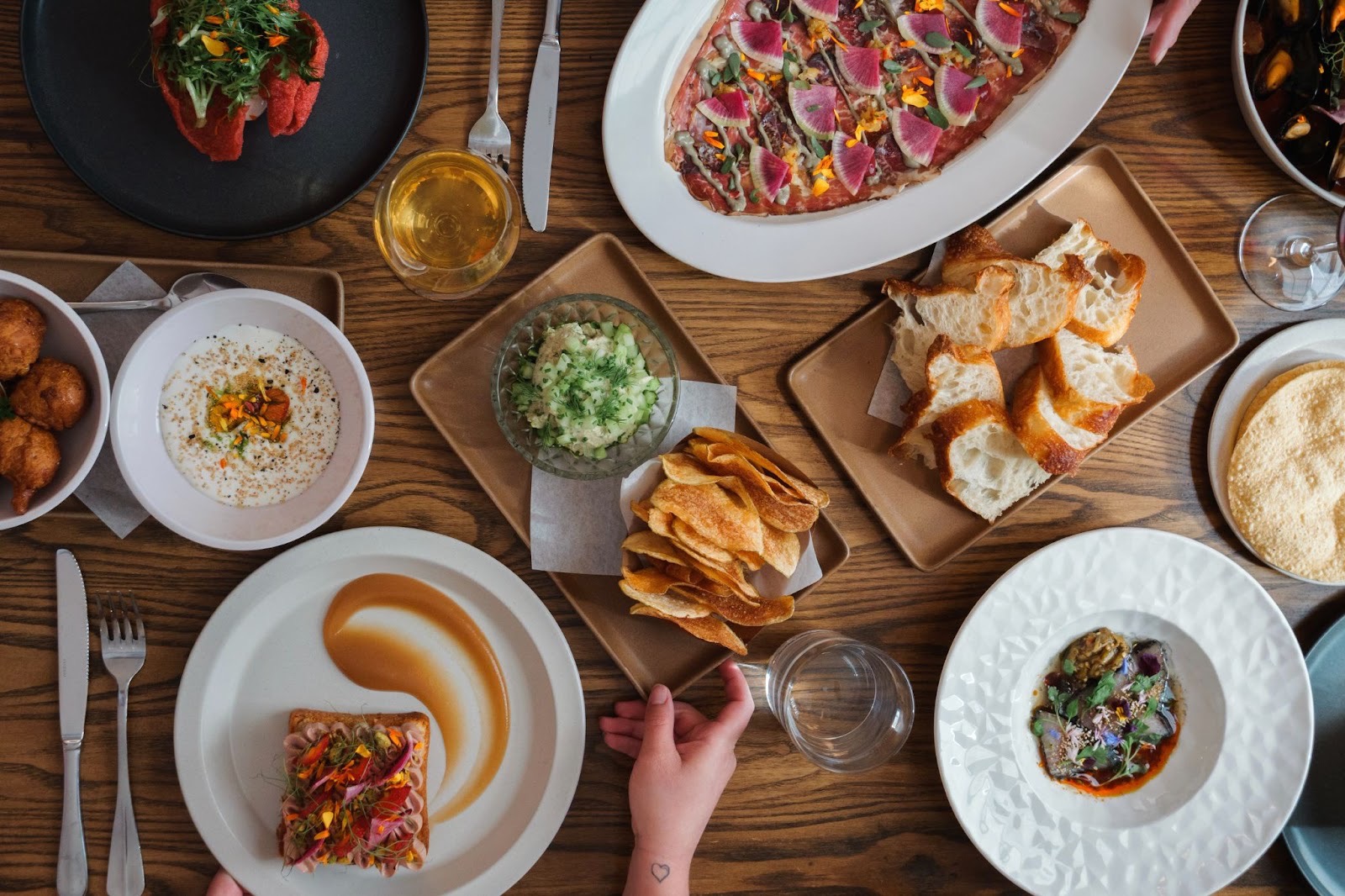
Beyond Denver, the entirety of Colorado has become a culinary destination, and national authorities have taken note. Now, for the first time, the Michelin guide will cover the whole state, and the James Beard Foundation has celebrated talent in the mountain region since 2020.
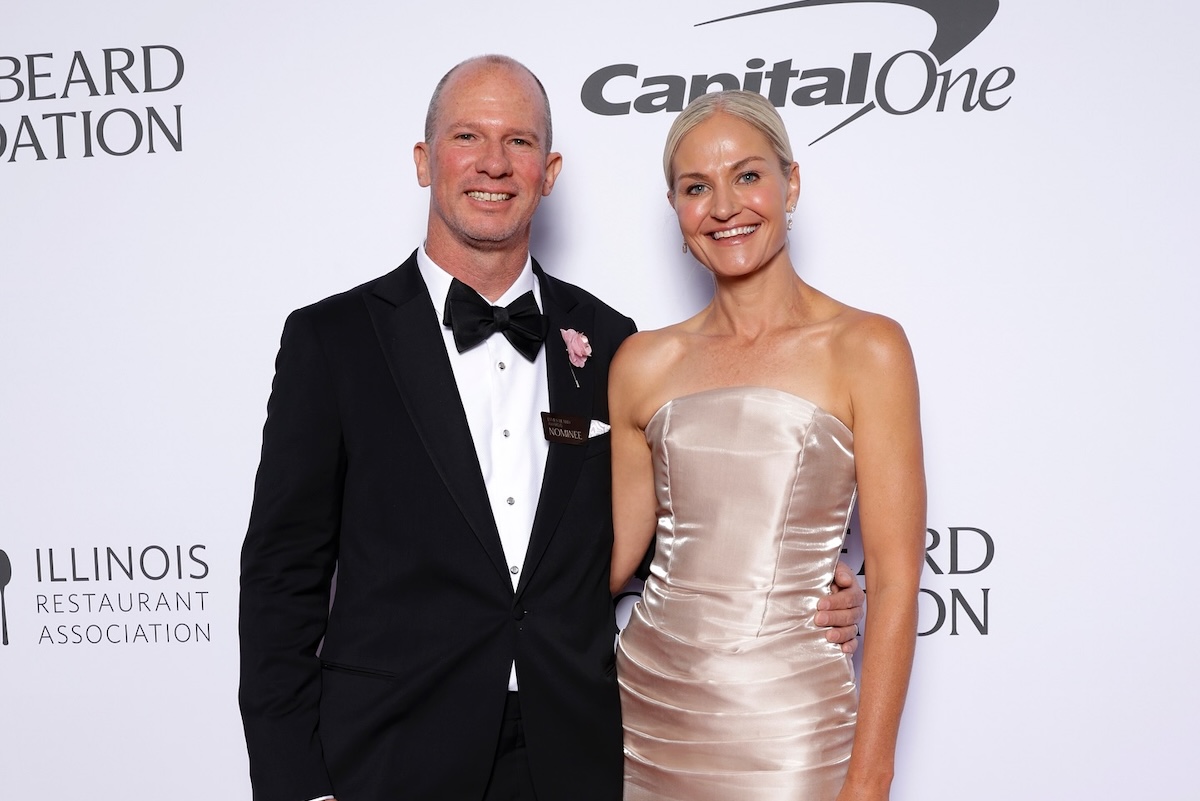
That’s when Josh Niernberg, the acclaimed founder and chef of Bin 707 Foodbar in Grand Junction, received his first of five James Beard nominations (his name appears on the latest line-up). Meanwhile, the most recent Hospy awards selected Bin 707 as “restaurant of the year” and the New York Times featured it on its annual list of the country’s top 50 places to dine.
“All of these accolades have really helped to showcase that you don’t necessarily have to be in a major metropolis to be doing something cool and unique,” said Niernberg. Unquestionably, Bin 707 checks that box and more.
The Making of Bin 707
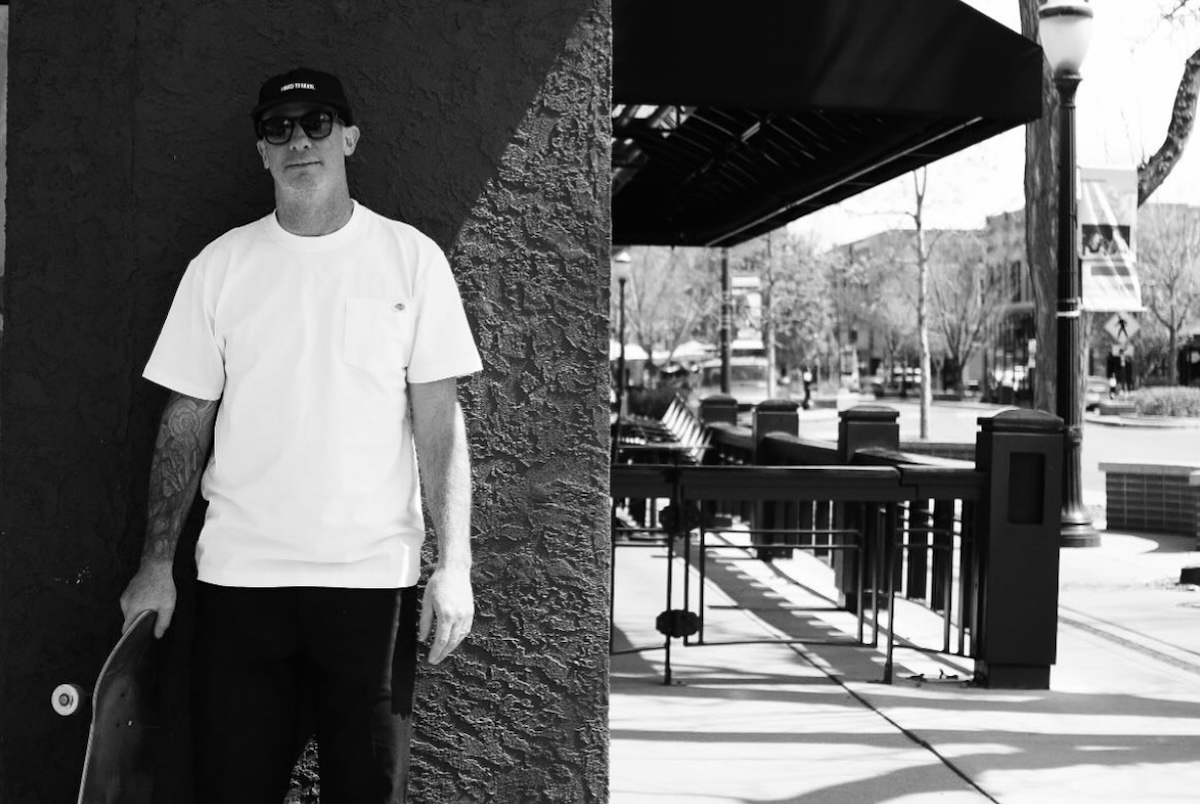
Niernberg began cooking straight out of high school but in his early years, he dreamed of becoming a professional snowboarder. While his nights were in kitchens, his bluebird days were on the slopes in Summit County and Steamboat Springs. But anything done in a career capacity, even snowboarding, starts to feel like work.
The culinary industry was not only more lucrative, but something Niernberg enjoyed. He learned various restaurant positions and eventually came to work in Denver alongside chef Sean Yontz. Together, they helped to open a slew of restaurants including Mezcal on Colfax Avenue and Tamayo in Larimer Square.
In 2007, he and his now-wife, Jodi, relocated to Grand Junction to be closer to her family. The plan was to live there for two years, but the subsequent economic recession made them reconsider another move.
Rather, they took the opportunity to open a restaurant, one that would showcase the local economy, its workforce, and the products of the Grand Valley. Bin 707 Foodbar opened under that premise in 2009 and according to Niernberg, it was “moderately successful.”
Things really picked up, though, when the restaurant moved to a downtown location in 2011. Every couple of years, Niernberg and his wife would remodel the space to keep things fresh. Yet the new colors, shiny plates, and shuffled tables always stayed on-brand (and complemented its nearby fast-casual sister concept Tacoparty, which opened in 2017).
Bin 707 operated out of that space for 13 years before moving to its current location at 400 Main St., where you’ll find its best iteration yet.
An Effortlessly Cool Ambiance
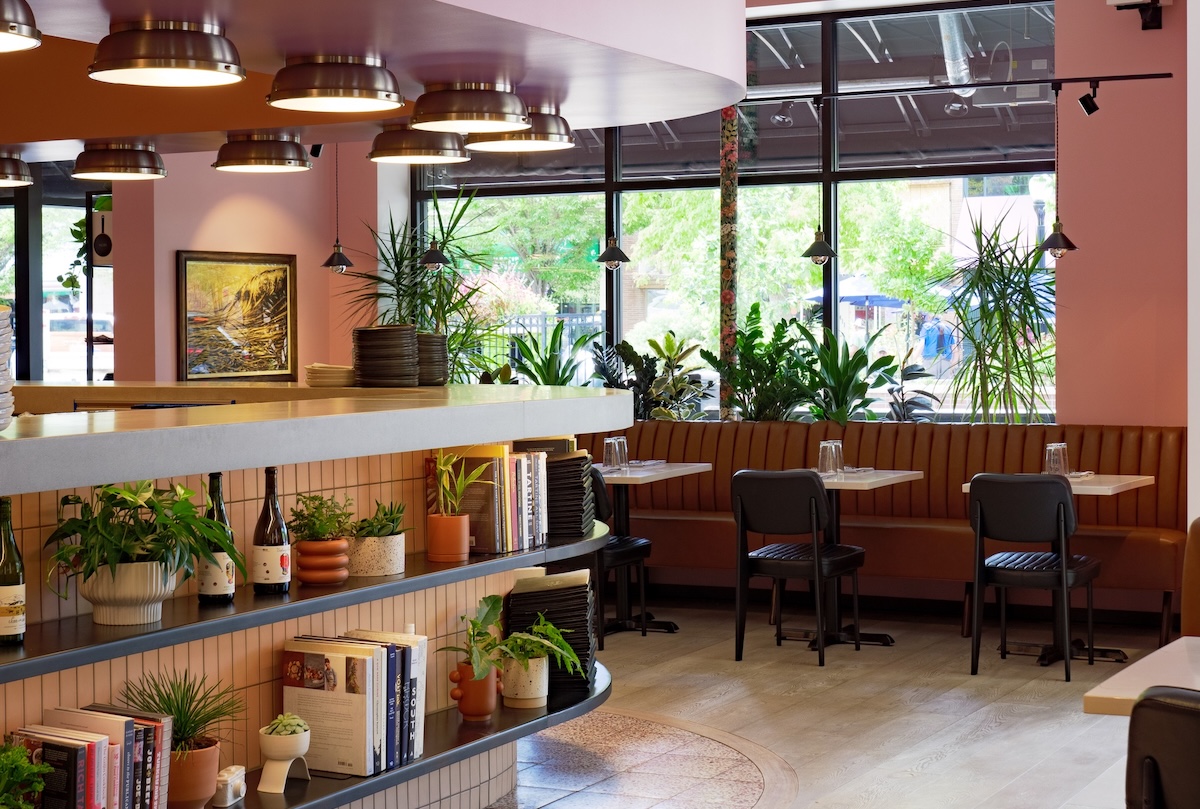
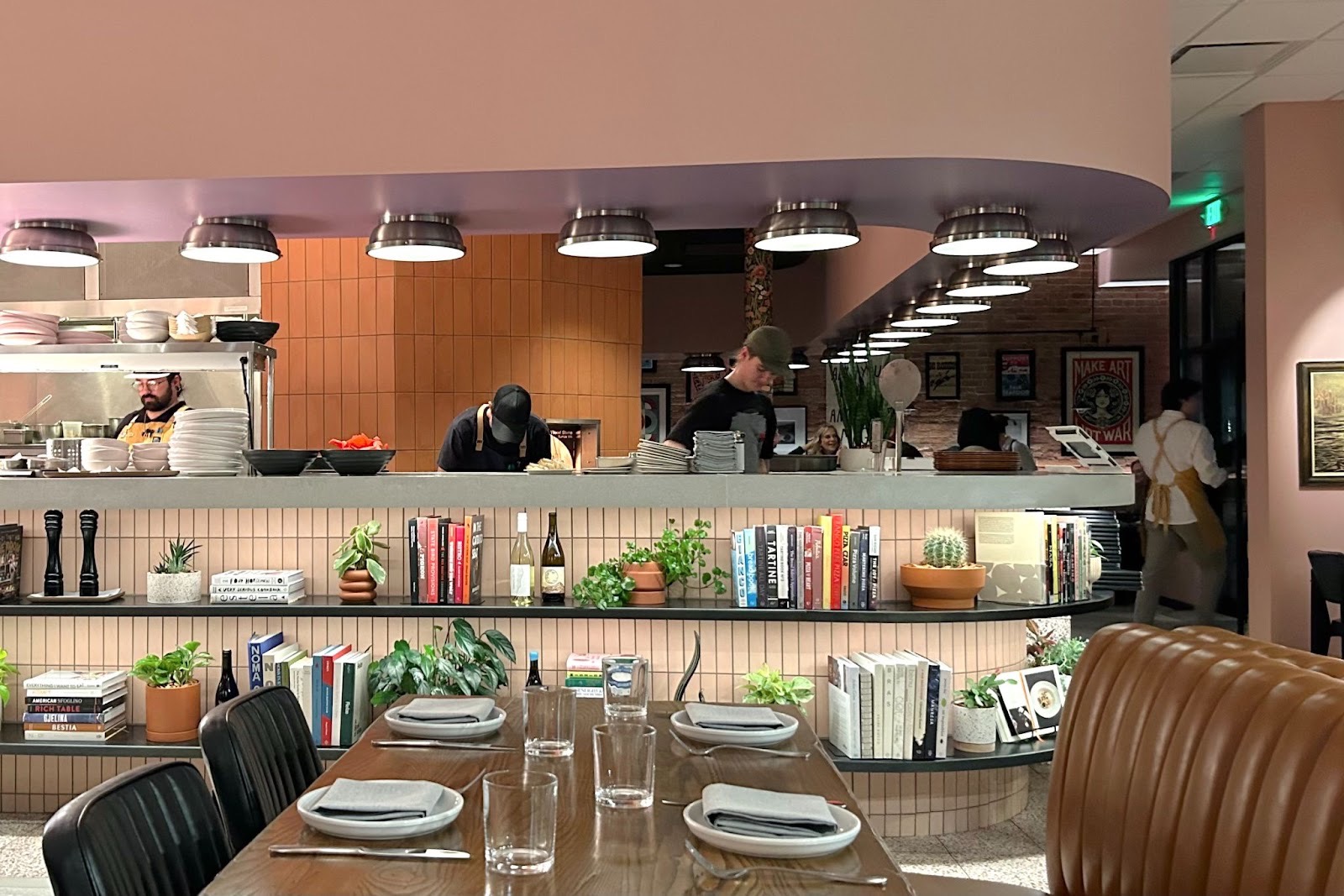
Inside Bin 707, you’ll first notice staff members bustling behind a large concrete bar, where pizzas are peeled from a terracotta-tiled oven. Steel cabinets below the counter are decorated with stacks of hardback cookbooks, potted plants, and bottles of wine. Above, industrial ceiling tiles transition into a sculpted wave.
“In terms of the design, it’s very much an extension of who Jodi and I are, what we want to represent and think is fun and cool,” said Niernberg. His numerous awards and personal art, including posters from punk bands and streetwear brands like Vans and Obey, adorn the mauve pink walls.
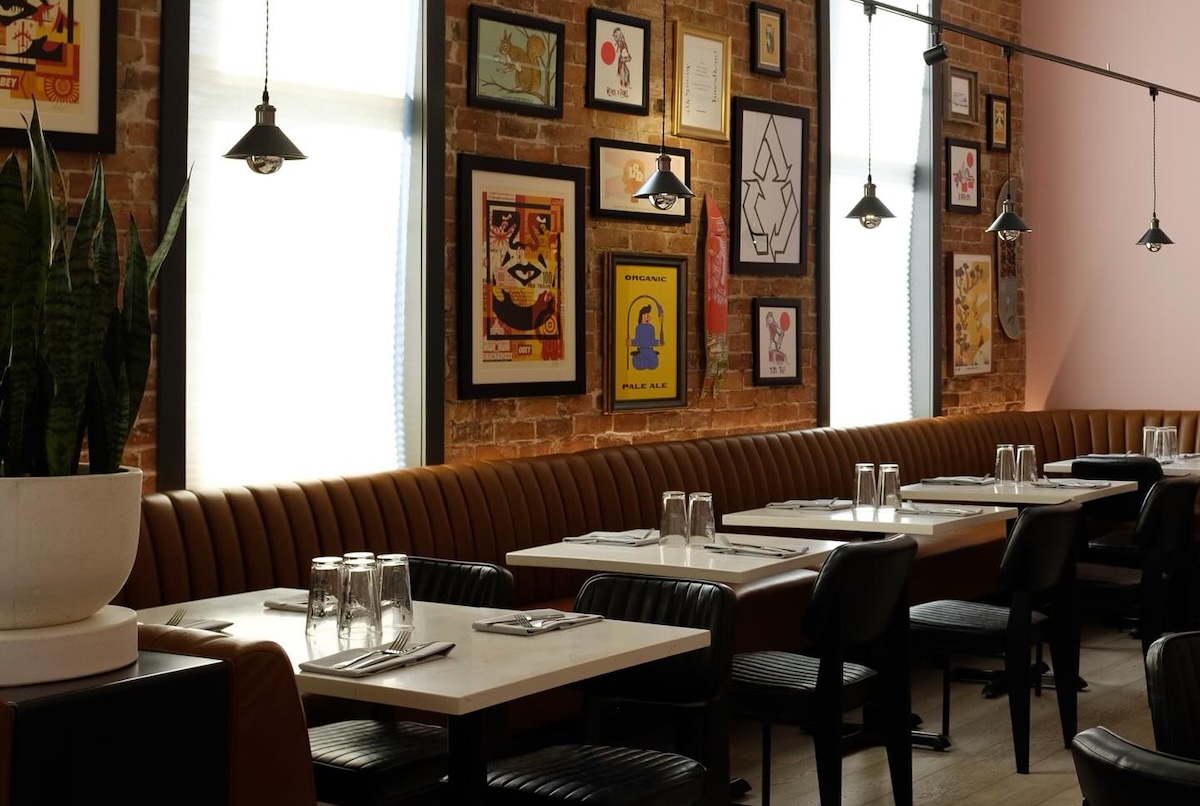
Bin 707’s moodboard reads midcentury modern diner with a snowboarder’s steez. It’s curated in a way that’s casual, yet sleek. The restaurant’s vibe doesn’t fit into a box, and that’s intentional.
When Niernberg received his first James Beard nomination, Bin was already more than a decade old. “It made me rethink the way that restaurants operate,” he said, explaining that the usual “flash in the pan” approach doesn’t work. Something newer and shinier will eventually open and steal the spotlight.
Rather than chasing trends, Bin focuses on its unique place in the world, demographics included. To Niernberg, that means considering “the cost of the items on the menu as much as it does the expectation of the guests that are walking through the door.” As one would expect, location has also greatly influenced the critically praised menu.
Regional Flavors and Inspiration
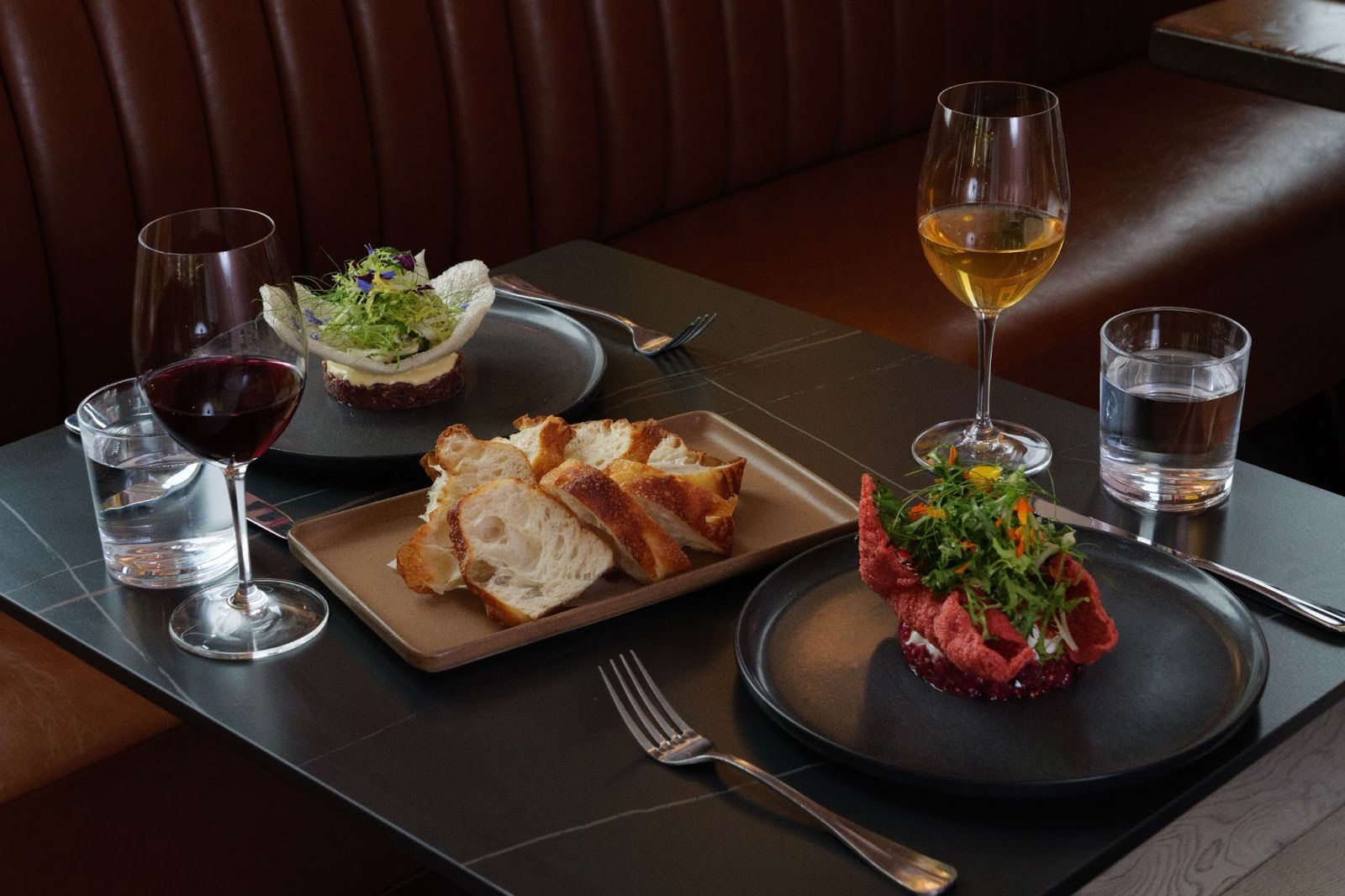
Niernberg doesn’t knock the locavore movement, but that branding and terminology don’t align with Bin 707, he explained. “The seasonal American restaurant is usually rooted in European, specifically French, fare that’s reimagined with local ingredients.”
Instead, in designing Bin 707’s menu, Niernberg took the borders off Colorado and considered the southwestern United States as a whole, as well as its major trade routes and nearby influences. Hence, in addition to a regional throughline, guests will notice inspiration from Central America, South America, and the Pacific Rim.
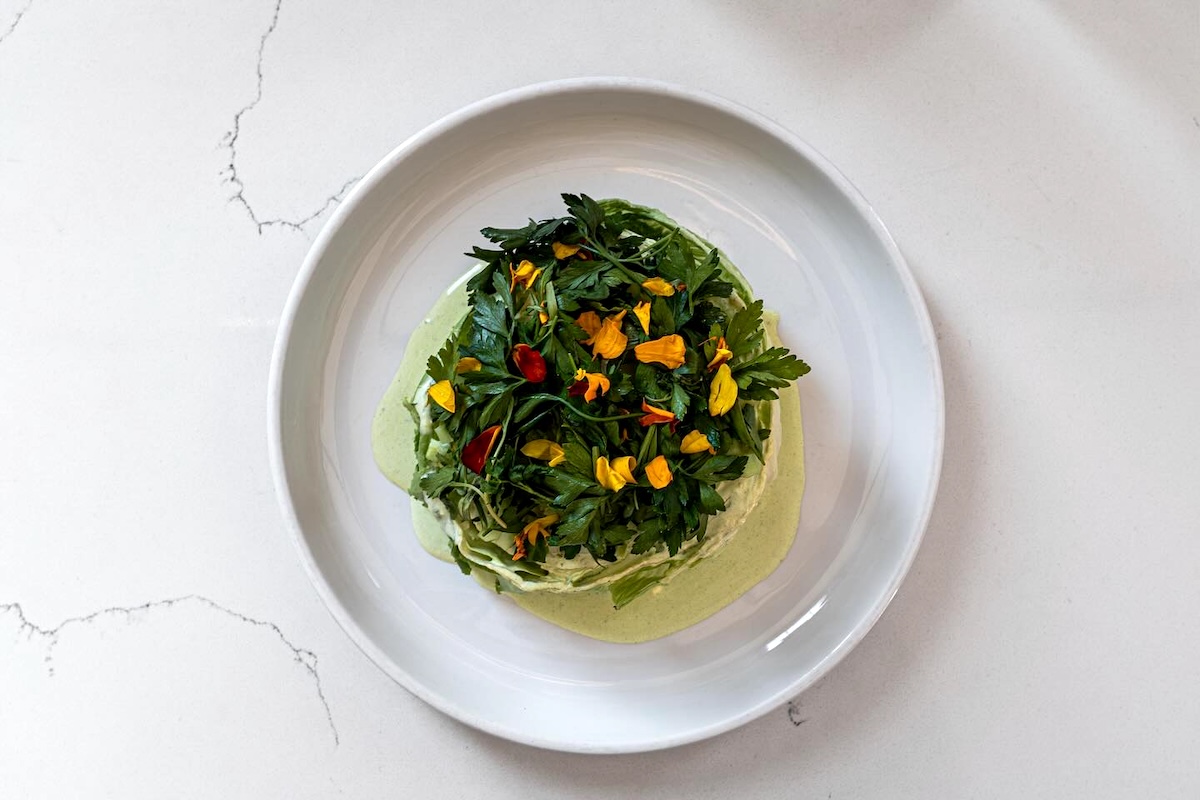
Take the signature elk tartare ($22) as an example, which features elk from Montrose and elephant heart plums from Palisade. To preserve the sour-sweet stone fruits, Niernberg uses a Japanese technique to make umeboshi, which has a flavor profile similar to olives.
“That became this locally-sourced elephant heart plum umeboshi tapenade that we use to season the elk,” said the chef. “Now, we’ve got something that is super unique to us, takes inspiration from lots of different places, but is more regionally appropriate from where we are.”
With ranching being a major industry on the Western Slope, the same goes for the restaurant’s Holstein ribeye filet ($53), which is uniquely unrolled and tied to make it eat like a tenderloin. Creamy white cheddar fondue adds to the dish, as does purple barley from Arizona. The grains undergo a short ferment, a wink to Colorado’s iconic beer scene.
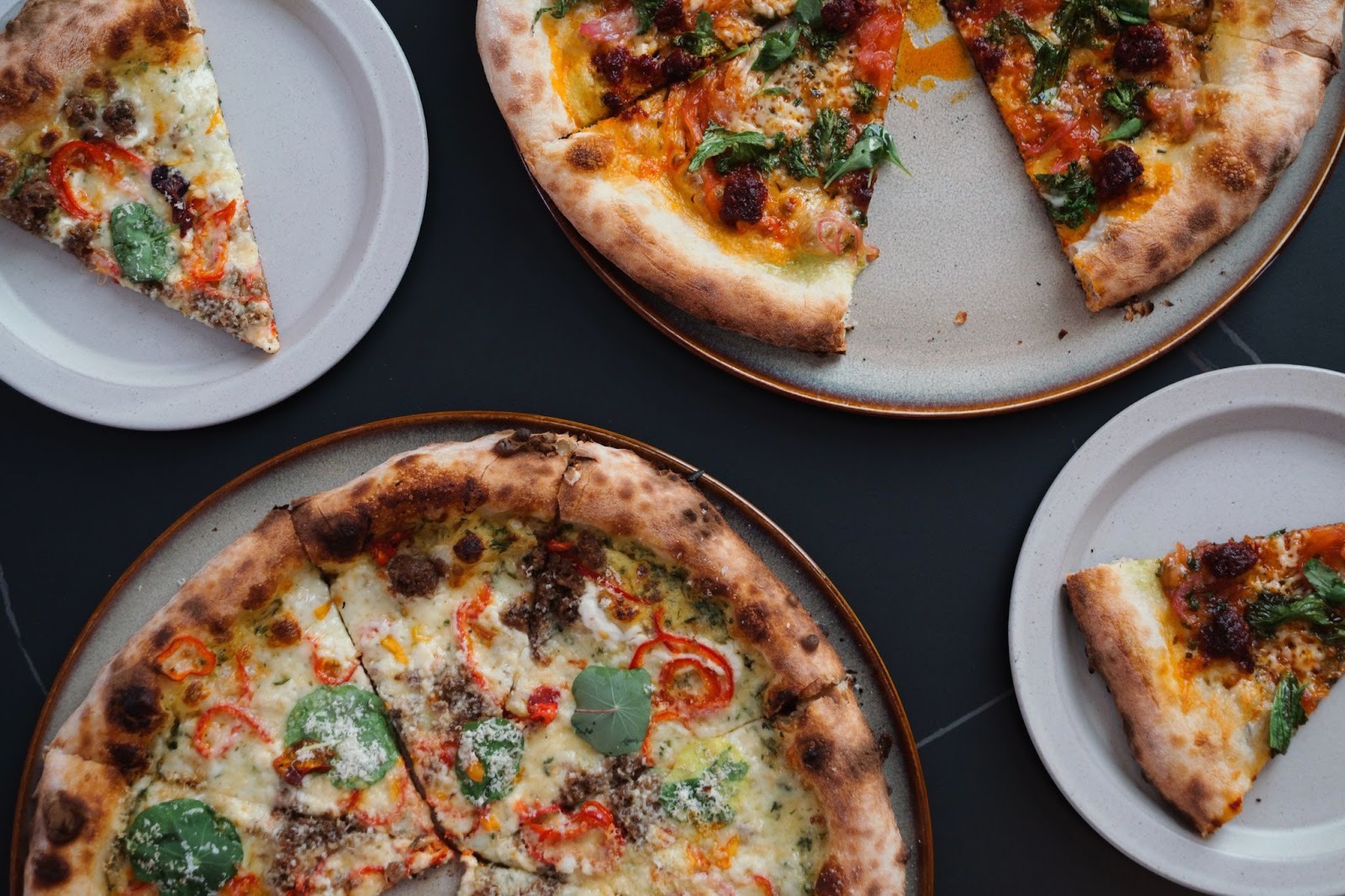
While highly recommended, you don’t need to order a lavish multi-course meal at Bin. If time or funds are limited, its carefully crafted pizzas ($22-$25) will equally wow you. Niernberg has been working the station for the past year and a half.
“It’s one of the harder things I’ve ever done, but it’s one of the things I’m the most proud of at the new restaurant,” he said.
Freshly-milled tomatoes form the base of the pepperoni pie which comes drizzled with smoky guajillo honey. The maitake mushroom pizza intrigues guests with an umami-rich miso chimichurri and scattering of fresh epazote, an herb common in Mexican cooking.
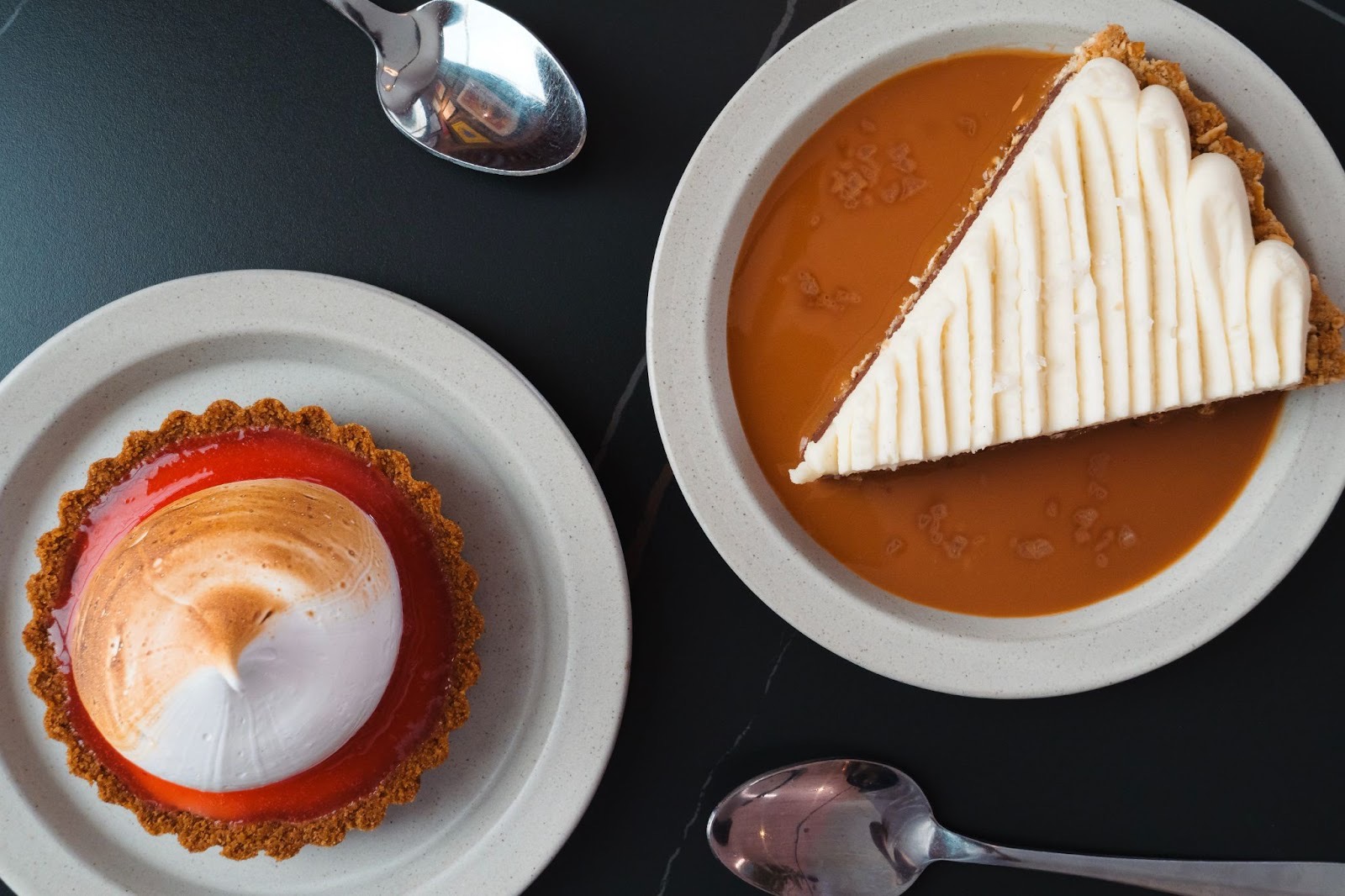
For the love of all things good, save room for dessert. Having introduced it in 2011, Bin has built a reputation for offering an incredible pie menu. Niernberg joked, “At this point, we can’t change it if I wanted to.” But the selection works, meeting the desires of casual guests and offering whimsy to those dining on a special occasion.
Spoon up every drop of the milk jam caramel served with the decadent chocolate pretzel pie ($12). Or, discover a cold, refreshing sorbet hidden beneath the marshmallowy meringue crowning the lime curd tart ($14). The only exception to the dessert menu is a cobbler, pie’s crustless cousin, which we equally love.
During summer’s peak bounty, the cobbler features Palisade peaches. Later, the filling is made from elephant heart plums. It’s an obvious example of how Bin navigates seasonal shifts.
One less obvious application relates back to the elk tartare. “We make fruit gastriques as one of the many ways to preserve all the fruit that we have, and then those gastriques will turn into a béarnaise,” explained Niernberg. Currently, the signature dish features a pear infusion; previous iterations have incorporated apples, peaches, and plums.
“The primary menu items themselves don’t change a lot, but the menu items are built in such a way that they evolve throughout the year based on what’s coming through,” said Niernberg. It’s just one of many reasons to keep coming back.
Natural Wines and Clever Cocktails
One could wax poetic about all that’s wonderful about Bin 707: the mind reader-level service, the phenomenal ambiance, and the food. Not to mention, the restaurant has a fantastic list of natural domestic wines and cheeky cocktails modeled after songs on its alt-indie playlist, which you can listen to on Spotify no matter where you are.
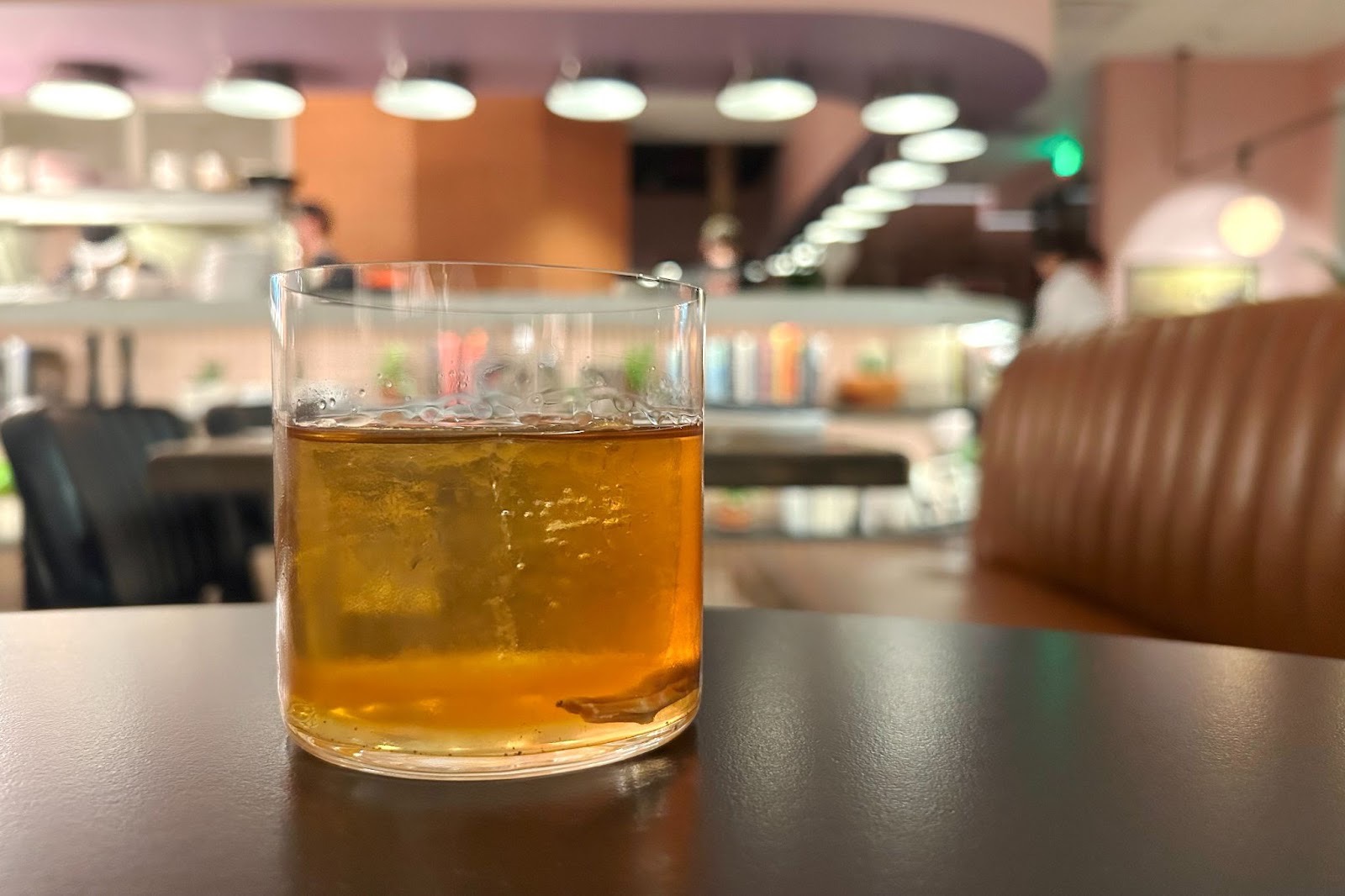
For instance, consider the old fashioned named Where Is My Mind ($15), a tribute to a Pixies song inspired by swimming in the ocean. Drawing from those lyrics, Niernberg, alongside longtime staff members Jeremy Arthur and Shay Walz, decided on a dashi-washed bourbon base. A candied beech mushroom garnish builds on the dried seaweed’s rich umami flavor.
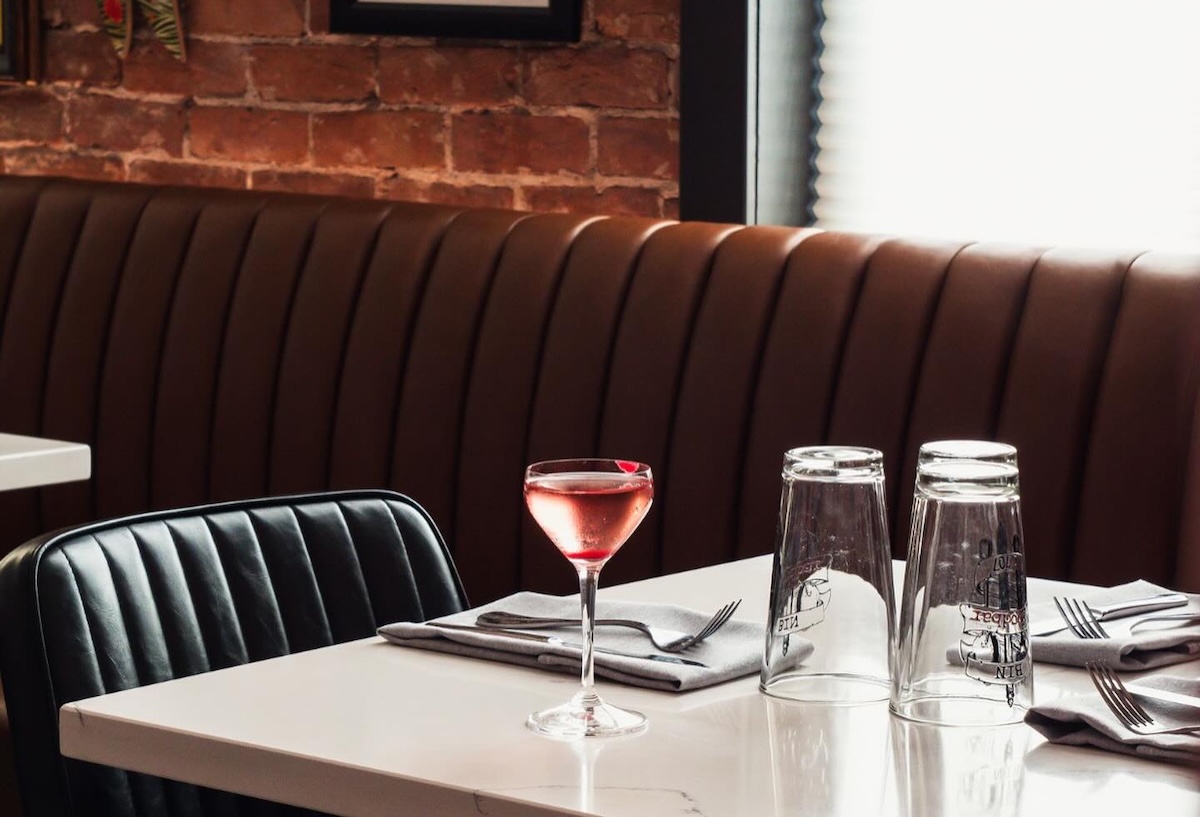
“We’ve really not put a lot of emphasis on it, but kind of hidden it in plain sight,” commented Niernberg of the cocktail menu. But really, there’s unrealized intention in so much of what he and the team at Bin 707 do. It’s wildly impressive and 1,000% worth a road trip.
Visit Bin 707 Foodbar from 4:30 to 9:30 p.m. on Mondays through Thursdays; 4:30 to 10 p.m. on Fridays and Saturdays; and 5 to 9 p.m. on Sundays. Reservations can be made via Tock. 400 Main St., Grand Junction, bin707.com


