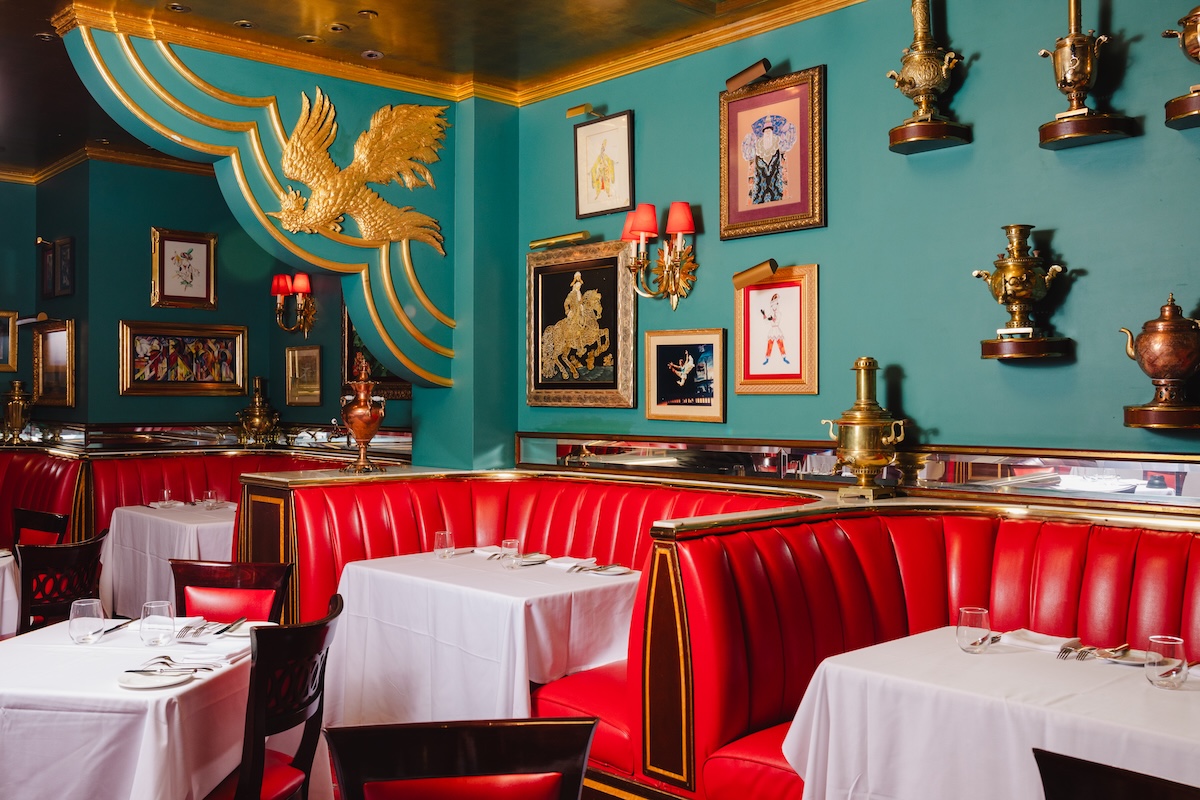
The etched revolving doors on 57th Street belie the opulence that lies within the Russian Tea Room, where gold firebirds swoop down from 24-karat ceilings, gleaming samovars fill the corners, and Art Deco chandeliers hang with baubles. Gold-framed art lines the walls, including, improbably, a Harrison Ford portrait. Crimson leather banquettes sit against walls so deeply green that, as Frank Bruni once wrote in the New York Times, every day feels like Christmas.
The storied restaurant has been like this for decades, and as it turns 100 years old, the Russian Tea Room wears its legendary century of flamboyance well. With each layer the story gets richer and more glitzy, which makes visiting the institution even more enticing.
How a Chocolate Shop Became a Legend
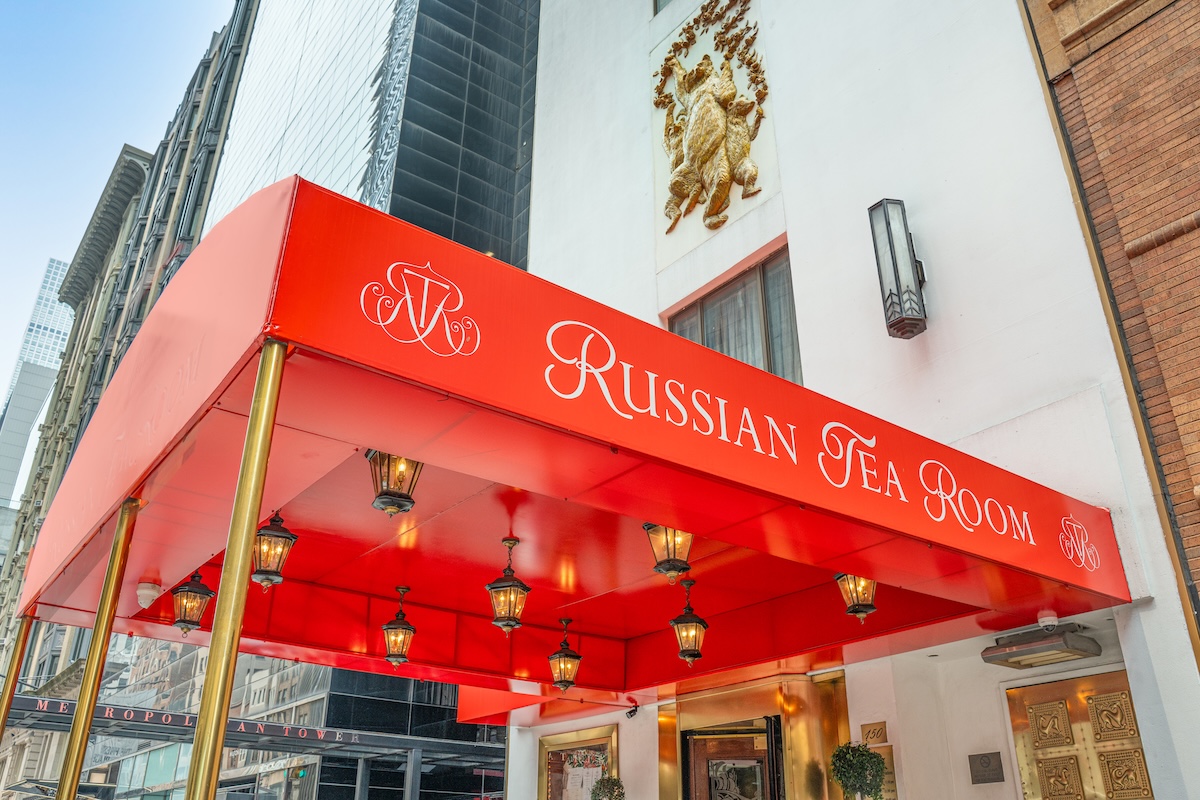
The Russian Tea Room wasn’t always the pinnacle of opulence. The space launched in 1926 as a tea and chocolate salon opened by the Polish chocolatier Jacob Zysman. It grew in popularity thanks to the Viennese dancer Albertina Rasch, who gave the place its earliest identity and its name, drawing fellow performers and musicians into the modest wicker-chaired space for tea and cakes after rehearsals.
From the start, there was another constituency too: Russian émigrés who had fled the Revolution, many of them former White Army soldiers, who found in this little salon something that felt, however faintly, like home.
In 1927 the concept moved across the street into what was then an Italianate brownstone, and in 1932 passed to an actual Russian, Sasha Maieff, who had owned a halvah factory in Moscow. He installed a proper kitchen, ripped out the soda fountain, and put in a bar where the vodka flowed. Upstairs, at one point, was a speakeasy supper club called Casino Russe, with flame eaters, violinists, and singers.
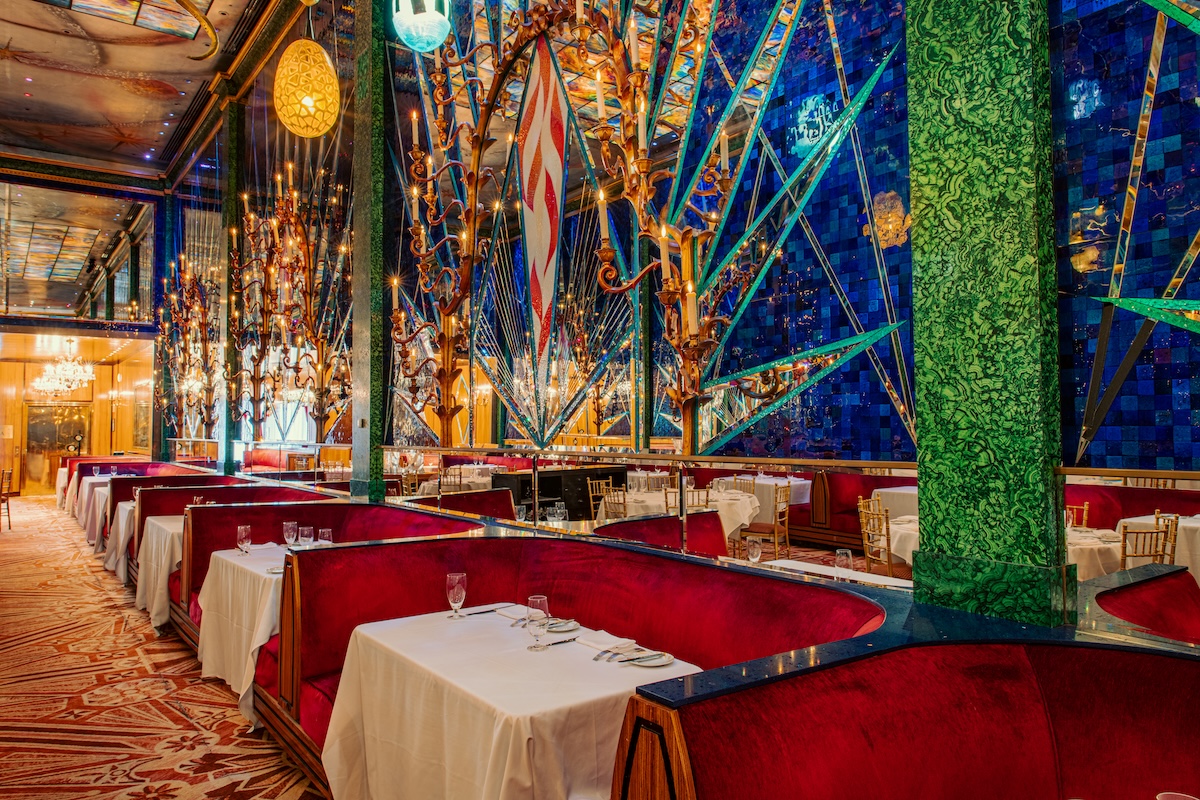
The gilded room that most New Yorkers know took shape under Sidney Kaye, who took over in 1955 and set about luring Broadway crowds after the Philharmonic decamped from the nearby Carnegie Hall to Lincoln Center. When Kaye died, his wife, the Broadway actress Faith Stewart-Gordon, ran it for nearly three decades, transforming what had once been a modest tearoom into something electric, a place to see and be seen by the culturati.
The Fame and Well-Heeled Patrons
Salvador Dalí was a regular, no doubt drawn to its surreal atmosphere. Rudolph Nureyev brought a particular glamour. Leonard Bernstein scrawled the opening bars of “Fancy Free” on a napkin while Elizabeth Taylor waved around her 33-carat Richard Burton diamond. Madonna worked the coat check. She lasted two weeks, allegedly fired for slipping demo tapes into the pockets of influential patrons.
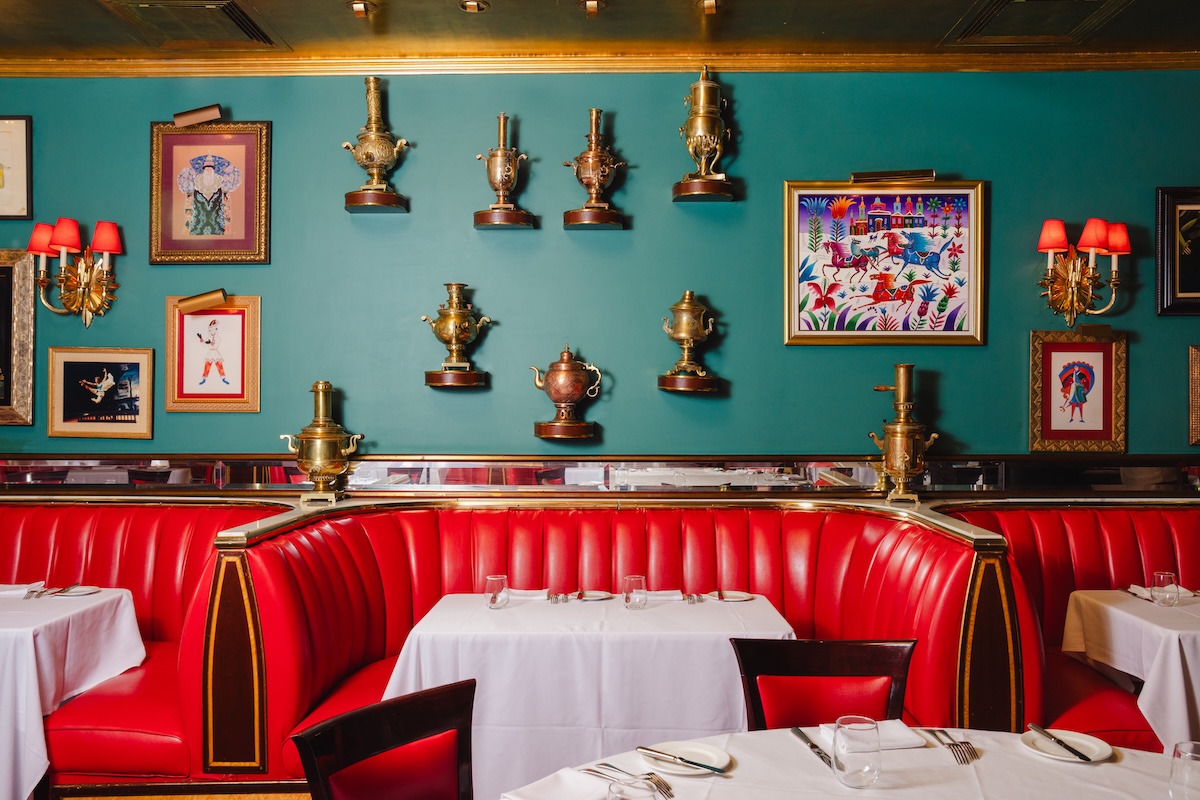
The restaurant has earned its own kind of fame, appearing in Sweet Smell of Success (1957), Manhattan (1979) , and Tootsie (1982), and more recently as a backdrop for the television show Gossip Girl (Season 2, 2009).
You can sit in this cinema history by claiming the booth from Tootsie, where Dustin Hoffman’s character meets his agent, played by Sydney Pollack. It’s at Table 2, and remains one of the most requested tables on OpenTable, and the staff will happily seat you there if it’s free.
The Evolution of the Russian Tea Room
Stewart-Gordon sold the property in 1995 to the restaurant impresario Warner LeRoy, who poured $32 million into a four-story renovation that was supposed to last 10 months. It instead lasted four years.
Warner LeRoy was Hollywood royalty: his father produced The Wizard of Oz, and his restaurants were nothing short of Technicolor. Though it closed in 1988, his Maxwell’s Plum in NYC combined show business glamour with circus spectacle; think red and gold accents, a Tiffany glass ceiling, and an atmosphere reminiscent of the Art Nouveau Maxim’s in Paris. When he took over Tavern on the Green in 1974, he poured in $2 million and added the Crystal Room, dripping with brass, Tiffany stained glass, and Baccarat chandeliers (it’s since been redone and opened under the city). LeRoy loved glitz, glamour, and unapologetic kitsch, and his reinvention of the Russian Tea Room would be no different.
During the 1990s renovation, the ground floor remained largely intact while the upper stories transformed. The fourth floor Hearth Room is arguably the most restrained in the building, and still it dazzles. A fireplace is faced in semiprecious stones; ceiling domes are painted in 24-karat gold. At the far end of the room, behind glass, a three-dimensional animated diorama depicts the Kremlin, cycling through all four seasons when illuminated.
Walls of muted burgundy with gold diamond patterning echo the carpets below them. A glass case displays decorative replicas of Fabergé eggs crafted entirely from sugar. One thing is certain about holding an event here: no additional décor is required.
Much of the ornamentation was salvaged from Maxwell’s Plum. In the third floor Bear Ballroom, a star-shaped light fixture from the former restaurant reappears alongside Tiffany stained-glass ceilings in a banquet hall straight out of LeRoy’s fantasy of Tzarist Russia. A balcony overlooks the room — ideal for a DJ, a string quartet, or a bridal entrance — while brass chandeliers adorned with dancing gold bears preside overhead, and etched mirrored panels capture bears in various states of play.
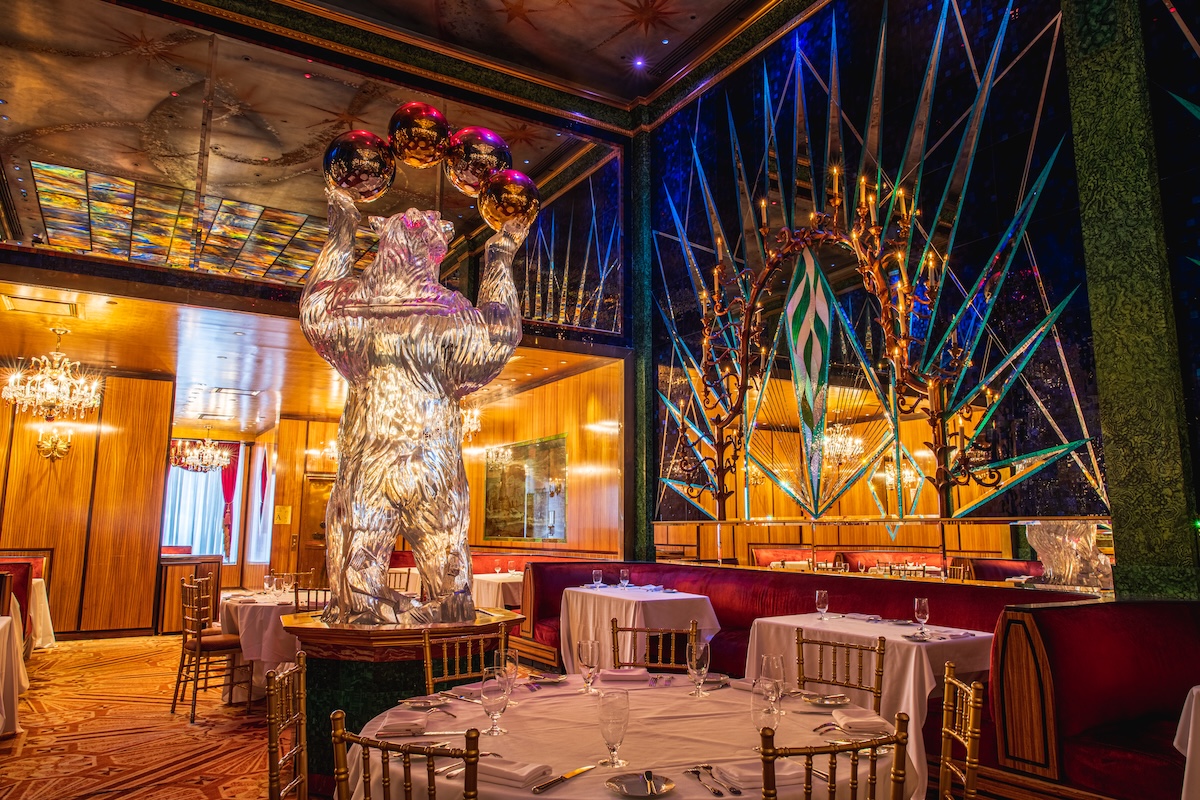
Why bears? The animal is an unofficial national symbol of Russia, embodying strength, power, and resilience. The second floor takes that symbolism and runs straight into whimsy. A 15-foot crystal aquarium, cast in the shape of a juggling bear, dominates the room. It revolves slowly, completing a full rotation every two hours. Any faster, and the parrotfish inside might get dizzy. The bear has no official name, though many call him Boris.
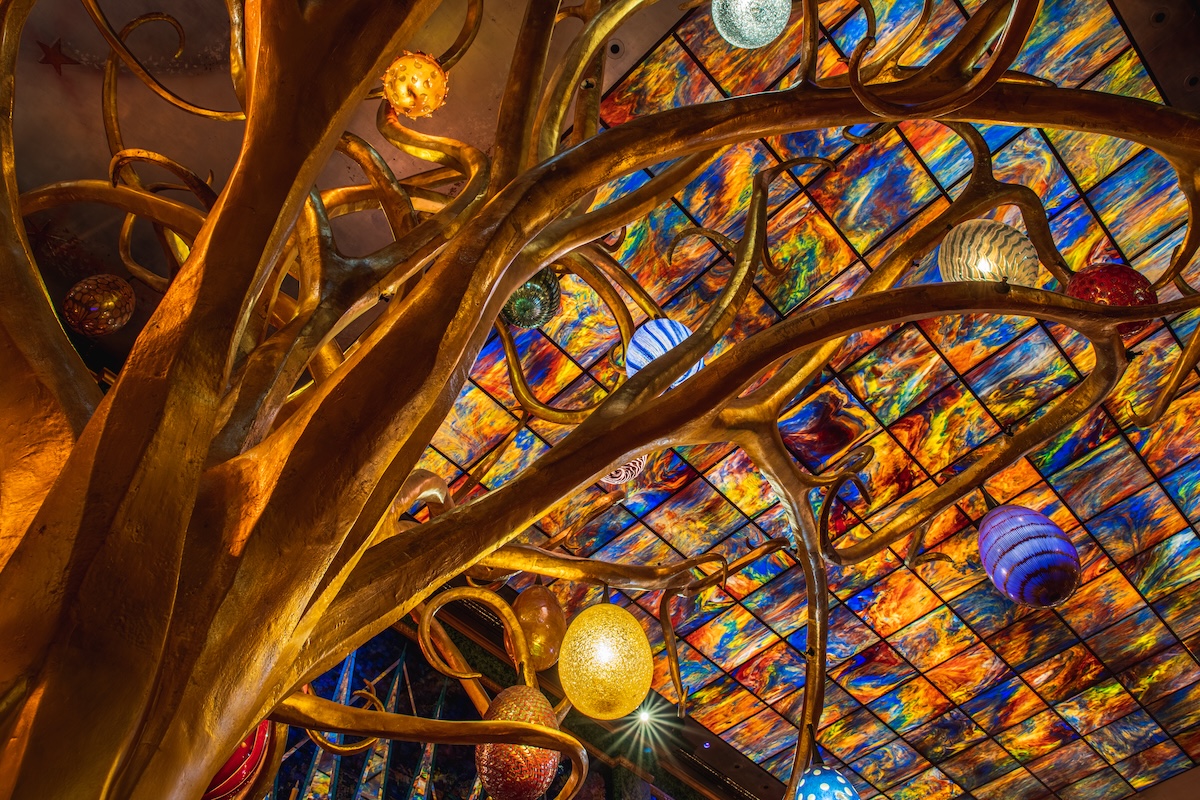
An acid trip, no substances required, this room goes straight down the rabbit hole. A gold-painted Venetian egg tree hung with oversized Fabergé-esque glass eggs anchors the far end of the space. Mirrored walls amplify the color, and another Tiffany stained-glass ceiling from Maxwell’s Plum makes its appearance overhead. Red built-in banquettes line the room. Not surprisingly, this floor is a favorite for private afterparties.
LeRoy’s tenure, for all its spectacle, lasted only five years. The restaurant closed again shortly after his death in 2001, caught in the financial crisis that followed September 11. It reopened under new management in 2006.
The Keeper of the Firebird
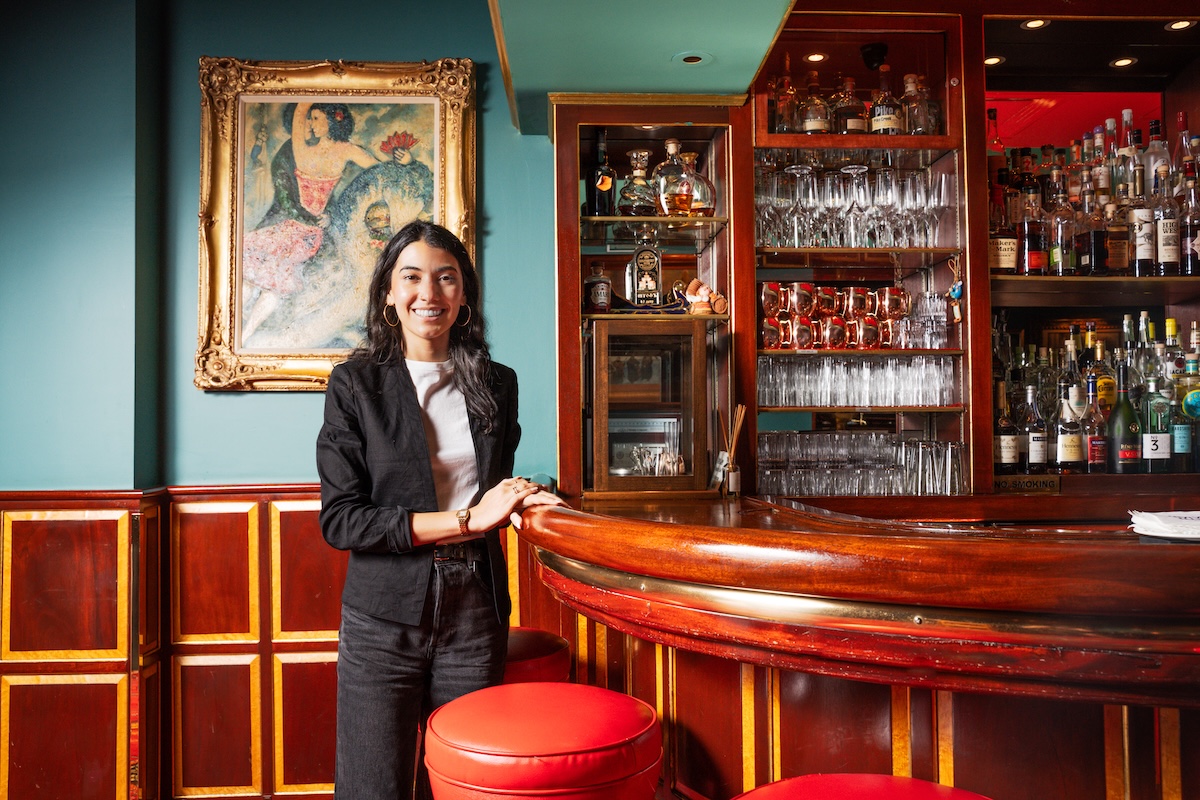
Isabella Biberaj is sitting at the bar when I walk in. She’s the restaurant’s operations manager and, as it happens, the new owner’s daughter. I enter the revolving doors just behind two young women who’ve come for the afternoon tea ($145, Champagne included), and I ask Isabella what I’ve been wondering: with classic New York institutions suddenly catching fire with Gen Z on TikTok, has she noticed an uptick?
She’s starting to. “New places try to be old New York,” she says. “We are old New York.”
The building was bought in 2004, rescuing it from a slow fade. Warner LeRoy’s celebrated incarnation had closed just five years earlier. The U.S. Golf Association had been leasing the space and briefly floated the idea of a golf museum, before abandoning it.
After the Russian invasion of Ukraine, the restaurant owners addressed their stance directly, posting a statement on the website: “The Russian Tea Room renounces Russia’s unprovoked acts of war in the strongest possible terms,” it read. “For one hundred years, the New York institution’s history has been deeply rooted in speaking against dictatorship and for democracy.”
It’s perhaps a reminder that the restaurant’s name had always belonged more to the white Russians who first filled its tables than to the country they fled.
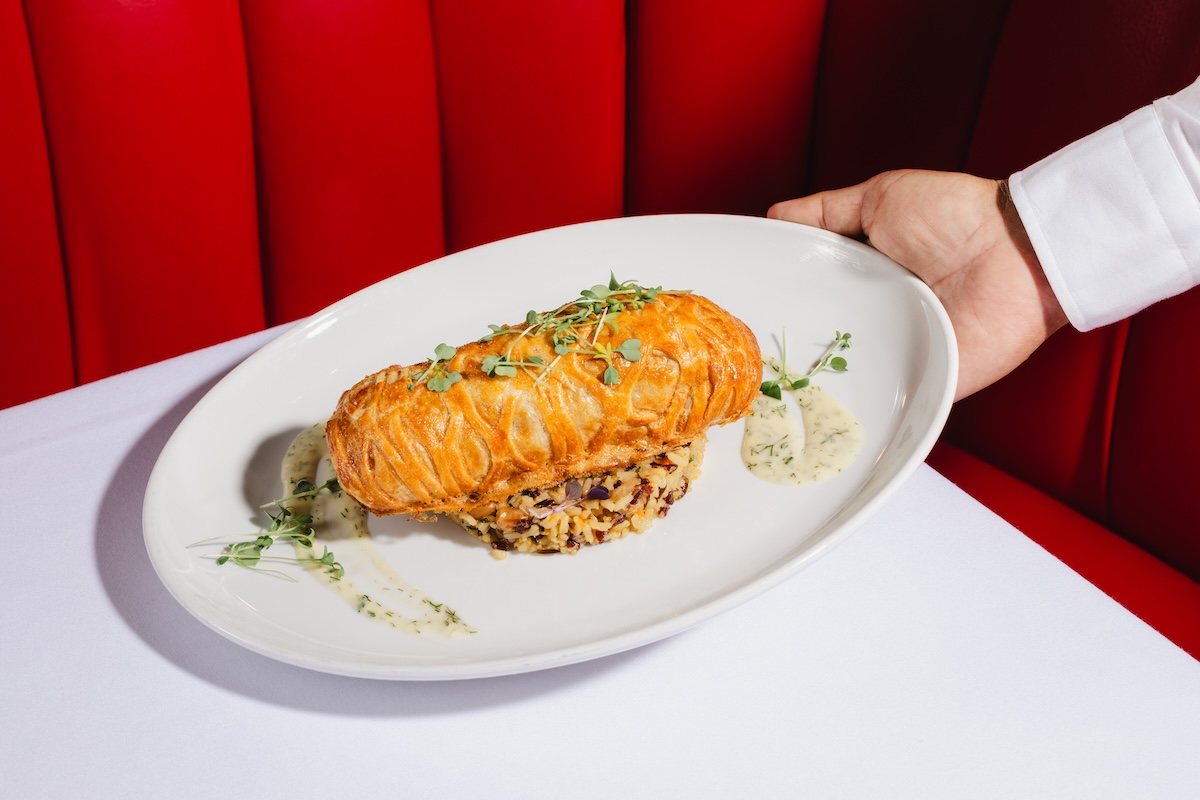
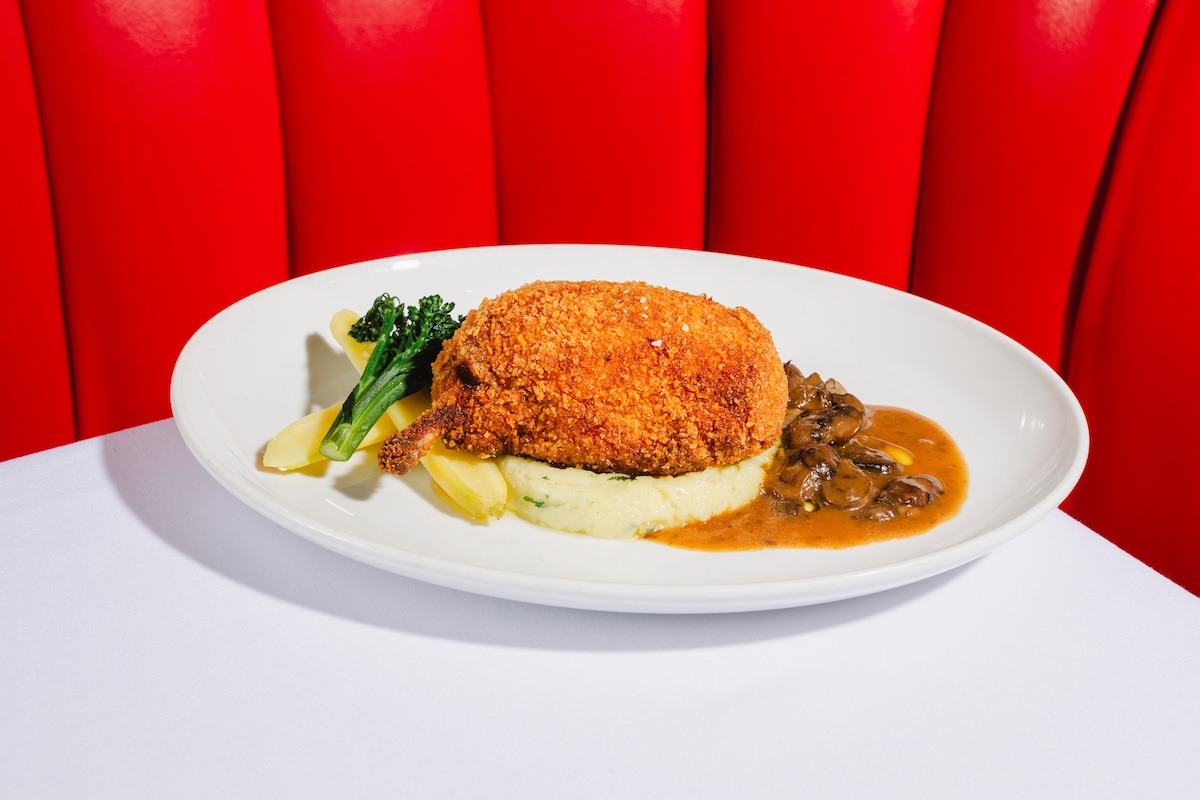
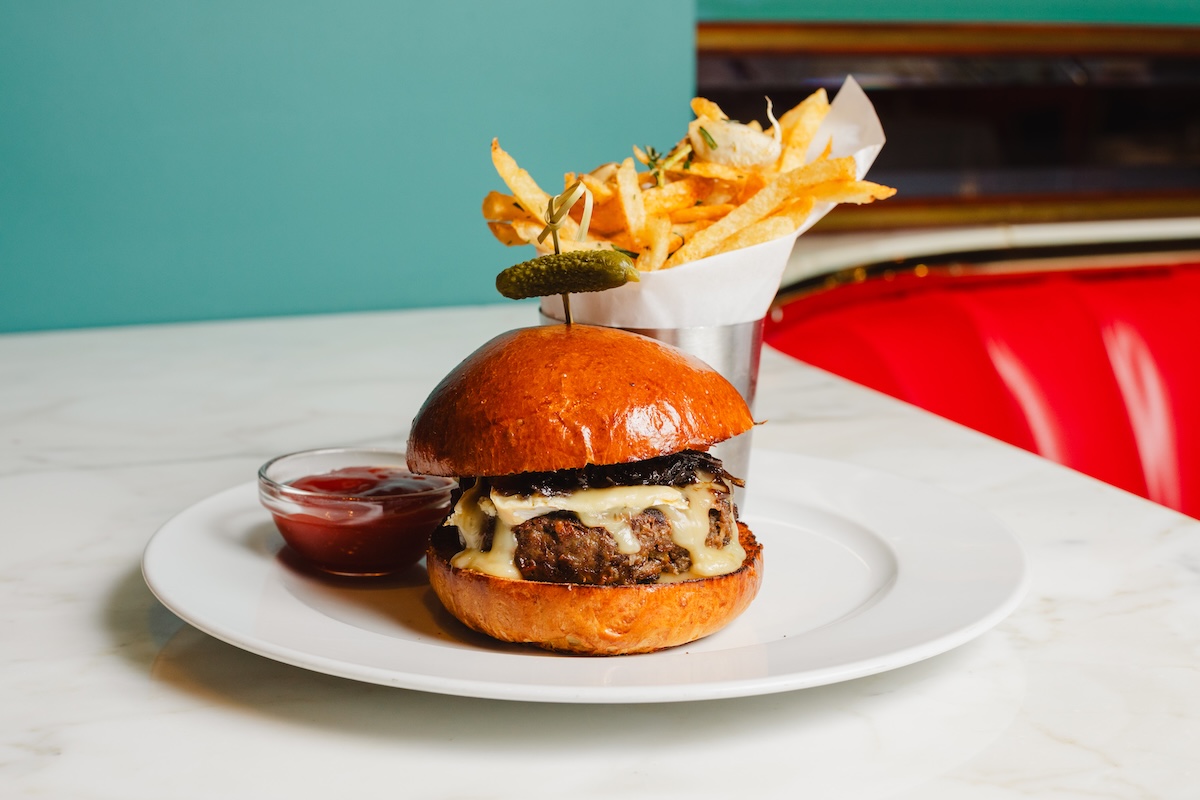
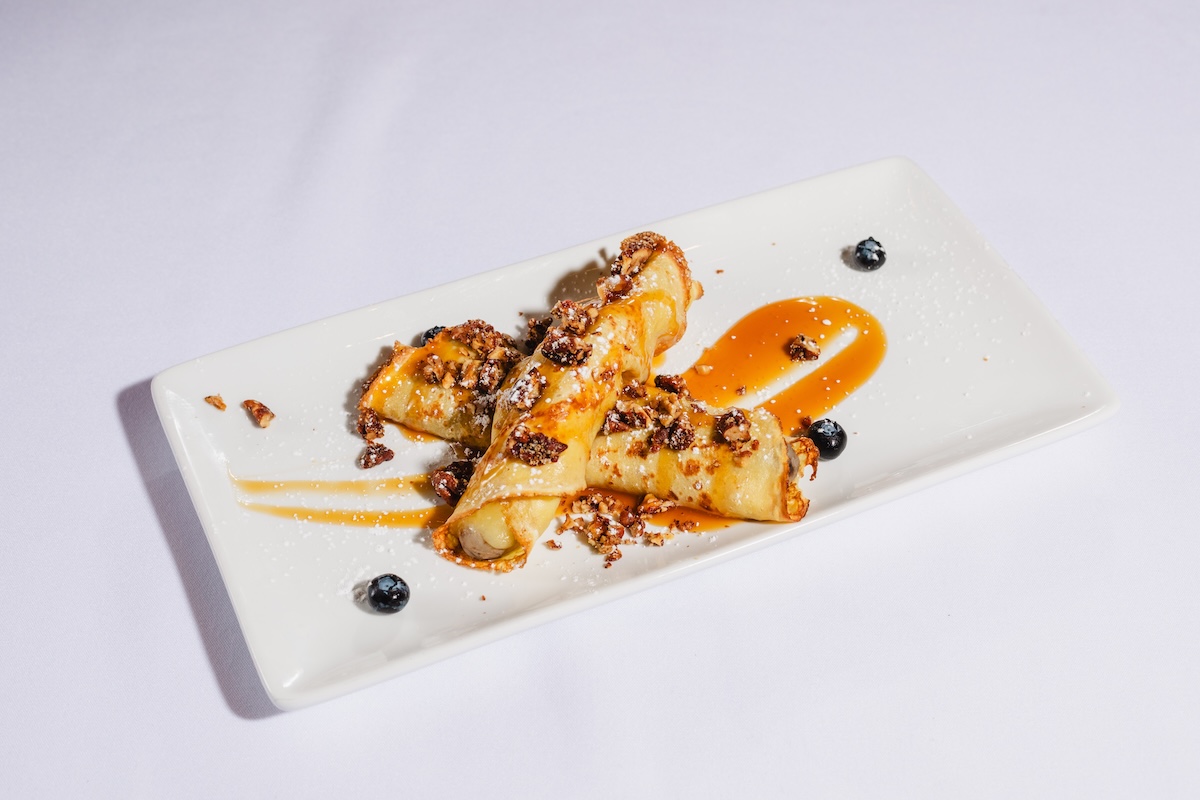
Today, people are drawn in for different reasons. Restaurant Week brings curious first-timers eager to try classics like the Red Borscht, ground Lamb Blinchik, Beef Stroganoff, or Kulebyaka, a traditional Russian salmon and mushrooms wrapped in flaky pastry. The Carnegie Hall crowd filters in before curtain for the pre-theater prix fixe, or one of the vodkas lined up behind the bar Pro tip: go for the flight, or try the RTR Dirty Martini, made with house-infused horseradish Beluga vodka and olive brine.
The Biberajs treat the space almost like a museum, making it less about reinvention and more about preservation.
“Any renovation would only restore what it currently looks like. Nothing to alter the actual appearance,” Biberaj said. “This is how meticulous we are. On the first floor, we found an exact carpet match when we redid the floors last year.”
It’s a century old, so of course there are ghosts. There’s the figure in period dress that a longtime security guard swears he watched walk into a bathroom on the monitors…and never come out. There’s the small child seen running around the fourth floor. When the elevator refuses to cooperate at one point, Biberaj said, only half-joking, “That was the ghost.”
The restaurant has threaded itself through her life in smaller ways, too. She grew up having dessert here with her father after high school let out. She held her sweet 16 in the Bear Room, Boris presiding over the whole affair. Now she’s helping make sure the restaurant finds its way into countless others’ stories as well.
When I leave, she hands me two matchbooks printed with one of the older logos: a Tsar astride a radiant Firebird, grinning like a man who knows something. In Slavic lore, the bird brings good fortune. Here, it’s been doing that for 100 years.
Visit the Russian Tea Room Monday through Friday from 11:30 a.m. to 11 p.m., and Saturday and Sunday from 11 a.m. to 11 p.m. 150 W. 57th St., Midtown, russiantearoomnyc.com