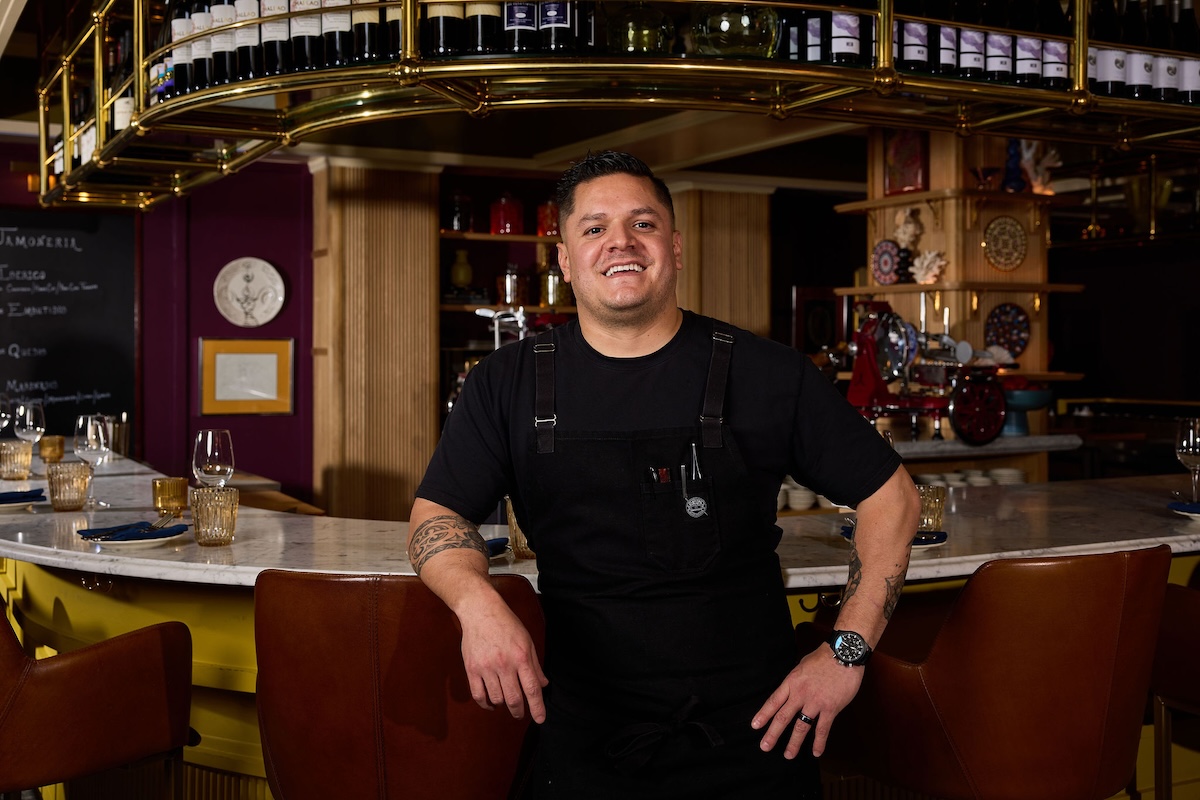
In just over two years, chef Johnny Curiel and his wife-partner, Kasie, have made a mark on Denver’s dining scene as major as any in recent memory. From Alma Fonda Fina to Mezcaleria Alma to Alteño as well as Cozobi Fonda Fina in Boulder, they’ve been at the forefront of a city-wide movement that’s transforming our understanding of Mexican cuisine. And now, the couple, who also owns Spanish concept Mar Bella Wine Bar, is about to embark on their most ambitious venture yet.
Set to open in RiNo on May 13, Milpero is “a dream that’s been years in the making,” according to Curiel. At its heart is an 18-course tasting menu designed to showcase the ingredients and techniques that define Mexico’s culinary heritage—first and foremost being corn and the nixtamalization process that turns it into masa, the dough used for everything from tortillas to tamales.
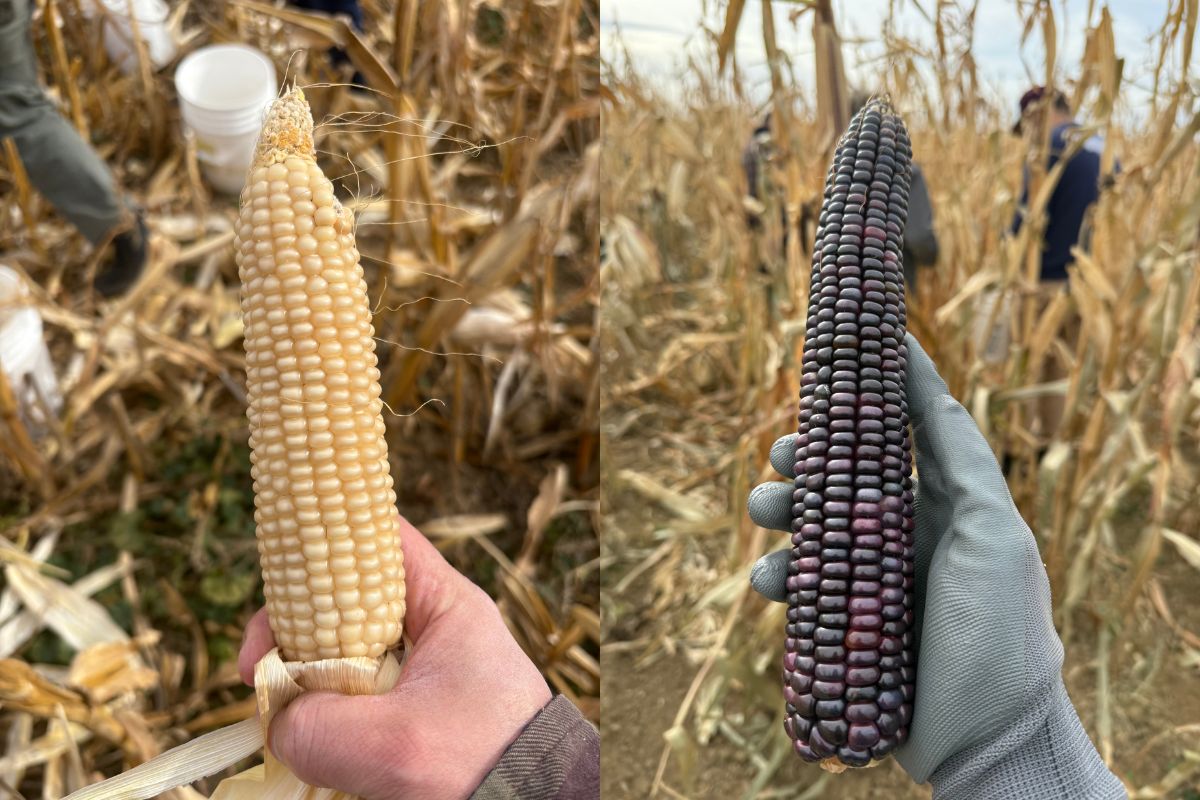
The original name for the concept was actually Maize (Spanish for corn), but the Curiels recently changed it to distinguish it from another local eatery (read more here). Milpero is the term for a farmer who grows maize, among other crops, which is fitting, because a partnership with the MASA Seed Foundation in Boulder is central to their mission.
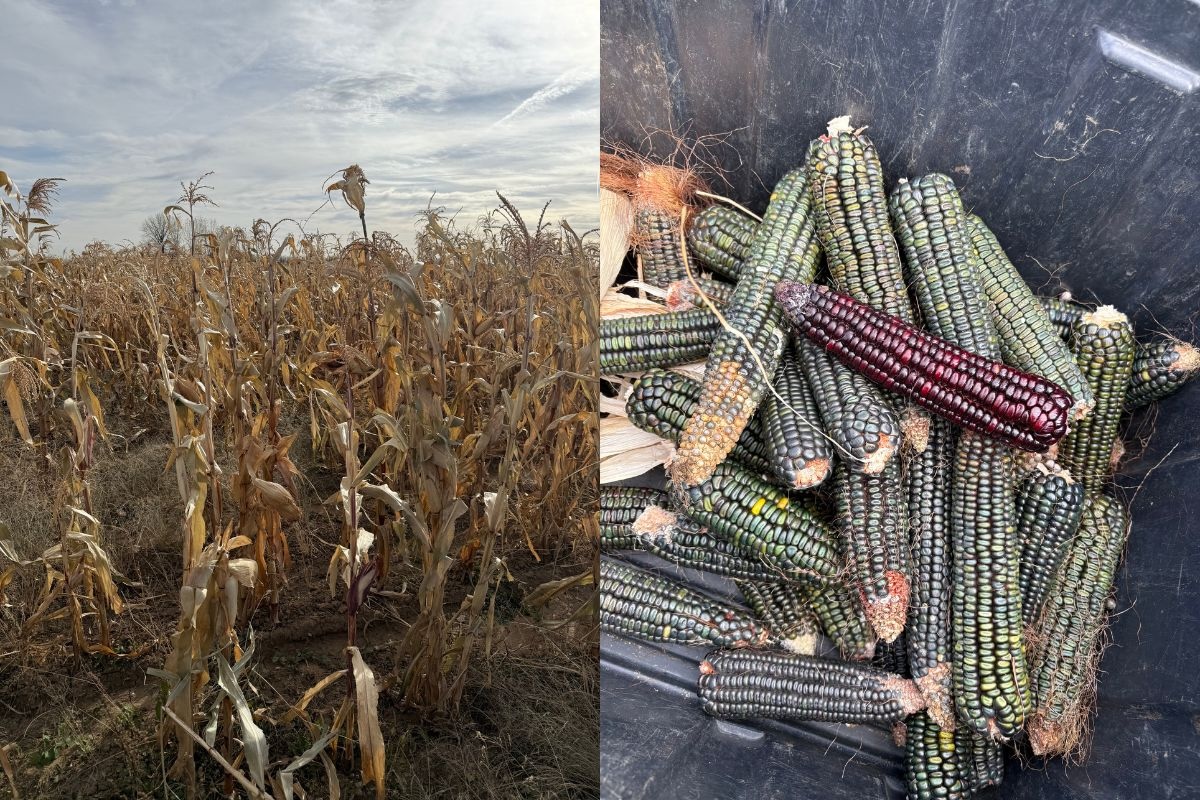
“All of the corn we utilize, 100%, is our own grown corn,” Curiel emphasized, noting that MASA owner Rich Pecoraro is growing 20 acres of strains Oaxaca Green, Chihuahua Blue, and Concha White exclusively for the Fonda Fina Hospitality group. Though he also sources corn from Mexico, Curiel pointed out, “It’s a win for Colorado to produce this type of corn and for us to be able to use it and share it with the world.”
But the world will have to be patient, because the restaurant seats only eight guests at a time.
Dining at Milpero
“They’ll come in through our welcome chamber, where they’ll get a welcome cocktail [of the fermented masa beverage called] tejuino with our mezcal, a vegan style of pechuga that Bozal made with our maize,” Curiel explained. “Then they’ll sit at the cold counter and go through the first eight courses, which are more dry-aged seafood, different shapes of masa, aguachiles, oysters.
And then they go into the fermentation room for a small class and tasting on Mexican ferments. Because I feel like everybody’s familiar with fermentation, right? We know the kimchis, we know the sauerkrauts, we know the kojis. But Mexico also has some great things that we want to expose. By the time people leave, I want them to research pulque or atole agrio or whatever.”
Of course, that won’t happen until they’ve enjoyed their remaining courses at the hot counter, from heartier meat-based dishes to dessert, and received a parting gift that Curiel described as “a to-go box—we actually modeled it after a Happy Meal—with a burrito with chile Colorado in a Sonora white flour tortilla for the next morning.”
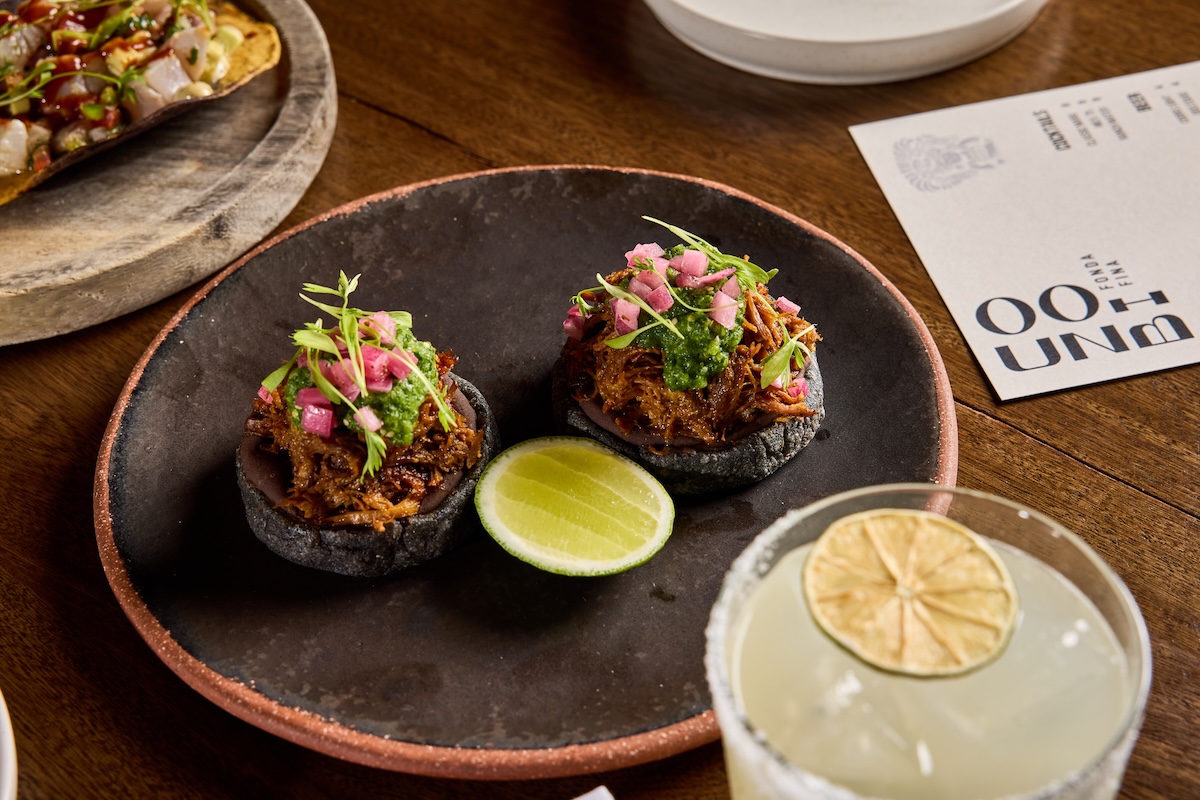
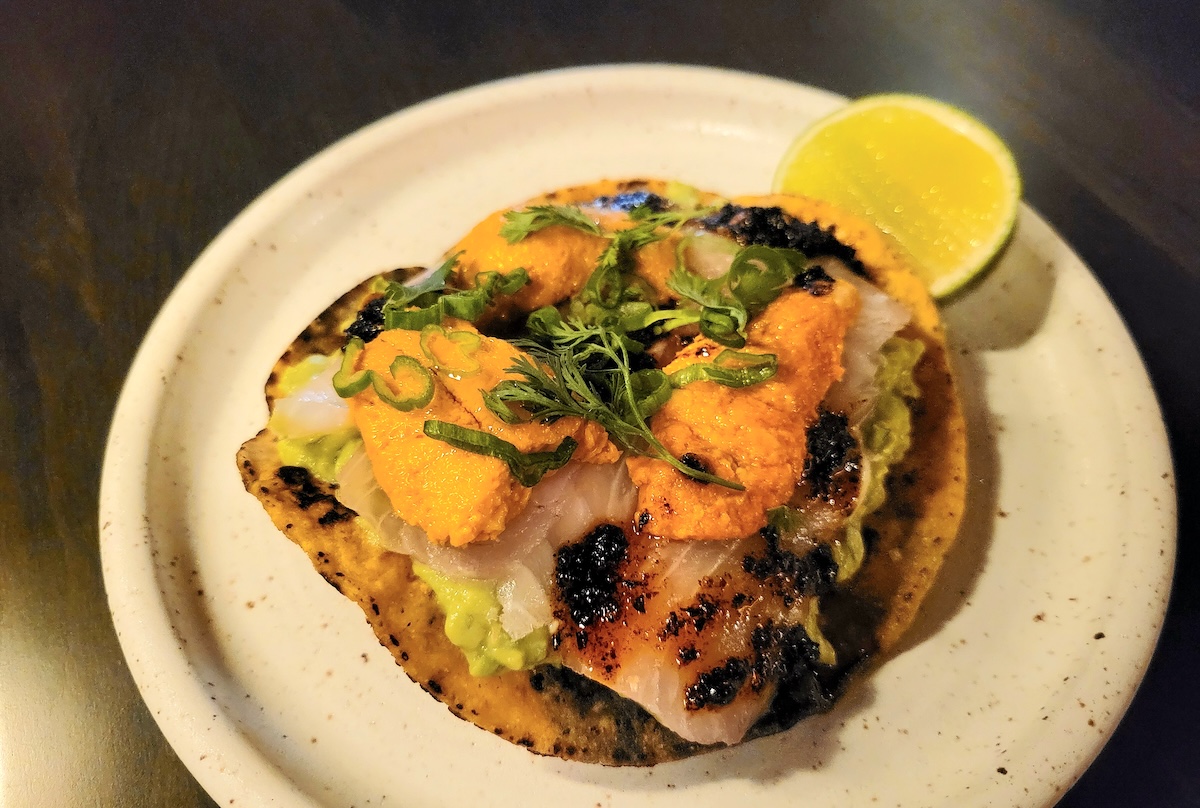
With his characteristic enthusiasm, the chef singled out some dishes on the opening menu that he’s particularly proud of. Take the local bison heart tartare with squash escabeche on a raspada, or “a tortilla that has been cooked on one side only, and then the side that’s raw, you scrape it off with a metate to make it almost like a cracker. Raspada means ‘scrape,’” he explained. Or the tamal with Hokkaido uni and a salsa verde incorporating chlorophyll made from hoja santa leaf. Or the pulque-roasted squab in mole amarillo.
And then there’s the borrego, another dish (one of six) featuring mole. It starts with “a lamb rack that we’re turning into kind of like a carne asada,” Curiel explained. “We’ll cut the lamb chops and then press them in a tortilla press to give them that flat carne asada look, and then we’ll serve them with adzuki beans and chochoyotes, which are masa dumplings that you fold into potato and then braise in a broth, [in this case] mole manchamanteles. ‘Manchamanteles’ means when you drop something and the tablecloth splashes. It’s a messy mole, so I’m super excited to share that one with Colorado.”
As for desserts, “We were able to hire one of the most passionate and cool chefs that I’ve met in a while to do pastries,” Curiel said, namely Filipino native Yna Zuniga. “She has gone down a rabbit hole researching the pastries of Mexico. We’ll have our version of a concha, which is an egg bread almost like a brioche with sugar on top, that we’ll fill with cajeta. We’re also doing a buñuelo and champurrado, which is a Mexican version of hot chocolate thickened with corn.”
On the Drink Menu
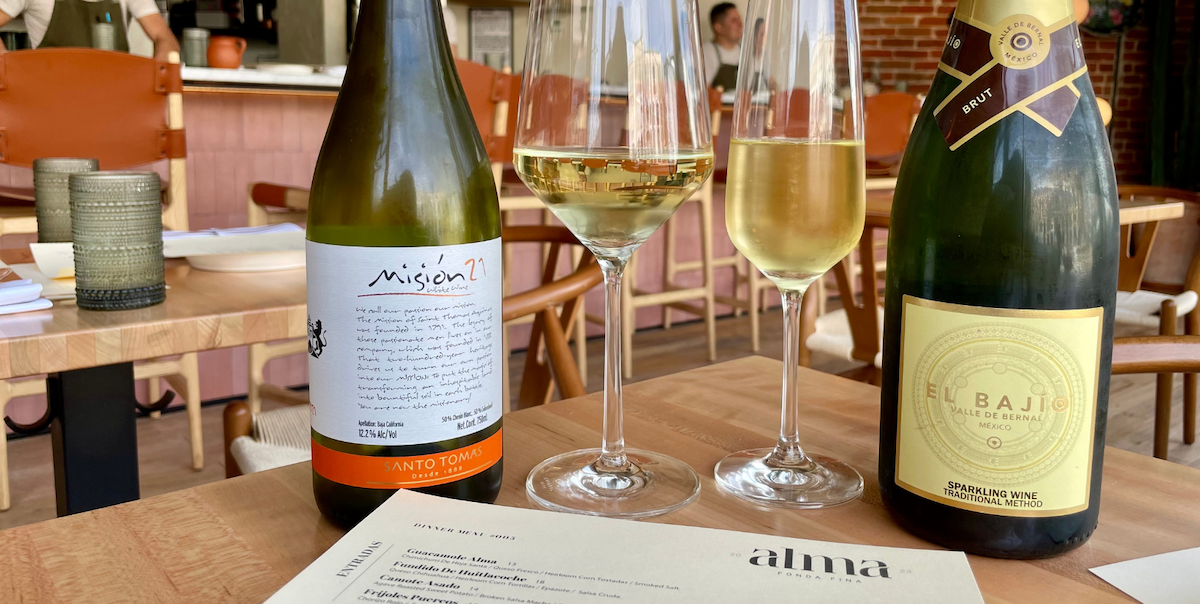
To complement it all, there will of course be a selection of cocktails based exclusively on Mexican spirits, every one of which is “going to have an element of cuisine in it,” Curiel noted. “For example, our Negroni is a Mole Rosa Negroni, and we have a highball made from tepache,” a fermented pineapple drink. But the core of the beverage program is wine, with three main pairing options devised by Fonda Fina wine director Justin Mueller: Mexico, Mundial (global), and El Chingon (the “fuck it pairing,” in Curiel’s words).
“The Mexican wine pairing makes the most sense, and it’s the cheapest” at $125, said Mueller. “And my hope is that a lot of people are gonna have their minds blown by it. We’ve got wines from all over the country—Baja, Querétaro, Aguascalientes, San Luis Potosí”—representing a range of varieties, from Riesling and Viognier to “maybe the best Chenin Blanc that I’ve had from Latin America” and a red blend of Malbec and little-known Southern French grape Caladoc “that’s fresh-fruited and crushable.”

At $175, the Mundial pairing includes “a lot of single-vineyard stuff and a lot of older vintages,” according to Mueller, so “there’s a tremendous amount of value there.” Think barrel-fermented and -aged Assyrtiko from Santorini, Greece, and Robert Sinskey’s 2015 Marcien, a red blend from the Napa Valley side of Carneros. Guests can also choose to do the Mexico and Mundial pairings side by side for $200.
“And the El Chingon pairing is the ‘wow’ wines, like, ‘How did you get that?” said Mueller. Priced at $500, it includes “really heralded vineyards, winemakers, and vintages from around the world. There’s Chateau d’Yquem Ygrec, the dry white that [the legendary Bordeaux winery] produces 2,000 cases of. It’s ridiculously expensive, and you get 2.5 ounces of that. There’s Burgundy that’s as old as me on there—and when it’s gone, it’s gone. It’s never coming back.”
Beyond Enjoyment, Milpero Aims to Educate
Clearly, Milpero will offer an immersive educational experience as much as an epicurean one. But that’s not just for the sake of the guests; it’s also for the benefit of staff.
“It will be kind of like our university,” said Curiel. “Chefs working at Alma, at Cozobi, at Alteño, will get a chance to rotate through here, gain knowledge about what we’re doing, and then take it back to the other restaurants. I never had the opportunity to stage in New York or London or Paris or anything like that. I never had the opportunity to be in a tasting menu environment. I want to give that to people who maybe are not fortunate enough to travel—something that is exciting and interesting and new to Denver, so they can hopefully take it with them for the rest of their lives.”
Rest assured, however, that the 16-seat space won’t feel anything like a university classroom. Curiel calls the decor “super-rustic,” combining reclaimed wood with accents of copper, hand-blown glass, and ceramic pieces—all enhanced by the huapango, a type of mariachi music, playing in the background.
“What is huapango? I want this to be a space where those questions are asked,” asserted Curiel. “I want it to be a space where you’re eating something you don’t understand and you ask, ‘Where did this come from?’ I want there to be conversation, because in this world today, there’s so much information out there, but there’s also so much misinformation. It’s all about talking to each other. I love my heritage, I love Mexico, and I love sharing it.”
Visit Milpero starting May 13 at 3455 Ringsby Ct., Unit 105A, Denver, milperodenver.com